leven votes in favor, one against, three abstentions. In New York on Friday, October 30, the US draft resolution on the Sahara had a majority of the Security Council behind it, but the vote against came from Russia, a permanent member, and its veto was enough to sink it. Moscow’s rival text then drew only three votes. No resolution was adopted, and the mandate of MINURSO, the UN mission in the Sahara, expires on Saturday, October 31.
What Washington proposed
The United States, which drafts the texts on this file, wanted to extend the mission by a year and change what it is. The “R” in MINURSO, for “referendum,” was to go: the mission would have become MINUSO on November 1.
The text made Morocco’s autonomy plan the only basis for negotiations, asked UNHCR to count the population of the Tindouf camps within six months, and called for a leaner mission.
What Russia did
Russia, the only member to vote against, cast its veto, while China, Pakistan and Somalia abstained.
Its ambassador, Vassily Nebenzia, argued that Washington gave up any neutrality when it recognized Moroccan sovereignty, and that the Council has no business settling a question of sovereignty. Moscow holds on to the referendum option in the name of self-determination.
The American response
Russia then tabled its own one-page text: one more year, with MINURSO’s name and tasks left untouched. Only Russia, China and Somalia backed it.
The United States voted against, and eleven members abstained, France and the United Kingdom among them. The US vote did not even decide the outcome, since the text fell six votes short of the nine it needed.
US ambassador Mike Waltz accused Moscow of using its veto “to preserve the letter R for the referendum,” a vote the UN itself has called unworkable for twenty years. France regretted that Russia had not abstained and warned that an abrupt end to the mandate would be “particularly worrying.”
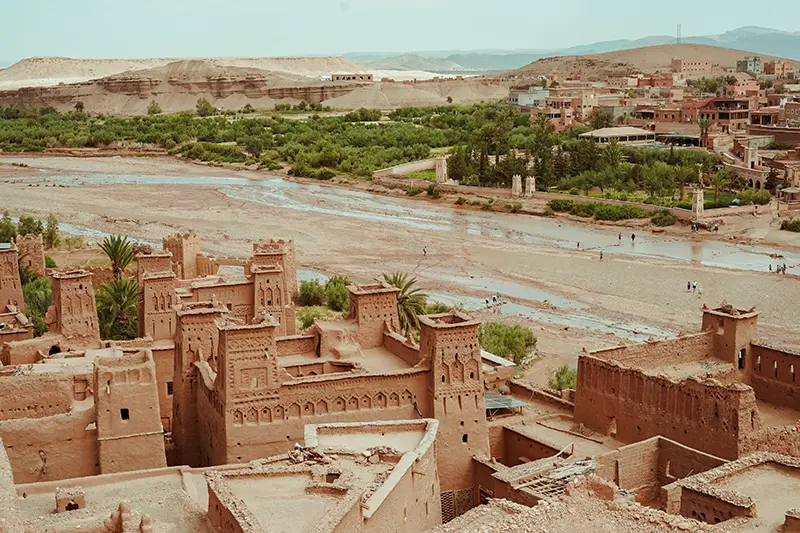
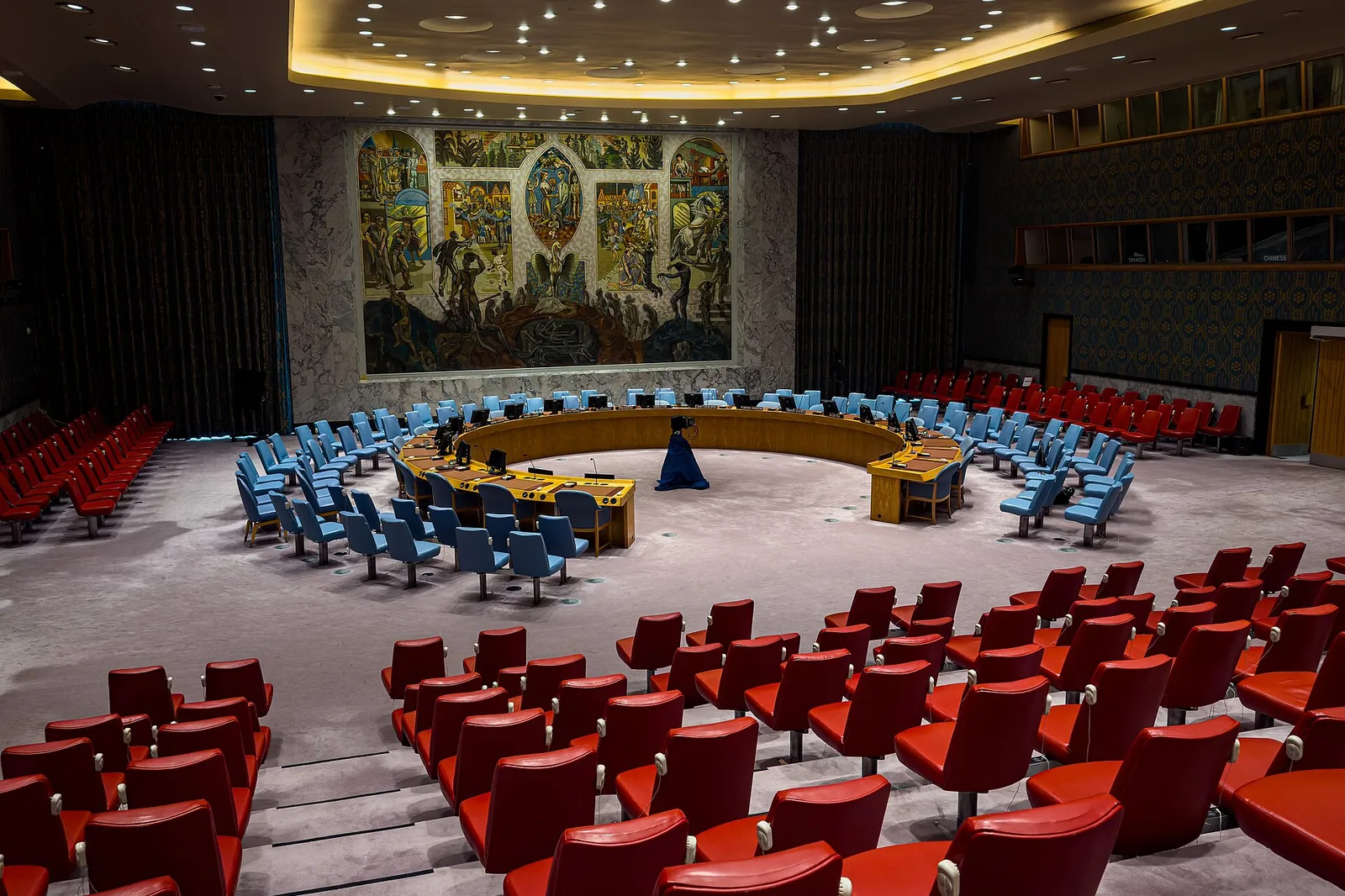
Photo: the Security Council chamber at UN headquarters in New York. Jdforrester, CC BY 4.0. Gallery: a MINURSO vehicle in Laayoune (Anass Sedrati, CC BY-SA 4.0), the mission’s headquarters in Laayoune (cingularite, CC BY-SA 2.0), the El Aaiun camp near Tindouf (Jorn Sund-Henriksen, CC BY-SA 3.0).
Why one letter matters so much
MINURSO was created in 1991 to organize a self-determination referendum that would never take place, as voter identification stalled in the 1990s. In 2007, Morocco put forward its autonomy plan.
In 2020, Washington recognized Moroccan sovereignty over the Sahara. On October 31, 2025, Resolution 2797 made autonomy the basis for negotiations, with Moscow abstaining. Dropping the “R” would have written that path into the mission’s very name. This time, Russia said no.
What happens now?
Without a new text, the mission loses its legal basis tomorrow, and no new vote had been announced by Friday night. Three outcomes remain open: a technical extension of a few weeks, a revised US text that wins a Russian abstention as in 2025, or a plain expiry, which would leave ceasefire monitoring in limbo.
Rabat turns the page
Morocco answered in the evening with a statement from the Royal Cabinet that turns the reading of the vote around. Far from treating it as a setback, Rabat hailed “a significant step toward the final closure of the Moroccan Sahara file at the United Nations,” and spelled out what it means on the ground:
“The non-renewal of MINURSO’s mandate clearly means that the presence of this Mission in the Kingdom’s southern provinces, notably through its staff, its vehicles, its equipment and its symbols, should end in the coming days.”
The statement speaks of “a 35-year page” now turned, that of a mission “inherited from an anachronistic and bygone context.” It also expects the question to be taken off the Council’s agenda, which would end the periodic meetings, the Secretary-General’s reports and his Personal Envoy’s briefings.
The Kingdom says it remains committed to the ceasefire, and announces similar steps in other UN bodies.
What it changes for Morocco
The Russian veto was meant to preserve MINURSO; it may hasten its end. Without a mandate, the mission loses its legal basis, and the country that hosts it on its soil now wants it gone. Nor does the veto erase Resolution 2797, which makes autonomy the basis for negotiations.
One unknown remains: the Council can still adopt a text before the mandate runs out, and the UN has not said how it would withdraw its teams. Algiers and the Polisario had not reacted officially by Friday night.
SNRT News (X) - Communiqué du Cabinet Royal, 30/10/2026
Hespress - Le Maroc satisfait de la non reconduction du mandat de la Minurso
Mike Waltz (X) - Russia just vetoed a U.S. resolution, backed by 11 Security Council members
Morocco World News - Referendum ‘Will Not Happen,’ US Says After Russian Veto Sinks Sahara Resolution
Morocco World News - US Vetoes Russian Draft Resolution on Western Sahara
Le360 - Sahara: trois voix sur quinze, le vrai poids du camp d’Alger à l’ONU
Le360 - Après le veto russe, quatre scénarios pour le Sahara
Le Desk - Sahara: Paris dénonce le veto russe et s’alarme d’une fermeture brutale de la Minurso
Cadena SER - Rusia veta en la ONU la resolución de EEUU sobre el Sáhara Occidental
TSA - Sahara occidental: la Russie oppose son veto à la résolution américaine
Hespress - What happens next after Russia’s veto of US Sahara resolution?
Wikimedia Commons - Security Council chamber, Jdforrester, CC BY 4.0