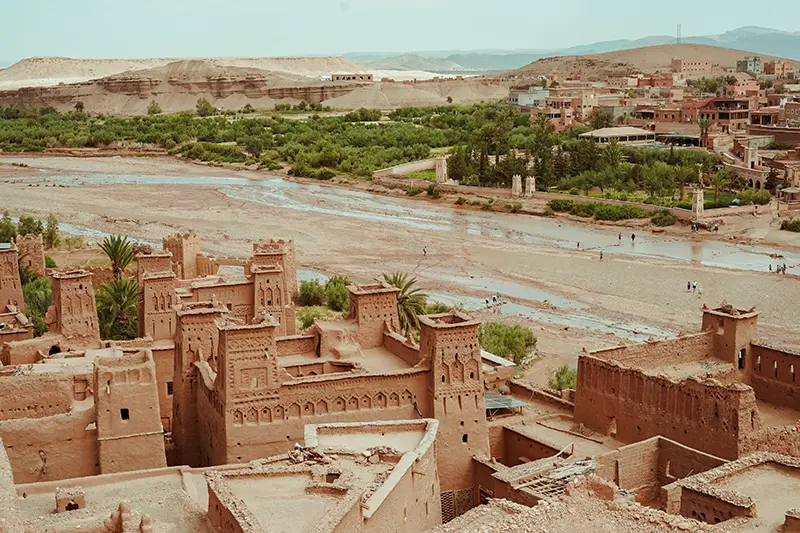
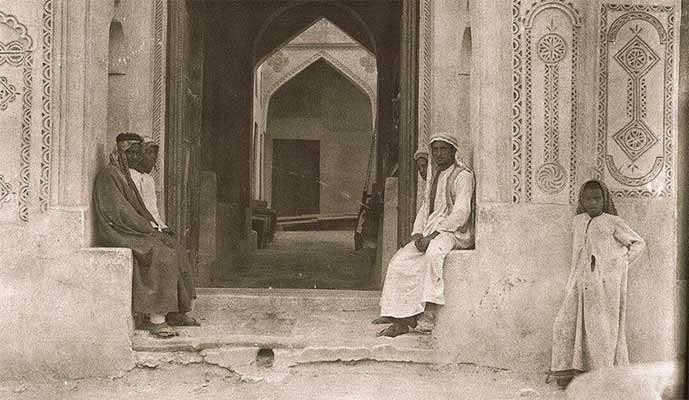
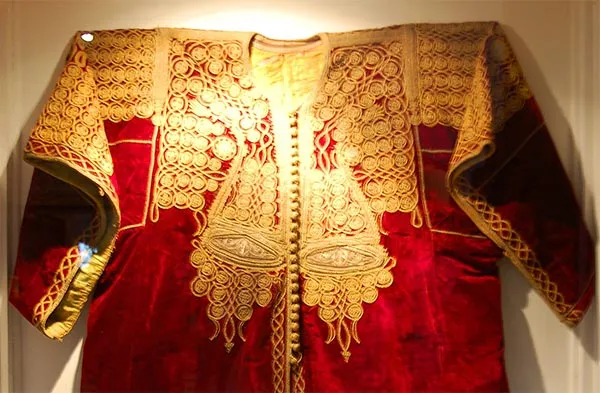
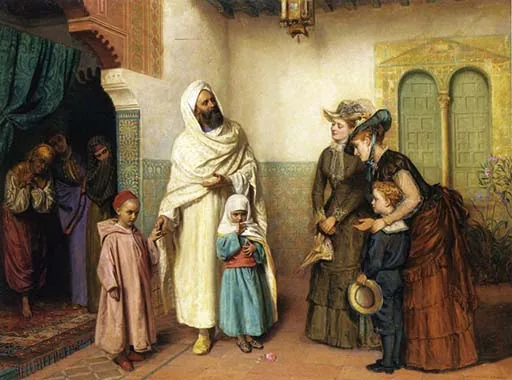
ellige, born in Morocco around the 10th century of the common era, originally stood out for its white and brown tones, reminiscent of the elegant Roman mosaics. This magnificent ceramic art has crossed the centuries, constantly enriched by the contributions of the successive dynasties of Morocco and Andalusia, under the Moorish influence of the Almoravids, the Almohads, the Marinids, the Saadians, and finally throughout the Sharifian era.
Each period brought its own unique touch, incorporating new colors and new patterns, transforming Zellige into a true mosaic of history, rich and varied, which continues to amaze through its complexity and its timeless beauty.
The origins of the word
The term “zellige” draws its roots from Arabic, meaning “small polished stone”. The word has traveled across cultures and languages, influencing several terms in the Latin languages. In Spanish, for instance, it became “azulejo”, designating decorative ceramic tiles, while in Ligurian (a region of Italy), it survives under the form “laggione”.
These linguistic variations bear witness to the spread and the historical importance of zellige in the art and architecture of different regions. Sumptuous buildings, palaces adorned with exquisite details, and richly decorated mosques testify not only to material wealth, but also to the sophistication and the cultural and spiritual depth of a society.
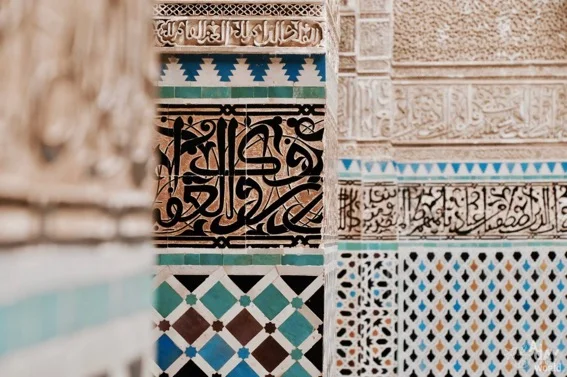
An ancestral craft
Zellige is a traditional Moroccan art in which tiles are crafted by hand from unrefined natural clay, extracted mainly from the region of Fes. This ancestral process begins with the meticulous preparation of a clay renowned for its unique technical quality. After being crushed and moistened in the workshop, the clay blocks are kneaded with water, then spread out in the sun to dry. Once calibrated and cut into geometric shapes, the clay is ready for high-temperature kiln firing.
Zellige tiles are made from natural materials such as clay, but also lime and mineral pigments. The making of Moroccan zellige is ecological, as it uses neither harmful chemicals nor energy-hungry machines. The artisans rely on traditional methods of clay modeling and wood-fired kilns, creating a final product that is respectful of the environment.
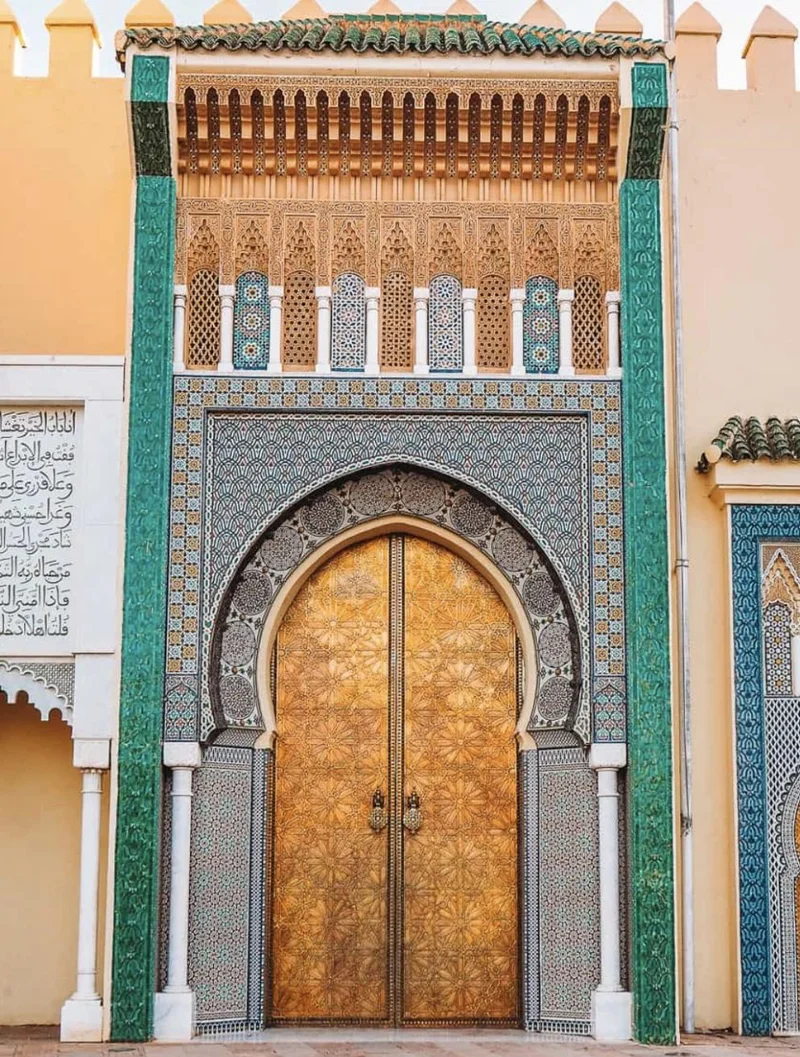
Each zellige tile is a unique piece, holding its own designation, underlining the irregularity of its surface appearance, its hue, its luster and its depth. After firing, vitreous compounds and mineral pigments are applied and fused, creating a range of semi-transparent, metallic, pearlescent or opaque shades.
There are several different laying techniques, each with its own advantages and drawbacks. The most common one is known as dry laying, which consists of setting the tiles directly onto the wall or the floor. This technique, among many others, is quick and easy, but it is not the most durable.
Traditional laying, in which the tiles are set on a lime mortar, is another technique, distinguished by markedly better durability and resistance, though more costly and more time-consuming.
Other, more modern laying techniques, such as adhesive laying, carry their own advantages and inconveniences, being faster and easier, but far less durable.
This craft, far more than a cultural identity, is a true savoir-faire anchored in the city of Fes and recognized by the World Intellectual Property Organization.
The “Zellige de Fes” label
Morocco’s Ministry of Handicrafts created the “Zellige de Fes” label to guarantee the quality of this ancestral art and of its derived products. Registered in 2015 in WIPO’s Vienna Classification of Figurative Elements, this intangible heritage has thus strengthened its international recognition while protecting its unique character.
In Fes, this craft constitutes a major economic pillar, engaging nearly four heads of family out of ten in the production of zelliges. This centuries-old savoir-faire preserves traditions while enriching and spreading Moroccan culture throughout the world.
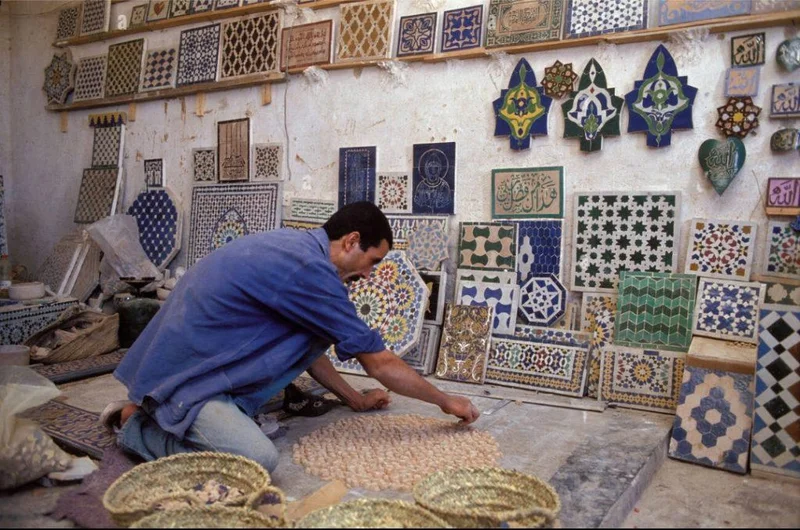
A square meter of zellige tiles can cost around 530 Moroccan dirhams (5,300 MAD for 10 m²), compared with ceramic subway tiles, whose price can drop to around 16 Moroccan dirhams per square meter.
Today, zellige production is mainly concentrated in the cities of Fes, Casablanca, Tangier, Tetouan and Marrakech. These tiles are relatively expensive compared to other types of tiles owing to the artisanal nature of their making. Their cost also varies according to their size, the complexity of the patterns and the quality of the finished product.
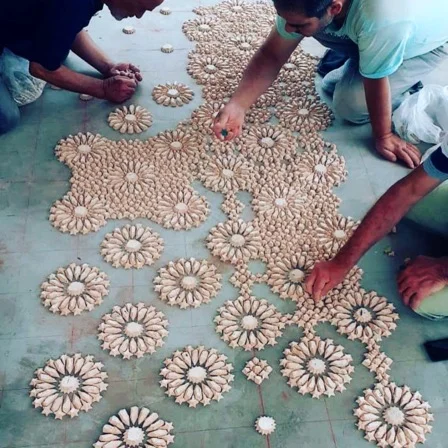
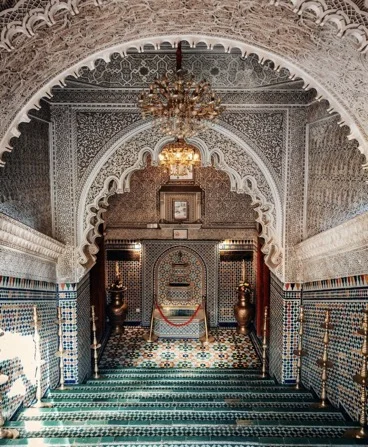
Art, a symbol of the prestige of civilizations
Throughout the ages, art and architecture have served as powerful symbols of prestige and respect. The Byzantine Empire, with its churches adorned with brilliant mosaics and its imposing buildings, perfectly illustrates this importance of architecture and decoration. Likewise, the Roman Empire distinguished itself through monumental infrastructure such as aqueducts, amphitheaters and forums, reflecting its power and its grandeur.
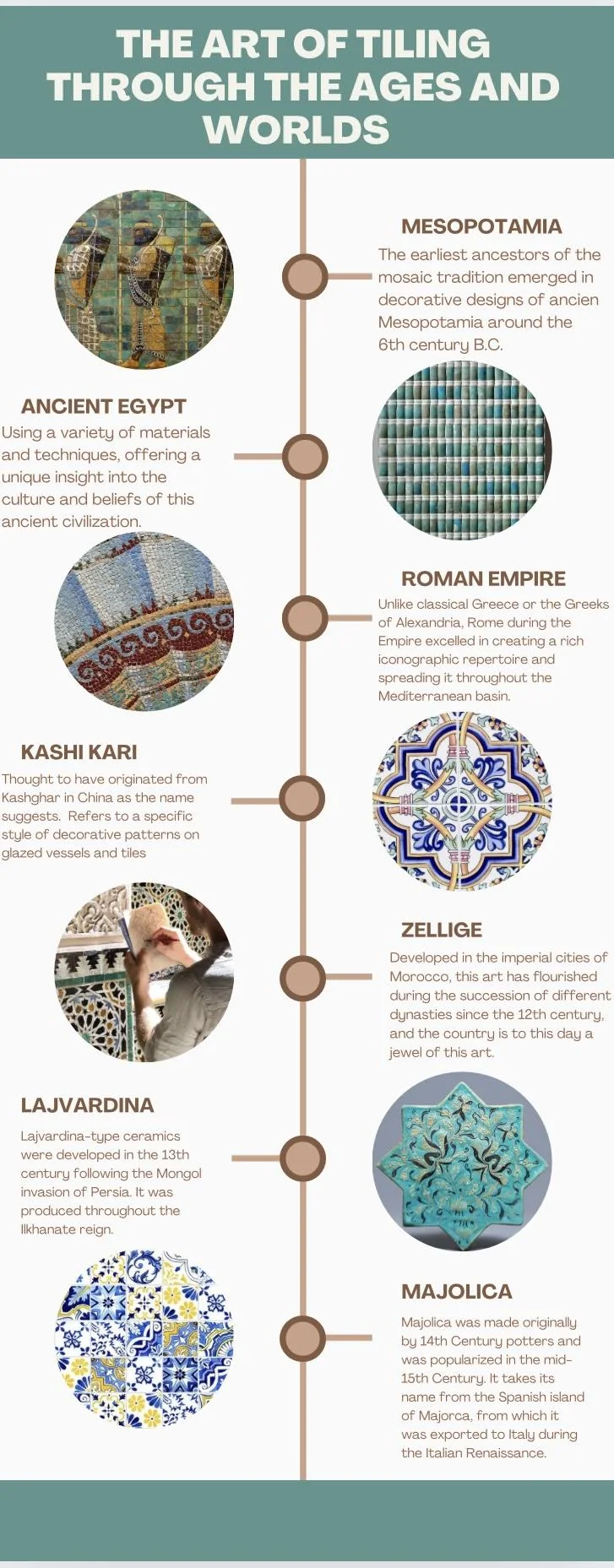
Mesopotamia, cradle of civilization, left us majestic ziggurats and palaces decorated with detailed bas-reliefs, while the Sasanian Empire is recognized for its sumptuous palaces and its refined arts, where decoration played a central role.
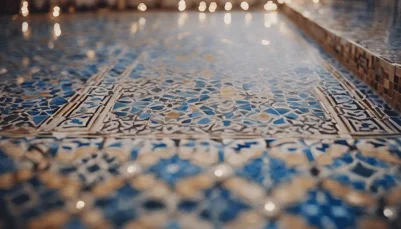
In Islamic culture, owing to the prohibition of human and animal representations, the art of decoration took on a particularly important place. Artists developed complex geometric patterns, arabesques and sublime calligraphy to adorn mosques, madrassas and palaces.
This decorative art not only embellished the structures, but also served to express the spirituality and the intellectual depth of Islamic culture. Thus, across the various eras and civilizations, architecture and the art of decoration have always been essential means of marking a unique cultural identity and leaving an indelible imprint.
A technique born in Morocco
While, at the beginning of the medieval era in North Africa, the tendency was to import ceramics from the neighboring Mediterranean countries or from the East, it is worth noting that the Moroccan dynasties always favored the development of a local technique, resting on a style of mosaic made from tile pieces individually chiseled by hand.
The book Kitab al-Zalidj fi al-Imara al-Islamiya bi al-Djazair mentions significant trade between Algeria and Tunisia for the importation of ceramics from the Italian city of Naples, destined to decorate the monuments and palaces of the cities.
It is important to distinguish zellige from the other forms of ceramic tiles. Zellige should not be confused with Mediterranean ceramics, which generally feature drawings, or with Oriental ceramics, often imported from Iran, found for instance in Algeria at Qalaa Banu Hamma, often erroneously attributed to zellige even though the aesthetics and the technique are different.
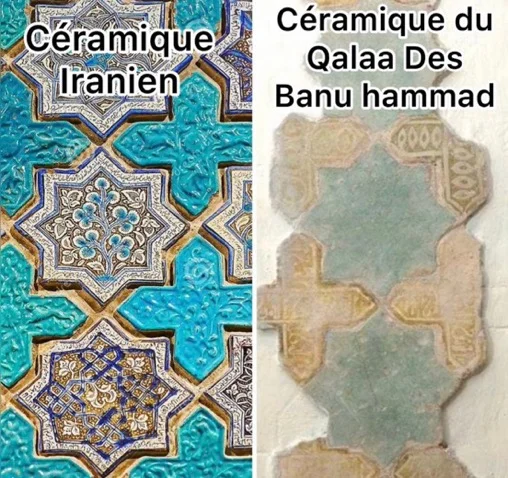
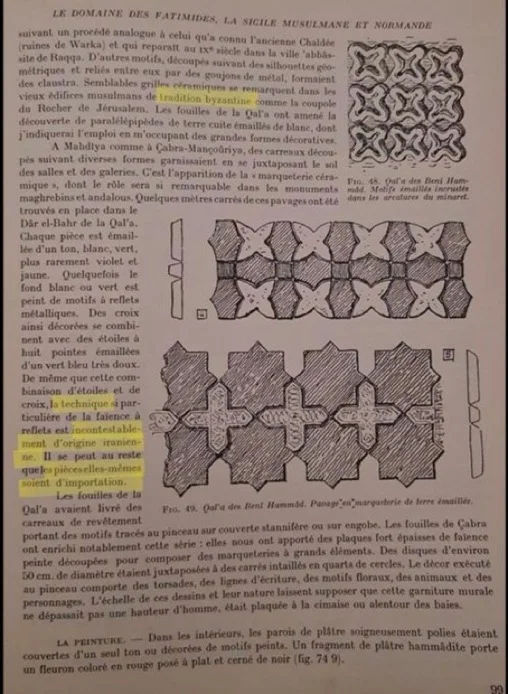
In the book De l’Empire romain aux villes impériales : 6000 ans d’art au Maroc, compiling archaeological analyses, it is indicated that the use of ceramic marquetry in Morocco, attested as early as the Almohad era, decorated minarets such as those of the Koutoubia and the Kasbah with complex geometric patterns.
“The use of ceramic marquetry is attested in Morocco, in the Almohad era, in the exterior decoration of the minarets of the Koutoubia Mosque and the Kasbah Mosque, second half of the 12th century. The faience friezes adorning the upper facade of the minaret or the top of the lantern tower compose a rectilinear decor of juxtaposed white and turquoise-blue geometric elements.”
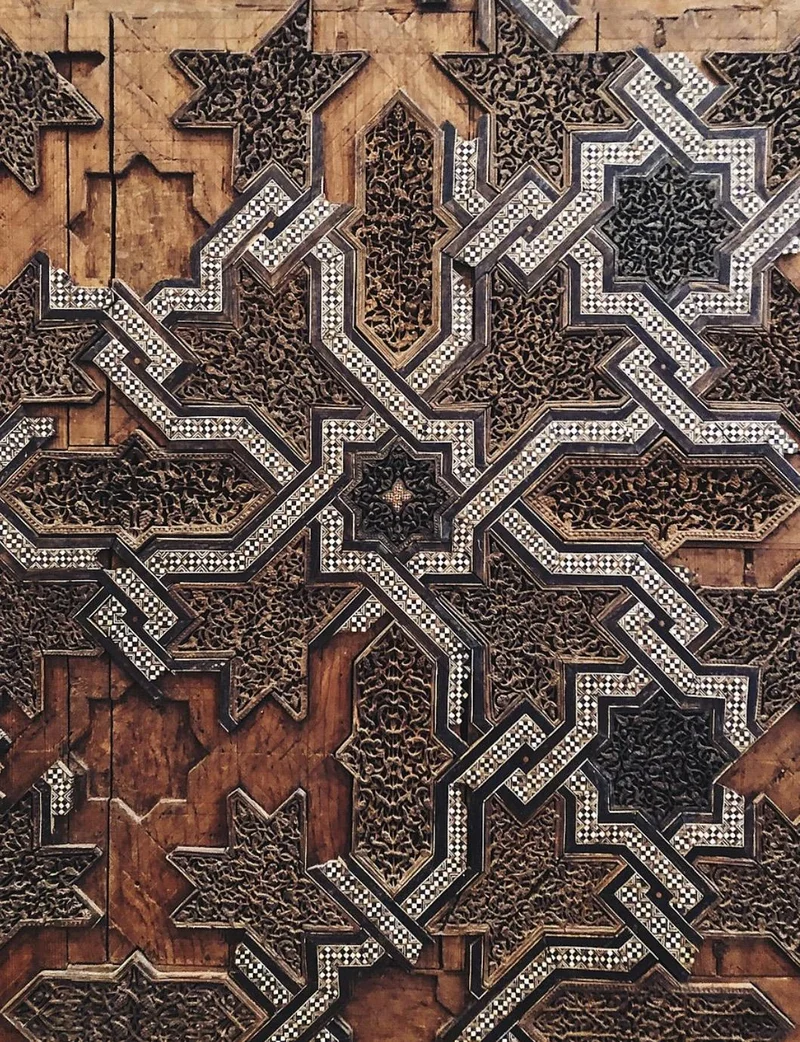
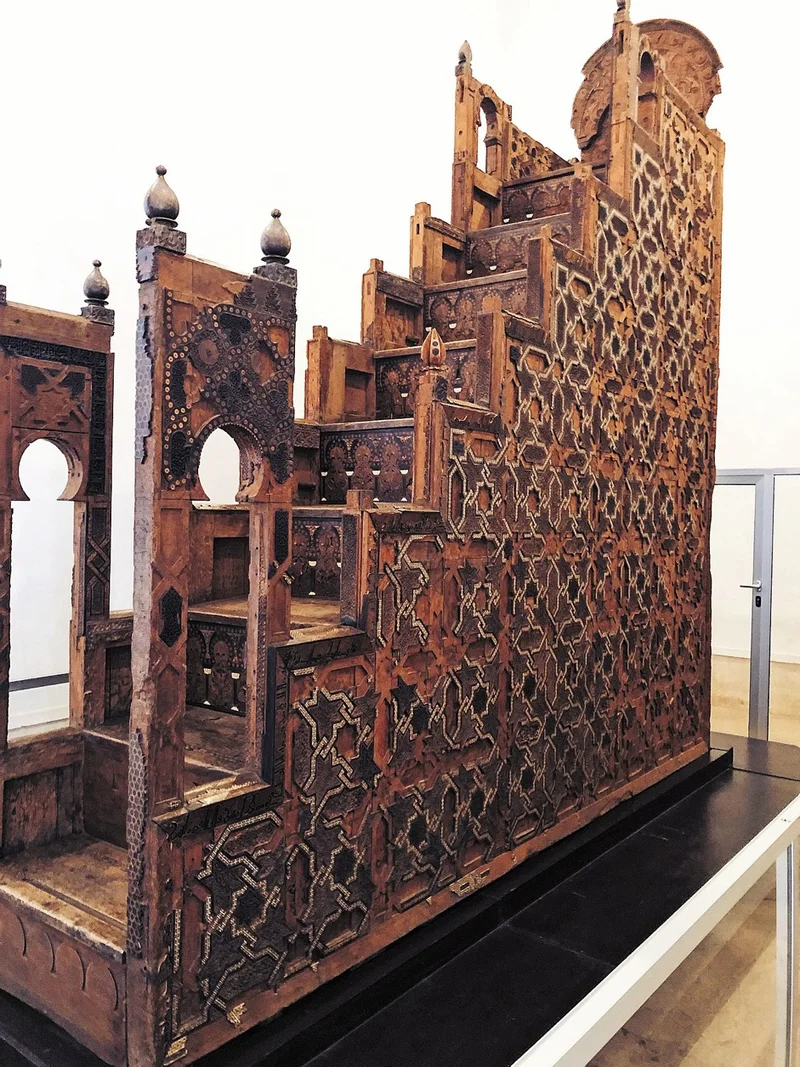
Others, whose movement recalls the swastikas, proceed from the eight-pointed star and the three-tenon rectangle. Against the ochre renders and the warm-toned paintings, the enamels of these large-scale faience marquetries took on their full value.
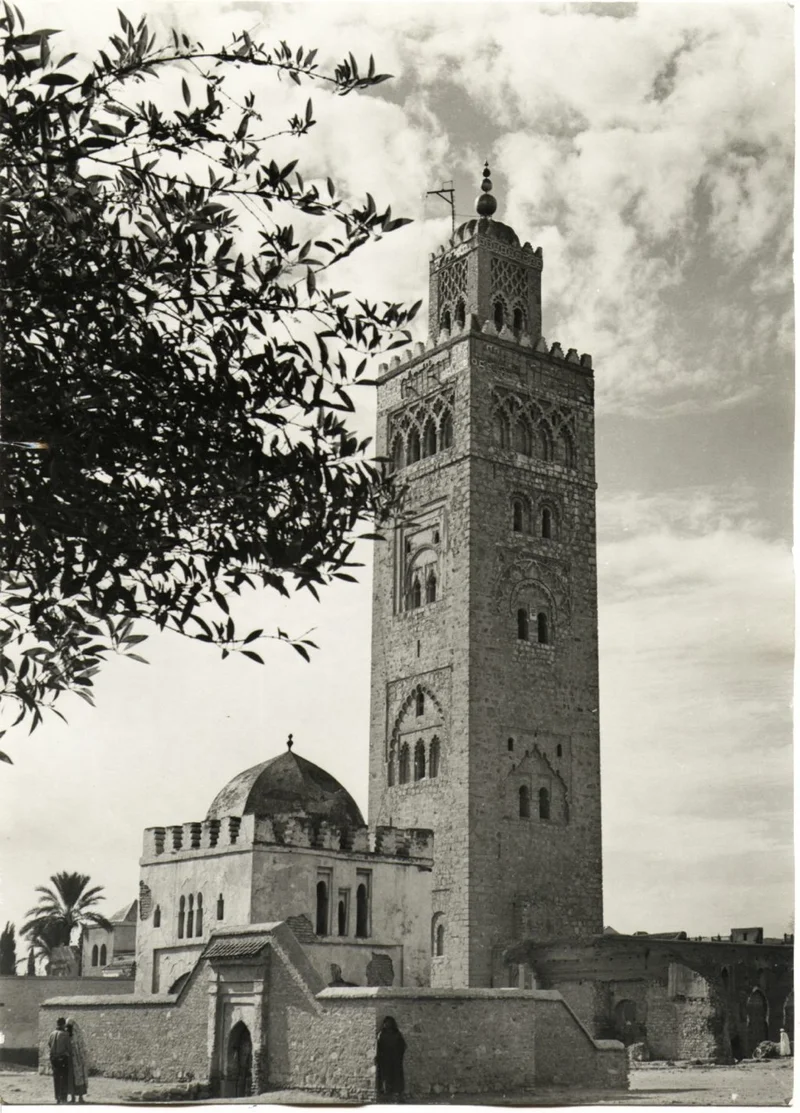
The preservation of these minarets is owed to the careful technique of their cladding: large faience slabs were pierced, before firing, with several holes. Should we see in this the herald of the zelliges that would enjoy great vogue under the Marinids?
More than half a century later, indeed, we witness the development of polychrome faience marquetry, designated by the term zelliges, involving small elements cut, after firing, from the tile glazed in a single tone.
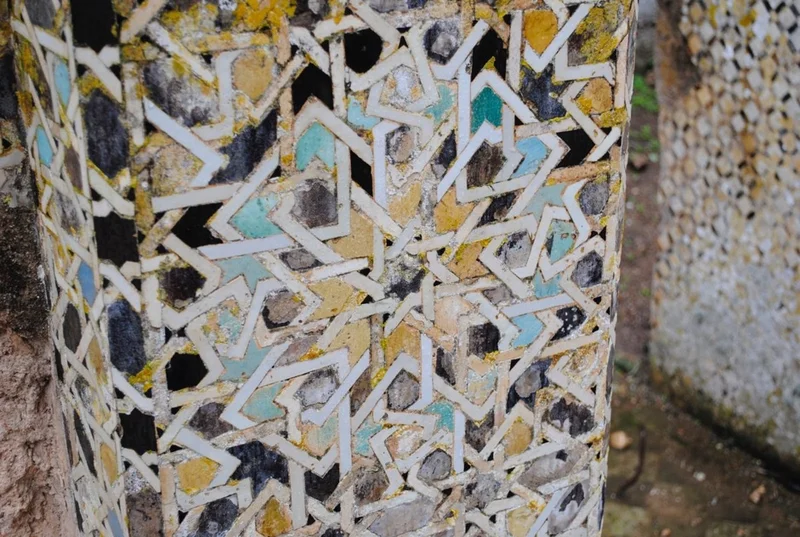
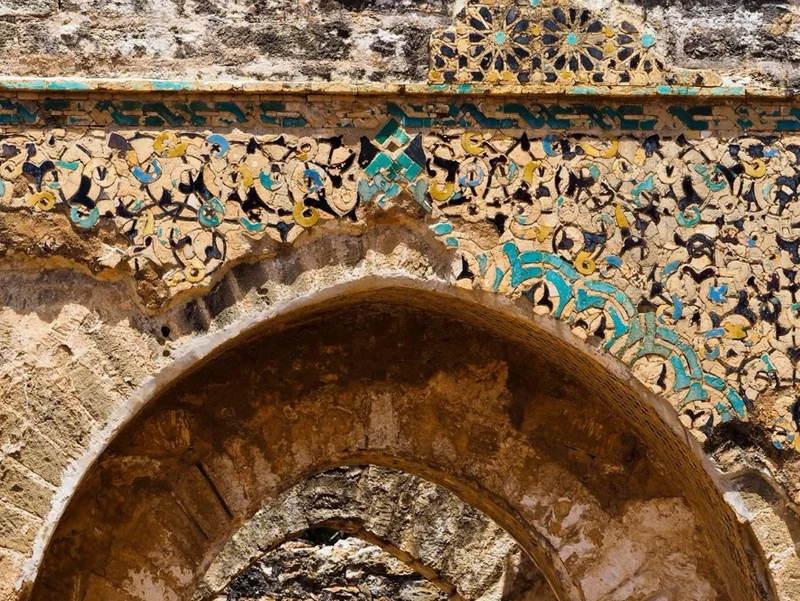
The presence of faience used as cladding at the Seffarine madrassa of Fes (1321-1323) seems to support the hypothesis of the Moroccan origin of this technique. Other religious buildings do not appear to have ignored it: the great mosque of Taza (enlarged in 1294), and that of Fes Jdid (founded in 1276 and restored, it seems, in 1395).
The Marinid expansion
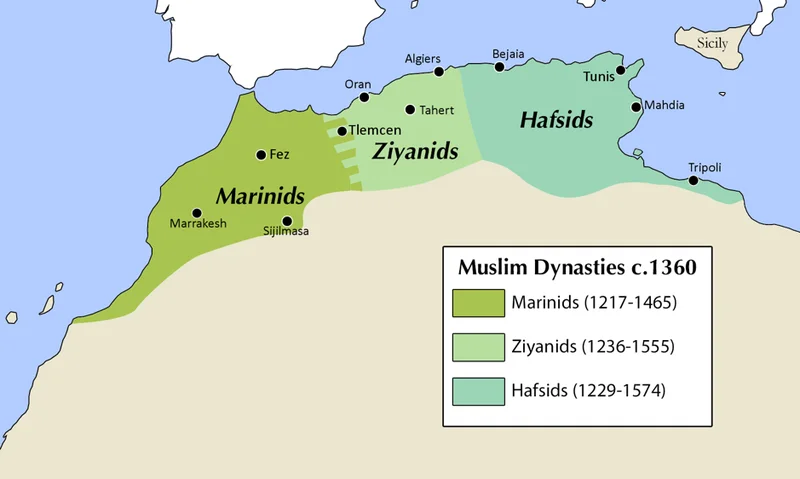
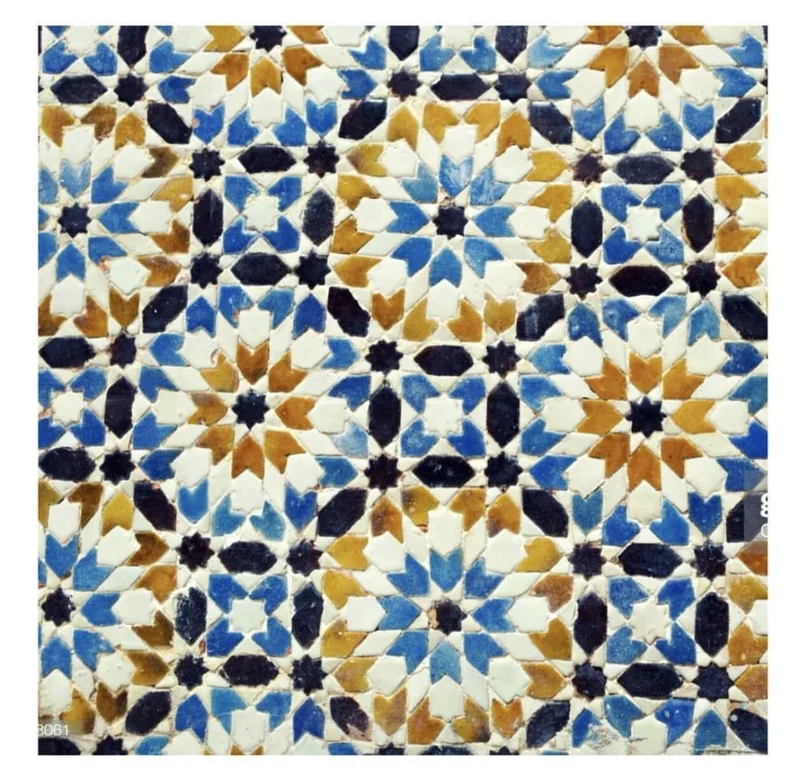
In the 14th century, during the reign of the Marinids in Morocco, the art of zellige experienced a notable expansion. Artisans improved their technique, broadening their color palette and creating increasingly complex patterns such as hexagons, stars and lozenges. In this era, the discovery of the double-firing method for clay tiles, along with the introduction of polychrome enamels, represented significant advances.
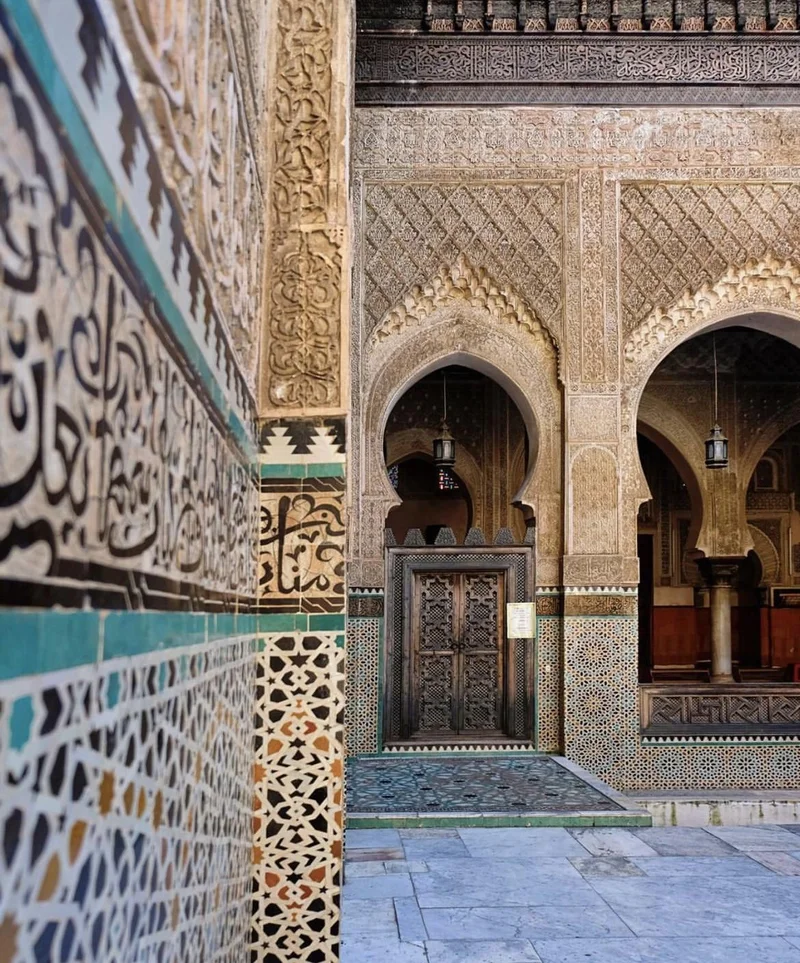
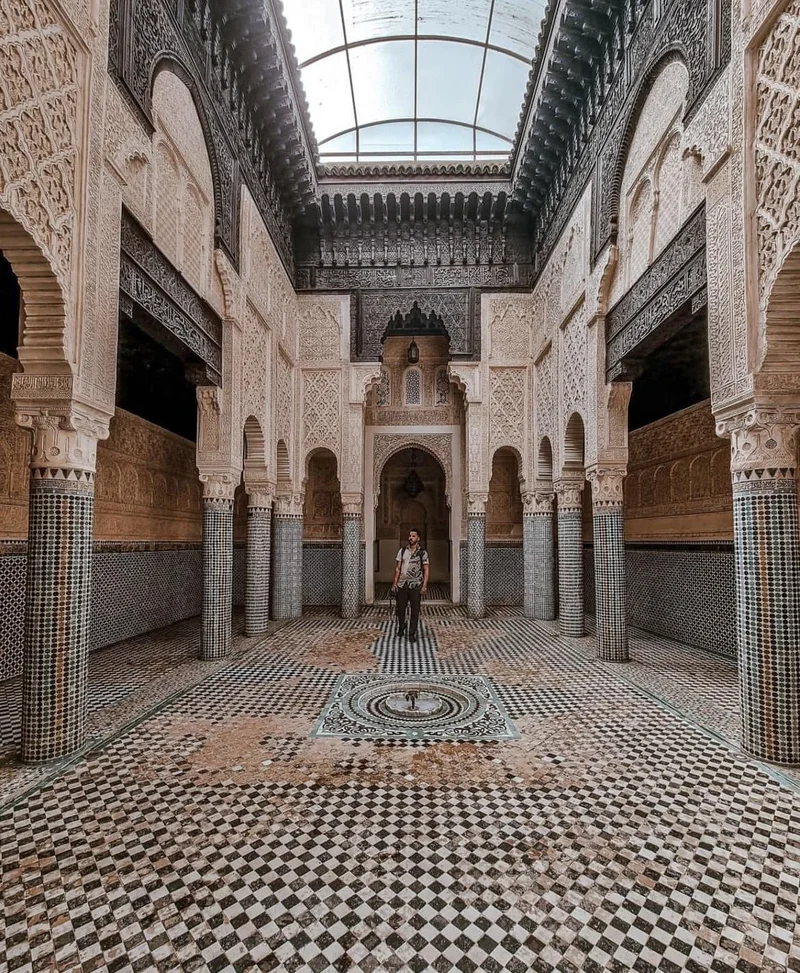
The Marinid madrassa of Sale, also known as the madrassa of Abu al-Hassan or the madrassa of Attalaa, is an ancient school built in the city of Sale, in the Rabat-Sale-Zemmour-Zaer region of Morocco. It was erected between 1333 and 1341 by the sultan Abu al-Hasan ben Uthman.
Zellige became highly prized as a decorative element for palaces, mosques and mausoleums, granting it a central position in Moroccan architecture. Under the Marinids, zellige was elevated to the rank of art, considered an essential expression of their cultural identity.
Several texts from the Marinid era associate zellige with Morocco. Among them, the accounts of the Muslim travelers Ibn Battuta and al-Omari, who roamed the whole of North Africa, describe zellige as specifically tied to the city of Fes. The presence of this technique across North Africa would certainly have been reported had it been known at the time.
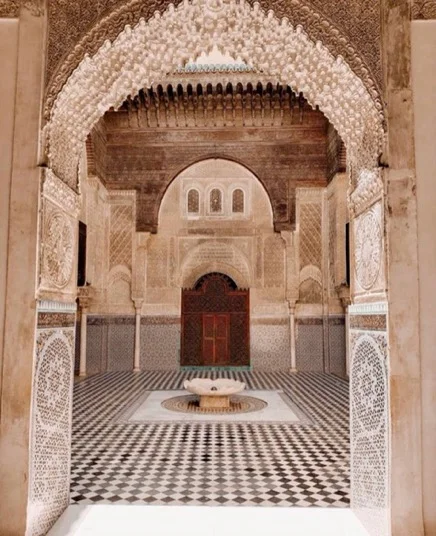
In this period, the predominant motifs included stars, flowers and complex geometric designs. A varied color palette, ranging from white, black and green to yellow, red and blue, lent a rich and diversified aesthetic.
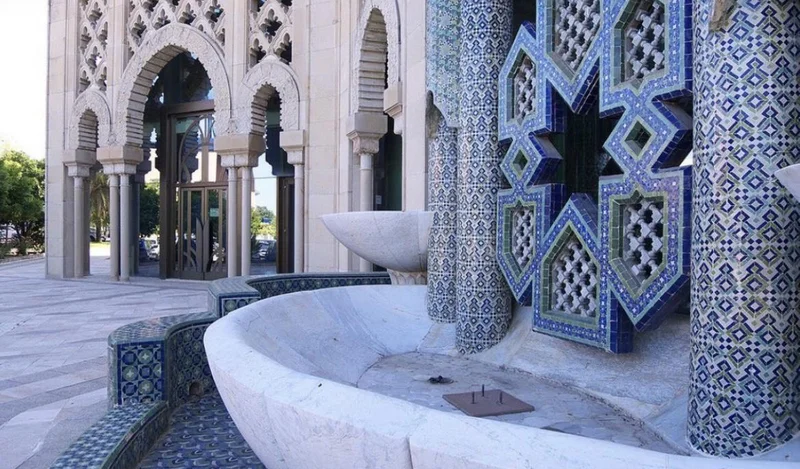
Zelliges elegantly adorn walls, floors, fountains and basins, revealing the wealth and the beauty of Moroccan craftsmanship in the era of the Marinids.
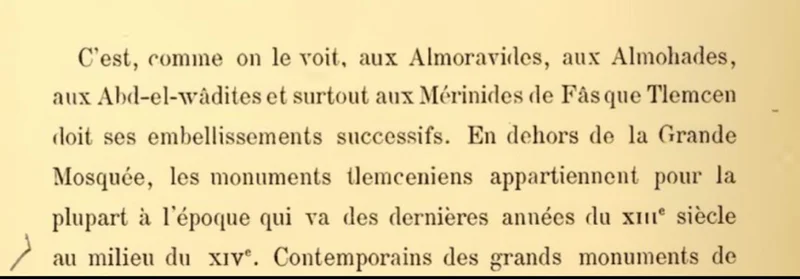
Researchers such as Alfred Bel and the brothers William and Georges Marcais, distinguished for their work on Islamic civilization, archaeology and arts in Algeria, brought to light the link between the presence of zellige in Algeria and the Moroccan architectural influence through their archaeological research.
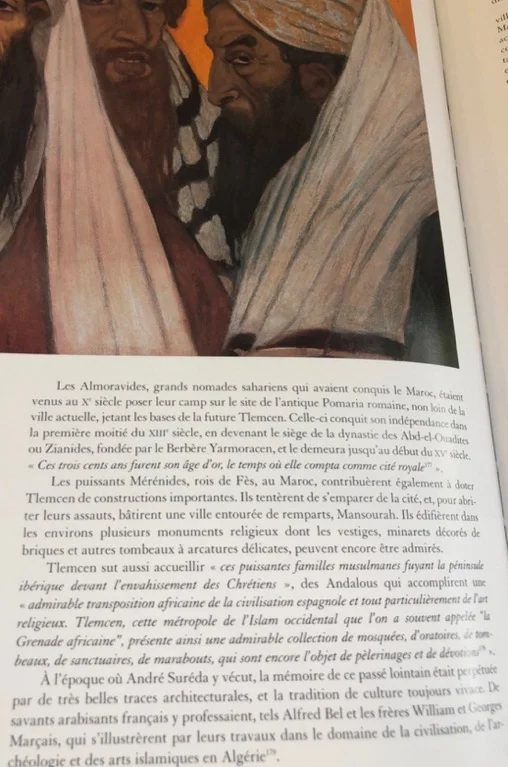
“The powerful Marinids, kings of Fes, in Morocco, also contributed to endowing Tlemcen with important constructions. […] They built several religious monuments of which vestiges remain, minarets decorated with bricks and other tombs with delicate arcatures.”
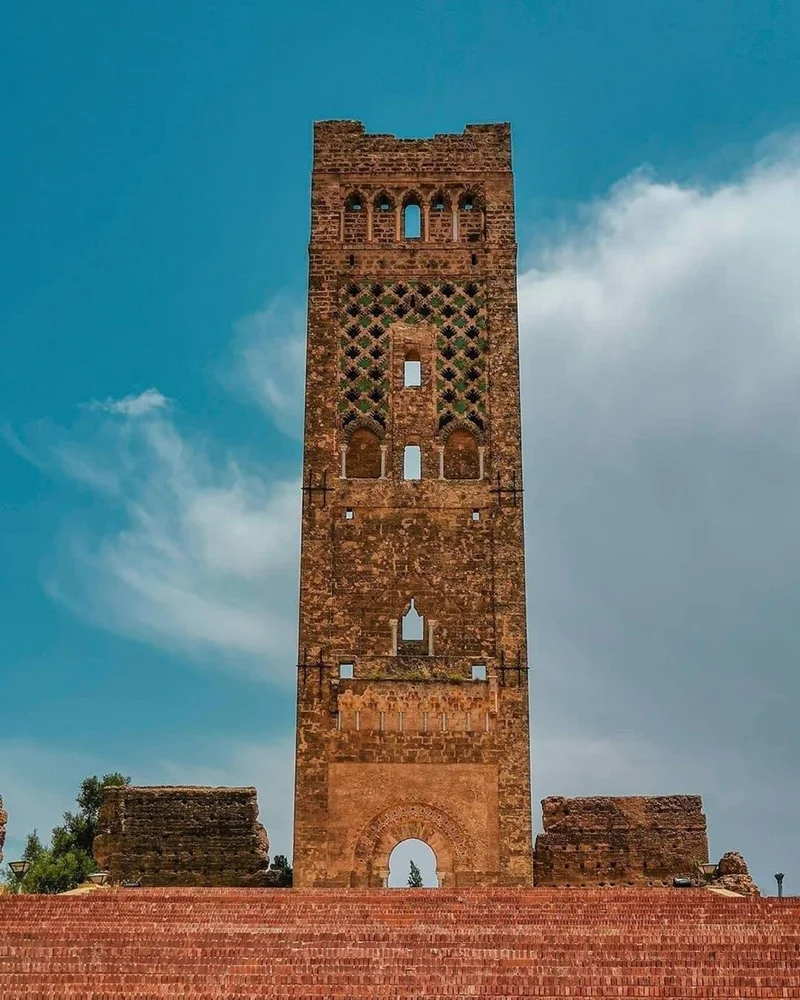
Dr Fares Masdour, professor at the University of Blida, underlines:
Moroccans have left a very special imprint in the field of Islamic architecture, such that no Algerian mosque is devoid of their mark and decoration.
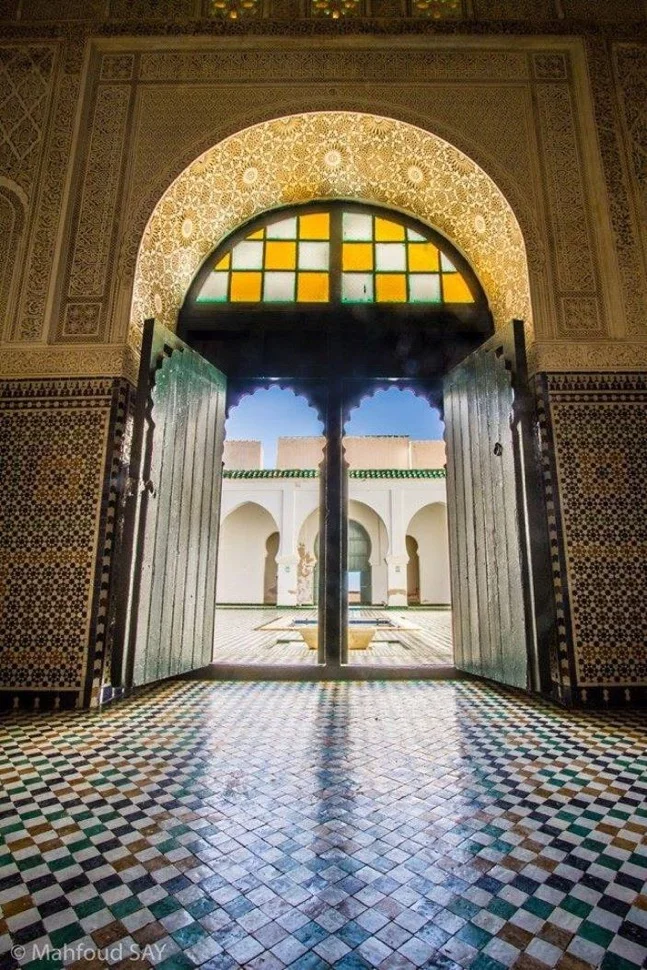
The Saadian apogee
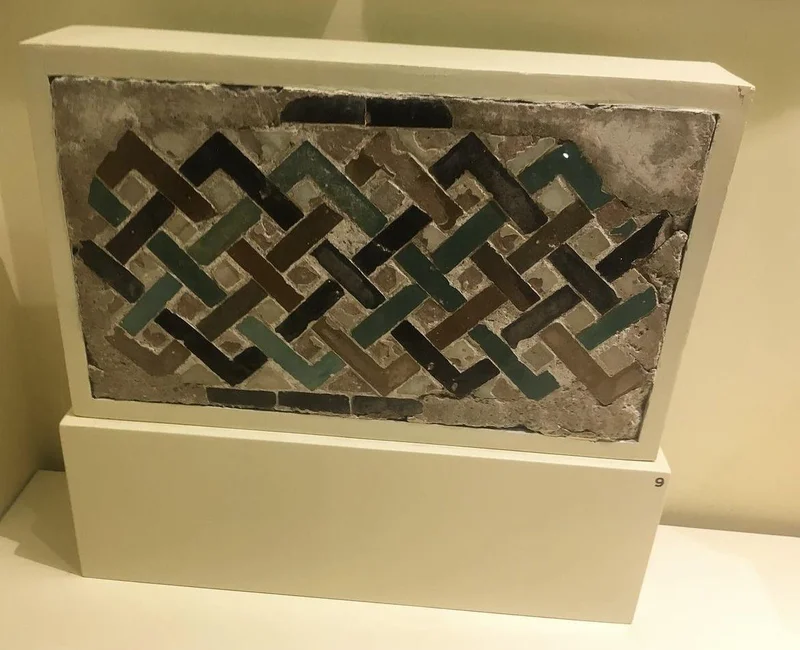
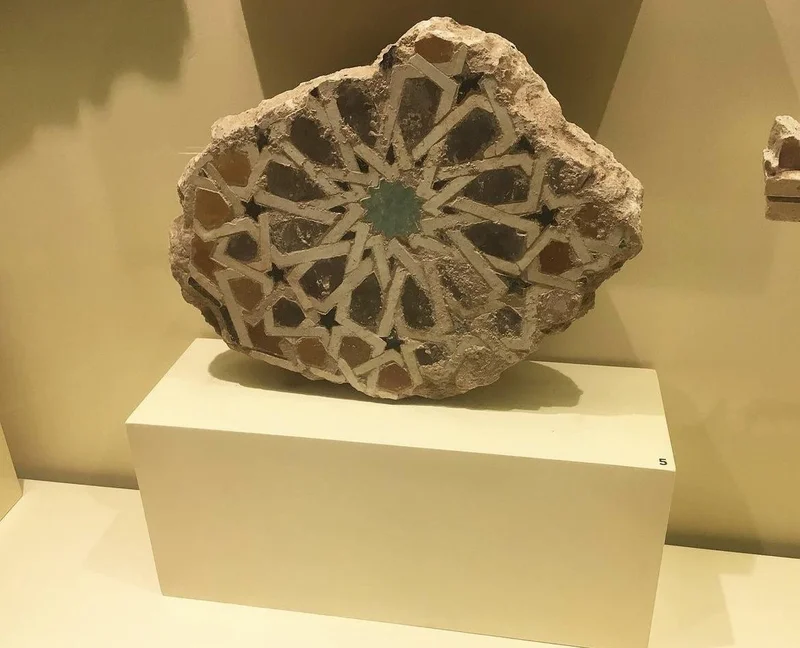
In the 16th century, zellige reached its apogee under Morocco’s Saadian dynasty, renowned for its passion for art and architecture. Their use of zellige to decorate the tombs of sovereigns and religious buildings was particularly remarkable.
The Saadian tombs were adorned with intricate, colorful zelliges, creating impressive geometric patterns. The tomb of the Saadian dynasty in Marrakech, for instance, which houses several members of the royal family, perfectly illustrates this artistic use of zellige.
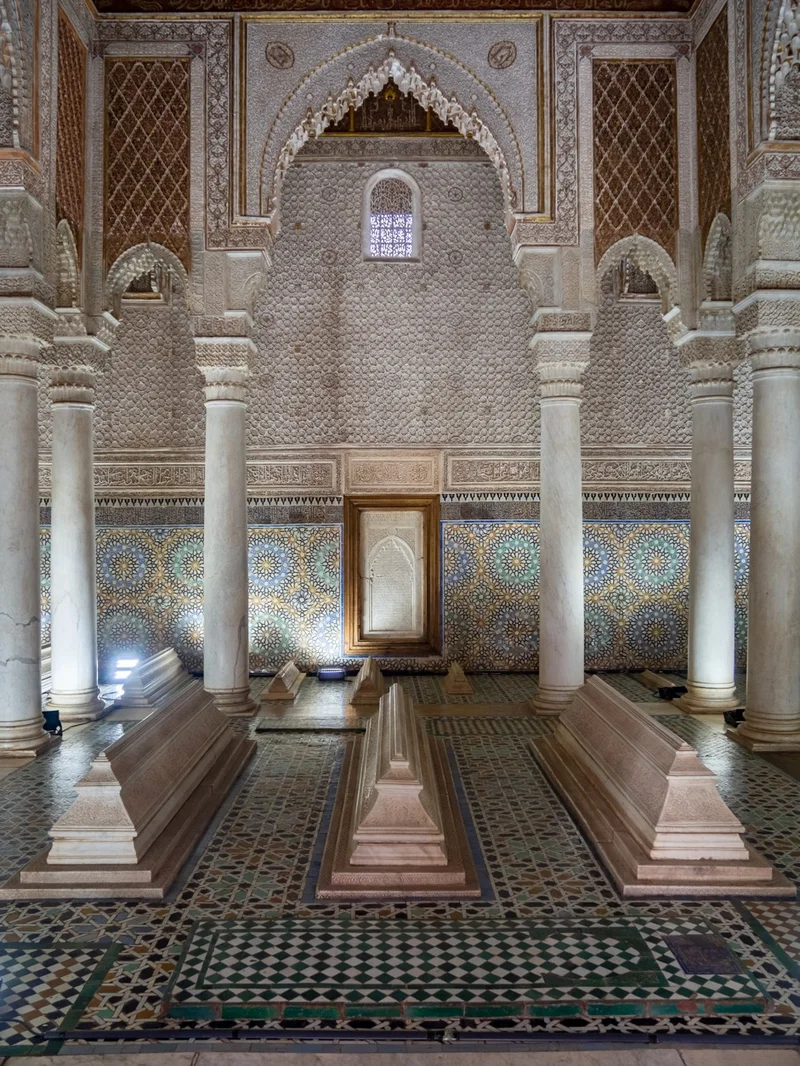
In religious buildings, zellige embellished walls and floors, offering patterns that evoked divine perfection. Mosques, madrassas and zawiyas were arrayed in intricate, colorful zelliges, creating an atmosphere of calm conducive to reflection.
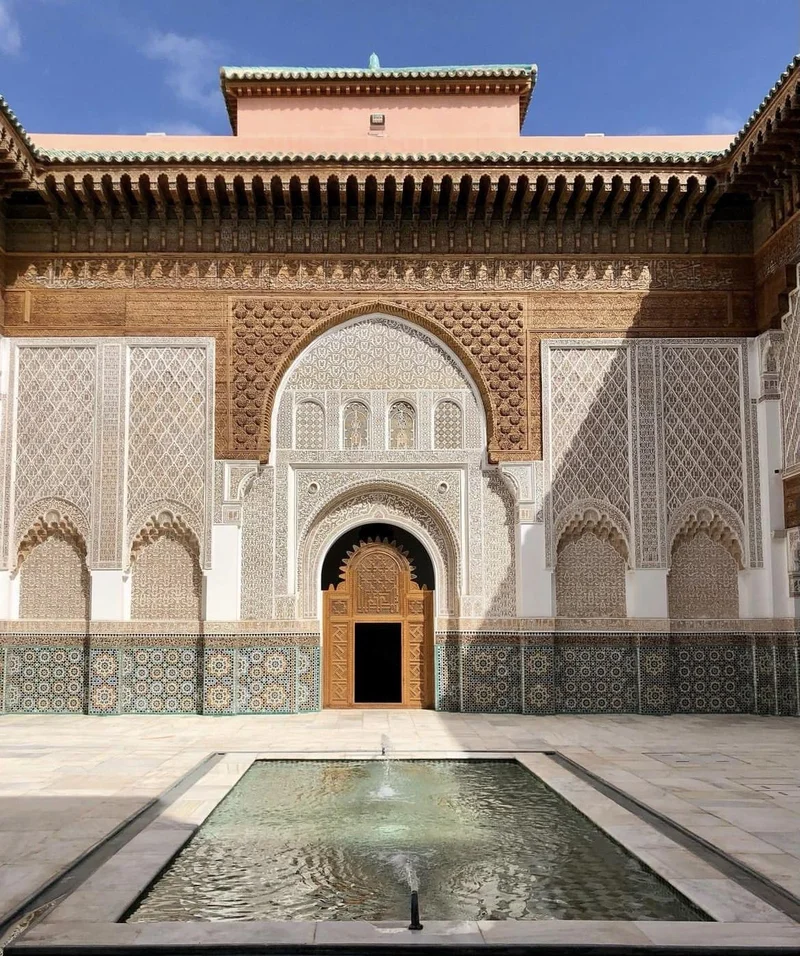
The Saadians also innovated in the making of zelliges, introducing techniques such as the use of wooden molds to produce patterns in series. This allowed for a faster and more efficient production of zelliges, widely employed in the construction of palaces and fortifications.
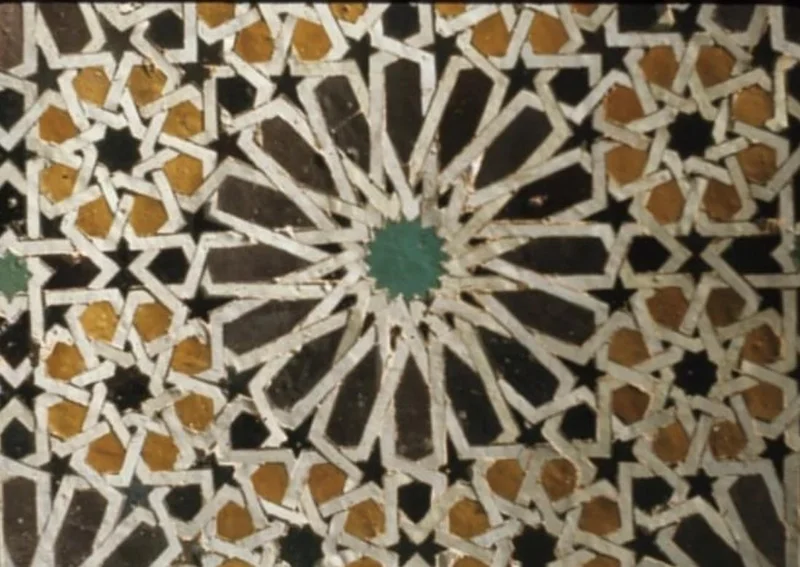
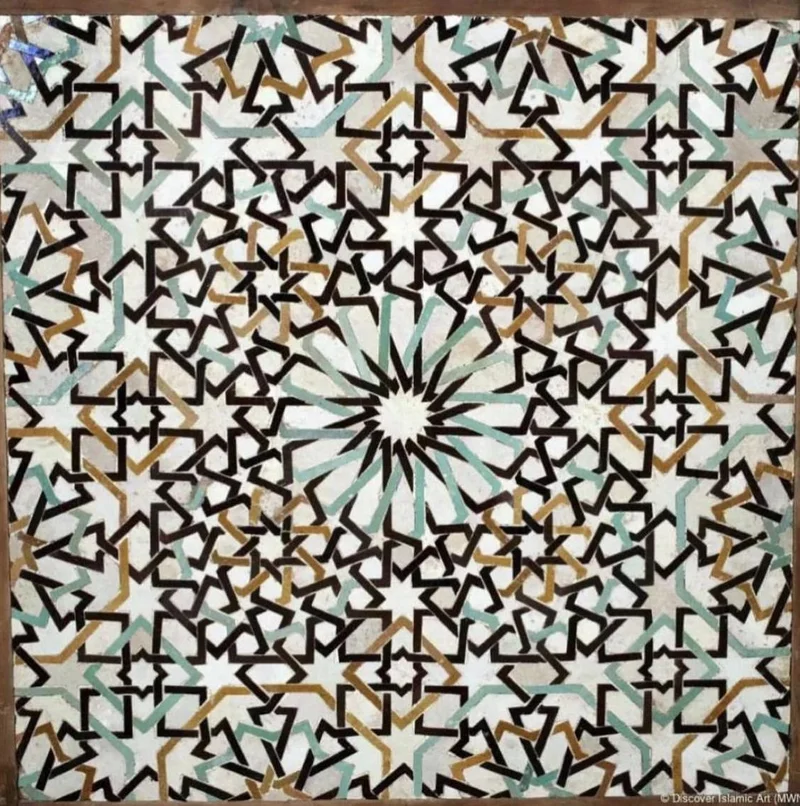
In the 16th century, zelliges displayed a more varied color palette than ever, with warm tones such as red, yellow and orange, as well as cool shades such as blue, green and white. Geometric patterns remained popular, but floral motifs and calligraphic inscriptions also embellished the zelliges.
This period was marked by great creativity and a remarkable refinement for zellige. Under the Saadians, this art was widely used to decorate the tombs of sovereigns and religious buildings, underlining the importance of religion and culture in the Moroccan society of the time.
Manufacturing techniques were perfected to produce more complex patterns, while the diversity of the colors employed enriched this key element of Moroccan art and architecture, whose influence endures in Morocco’s urban landscape today.
Zellige in the contemporary world
Morocco stands out as the only country where the art of zellige is passed down from generation to generation, with entire families of artisans devoted to this craft, such as the Fakhari family of Fes. Handmade zellige tiles from Morocco are renowned as the most precious in the world. A captivating documentary explores not only the reasons behind this high value, but also the intensity and the complexity of the manufacturing process.
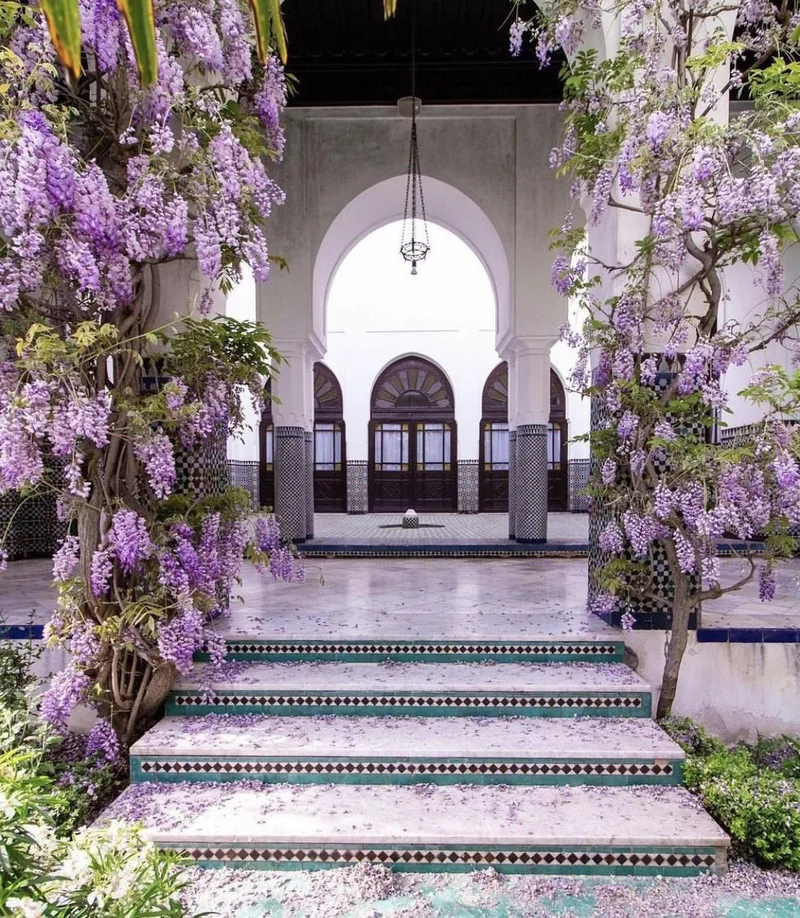
Moroccan craftsmanship has been highly prized internationally since ancient times. It is little known that Moroccan artisans are behind the embellishment of the Grand Mosque of Paris.
These Moroccan artisans put their expertise to work, installing Moorish decorations in the mosque to make it resemble al-Qarawiyyin. Around 450 Moroccan artisans contributed to the construction of the building, notably to its decoration.
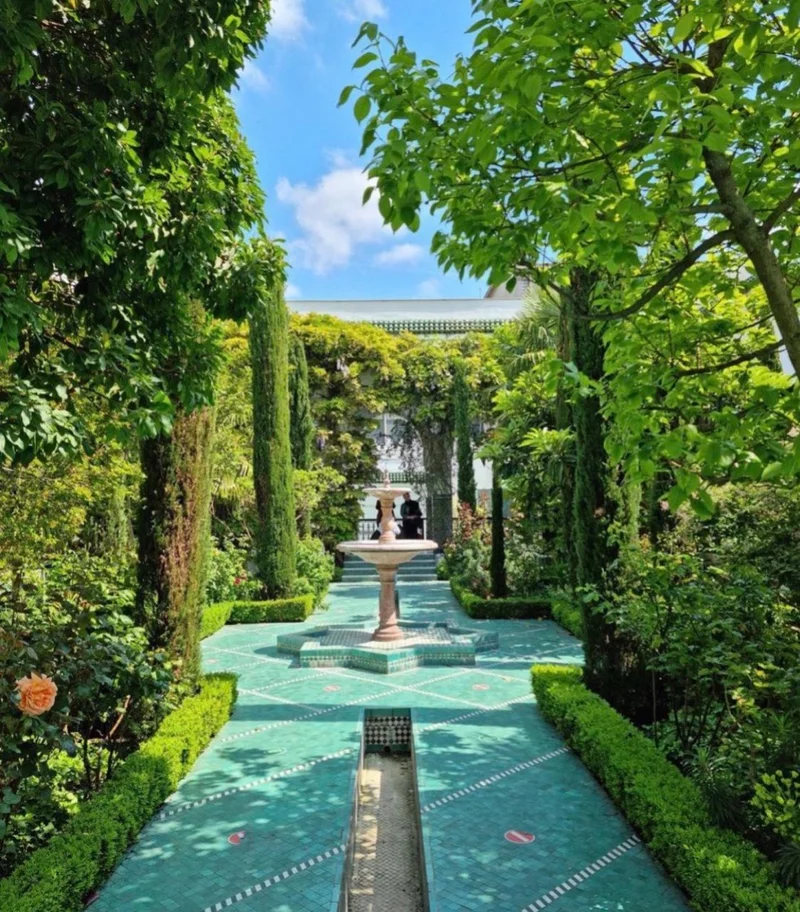
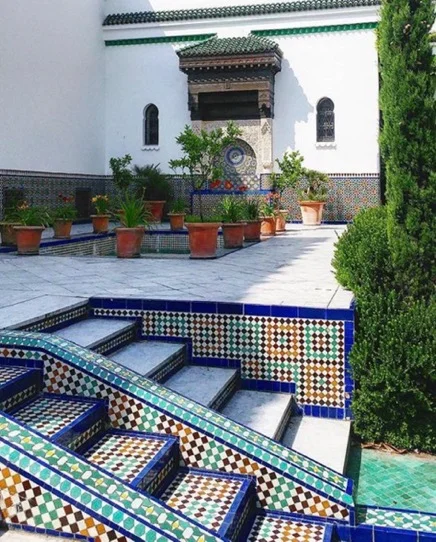
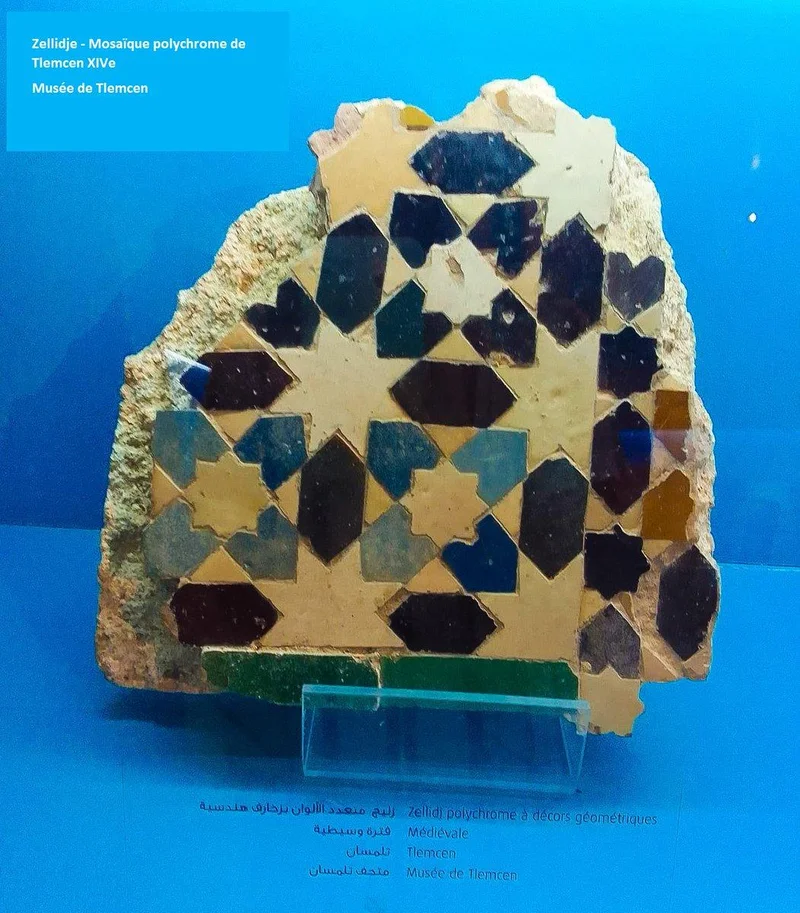
In Algeria, calling upon Moroccan artisans for the renovation and decoration of their precious heritage, including mosques, is a well-established practice. A remarkable example is the Mechouar Palace in Tlemcen, rebuilt under the supervision of Moroccan artisans. At the inauguration of the reconstruction works, Bouteflika underlined: “We must restore it with the help of the Moroccans (…) you do research in Morocco and you find solutions.”
This collaboration transcends the centuries, underscoring the expertise and the savoir-faire of Moroccan artisans, still in high demand in Algeria. A recent case illustrates this continuity: Nhari Abdel Ghani and his team were specifically chosen by Algeria to create the magnificent Moorish decorations of the Great Mosque of Algiers, perpetuating a rich and precious artisanal tradition. In the book “La protection de la vie locale en Algerie”, published in 1931, it is attested:
In Tlemcen, the Muslims who wanted a decoration inspired by the Hispano-Moorish traditions had to call upon Moroccan artisans for the plaster carving and the faience claddings.
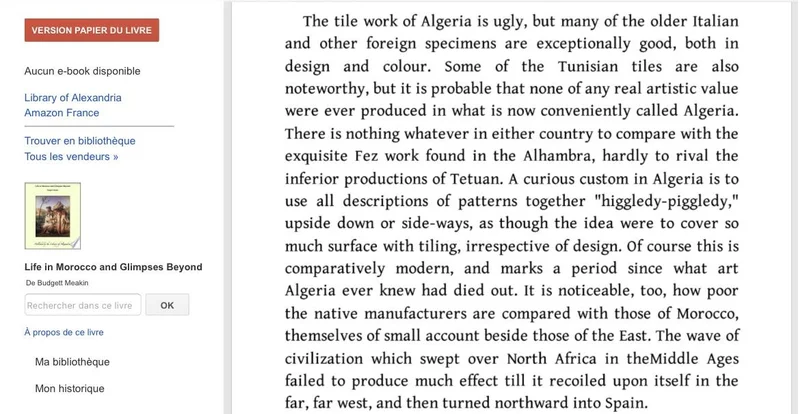
Even before the Protectorate period, many chroniclers reported an aesthetic distinction. The explorer and anthropologist Budgett Meakin (1866-1906) particularly underlined this singularity, testifying to Morocco’s renown as a land where the art of zellige stands clearly apart from the rest of North Africa.
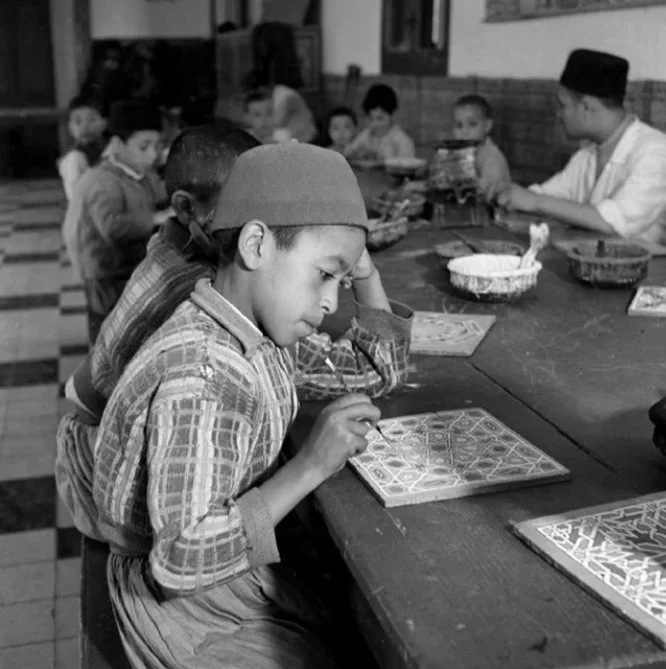
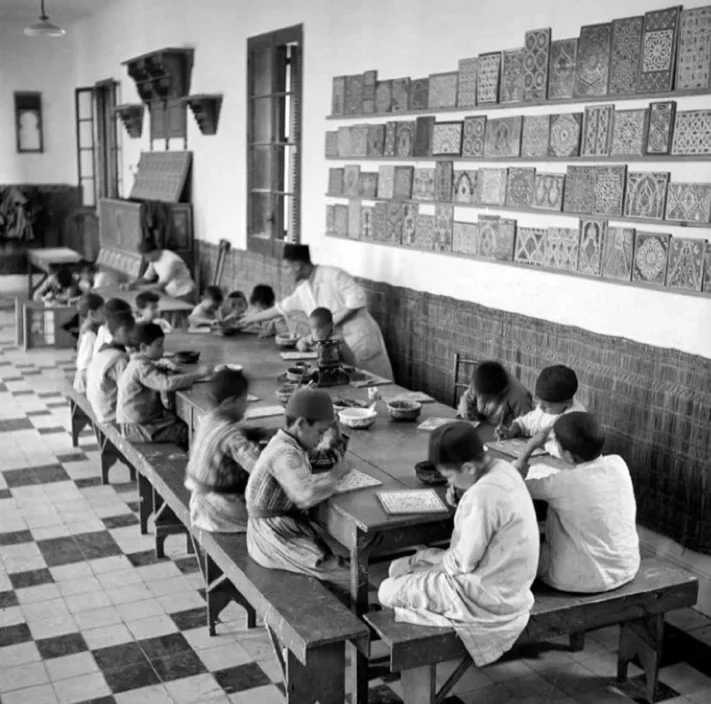
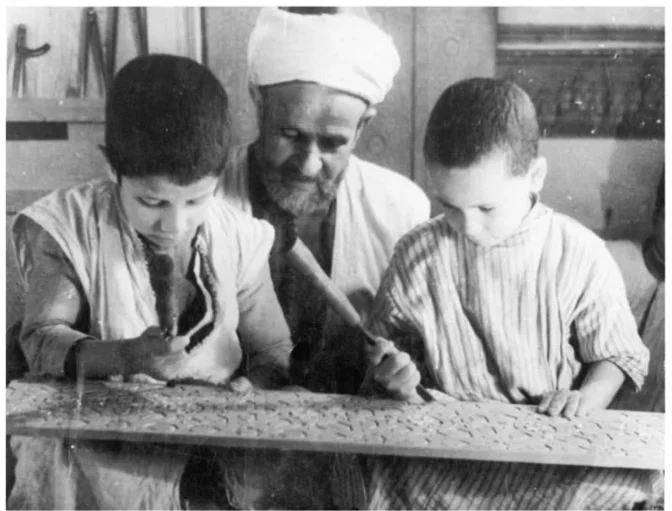
The constant demand for Moroccan craftsmanship around the world is partly explained by the existence of old schools in Morocco, specialized for centuries in the art of zellige. A remarkable example is the Dar Sanaa school in Tetouan, immortalized in the 1940s by Nicolas Muller.

Fes and Tetouan, two schools of zellige
Tetouan, a historic city renowned for zellige production, stands out for its unique techniques and materials. Tetouan zellige, influenced by Andalusi art, uses a clay rich in iron oxide, making the tiles less solid and difficult to cut.
Fes zellige, by contrast, made from a clay with less iron, allows for more precise cuts. Tetouan tiles are small, fired twice and not homogeneous in color, while those of Fes are carved after firing, with a smoother surface.
Tetouan zellige is in decline, unlike that of Fes, which is still preserved.
The decline of Tetouan zellige can be explained by several factors. On the one hand, the number of specialized artisans is shrinking, notably for lack of a new generation to take over. On the other, the production conditions, such as the use of a clay rich in iron oxide, make the process more complex and the tiles less resistant, reducing their competitiveness compared with the tiles of Fes. As a result, this ancestral technique risks gradually disappearing.
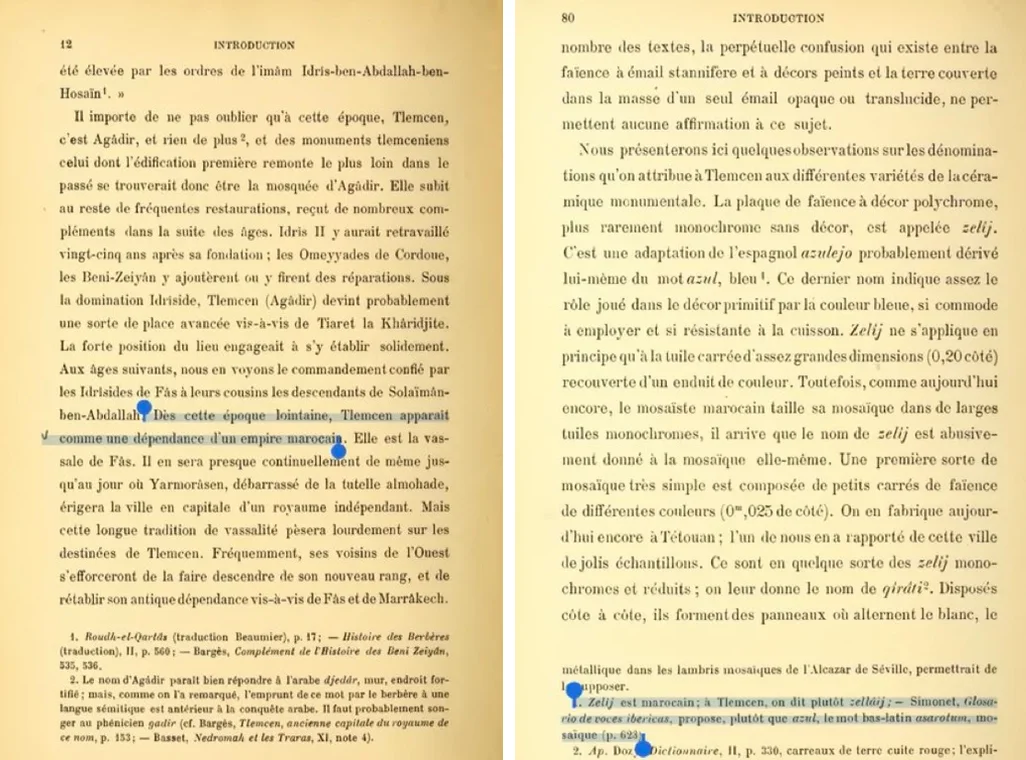
The renown of Tetouan’s artisans has likewise been recognized across North Africa for centuries, as underlined by the book Monuments Arabes de Tlemcen by the Marcais brothers, which inventories the city’s buildings and architectural elements. In its lexicon and its introduction, this book mentions zellige, native to Morocco and executed by the Moroccan mosaicists of Tetouan to renovate the city’s historic buildings.
An international influence
The international spread of zellige has been greatly facilitated by specialized companies, such as Ait Manos, founded by Ghalia Sebti and Tawfik Bennani. This Casablanca-based company, renowned for its creativity, has for nearly 40 years been adorning sumptuous interiors from Jeddah to New York with its zellige works.
There are also, notably, the companies Tiles of Ezra, Zellige Gallery, Moresque, Catrau, Maison Zellige and Atelier Maloukti among others, all specialized in the production of zellige in Morocco for years now. Morocco remains, moreover, the only country where this savoir-faire is passed down from generation to generation within entire families of artisans — like the Fakhari family, mentioned above.
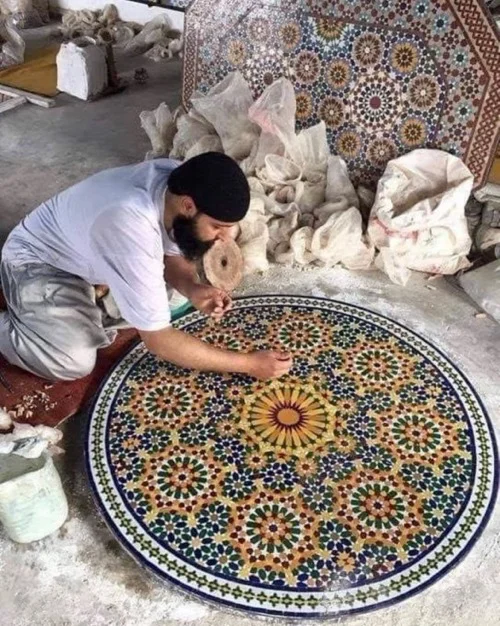
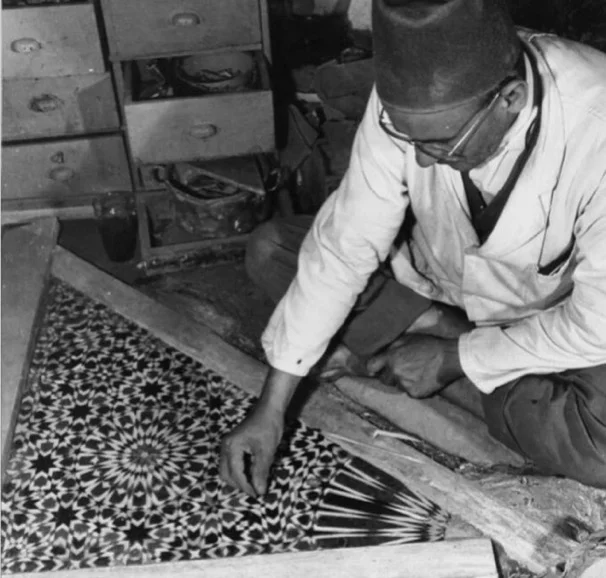
Moroccan craftsmanship is indeed sought after internationally: it can be found in Malaysia as well as in Oman, or even in Spain. In Spain in particular, Moroccans are often chosen to maintain and renovate the palaces of Andalusia, a choice that resonates with a rich history of cultural exchanges and influences. Moroccans perpetuate and build upon the direct legacy of the Andalusi heritage.
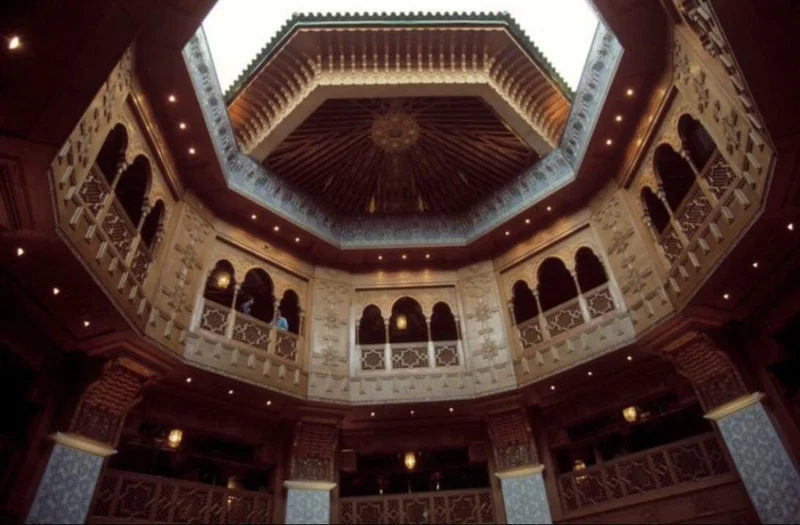
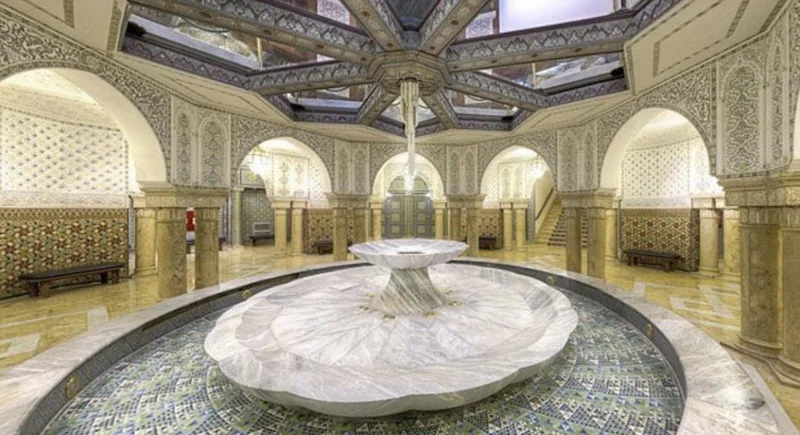
One of the most recent examples of this influence is the Moroccan Pavilion in Seville, realized under the direction of King Hassan II. It is therefore crucial to protect this art against any form of inadequate appropriation, and to fully appreciate the devotion of the Moroccan artisans who have been embellishing these places for centuries.
“De l’empire romain aux villes impériales : 6000 ans d’art au Maroc”, Paris, 1990
“Monuments Arabes de Tlemcen”, Marçais brothers
“Life in Morocco and Glimpses Beyond”, Budgett Meakin
“Travail marocain en Algérie : Une présence remarquable malgré les difficultés”, DW Journal
Senhadji, Les Mosquées en Algérie ou l’espace reconquis : l’exemple d’Oran, Dalila Senhadji
مسالك الأبصار في ممالك الأمصار, Al ’Umari
كتاب الزليج في العمارة الإسلامية بالجزائر في العصر التركي