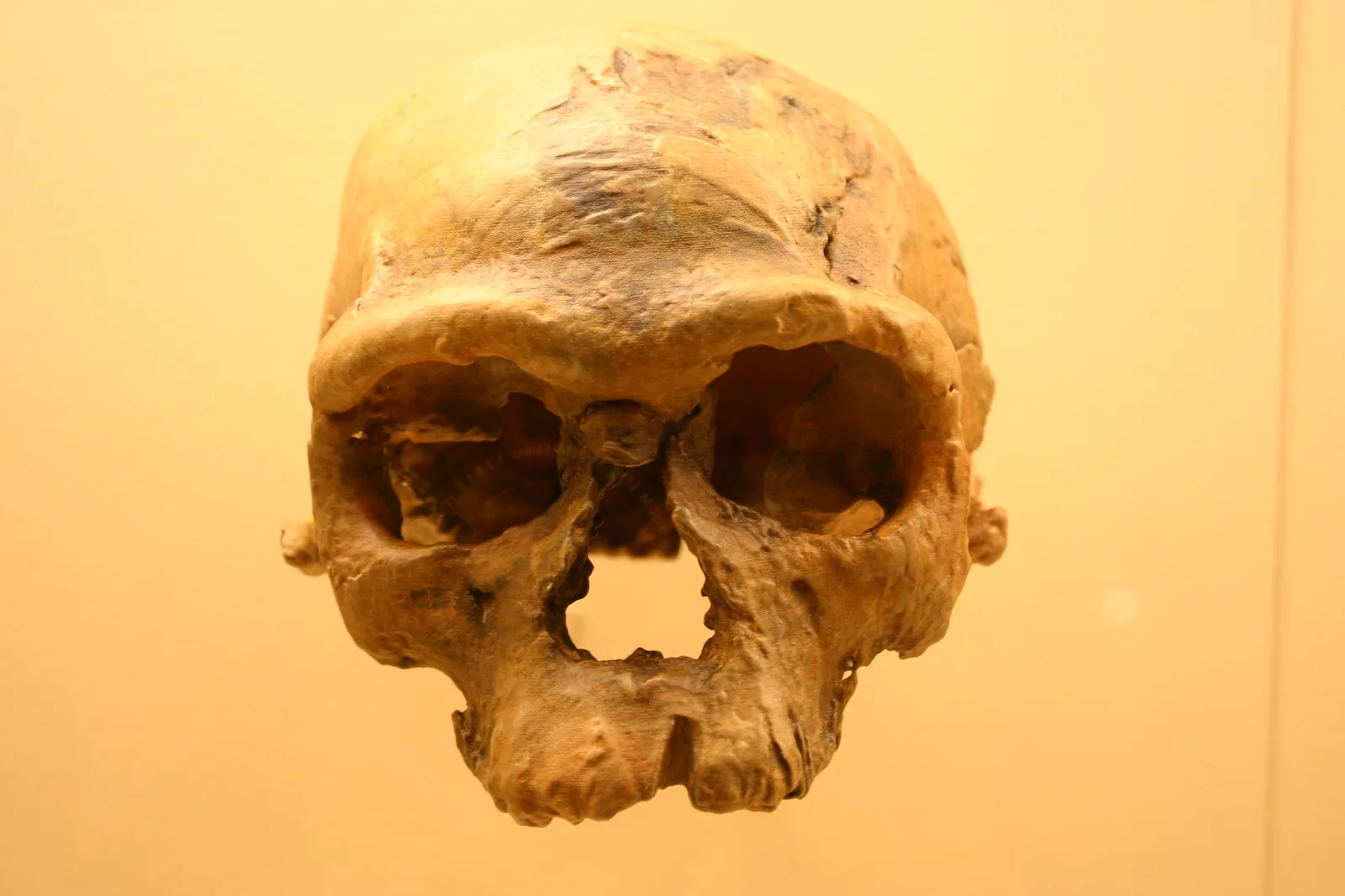
On September 13, 2026, the journal Heritage published a digital facial approximation of the Jebel Irhoud hominin, whose fossils, dated to about 315,000 years ago, are the oldest attributed to Homo sapiens.
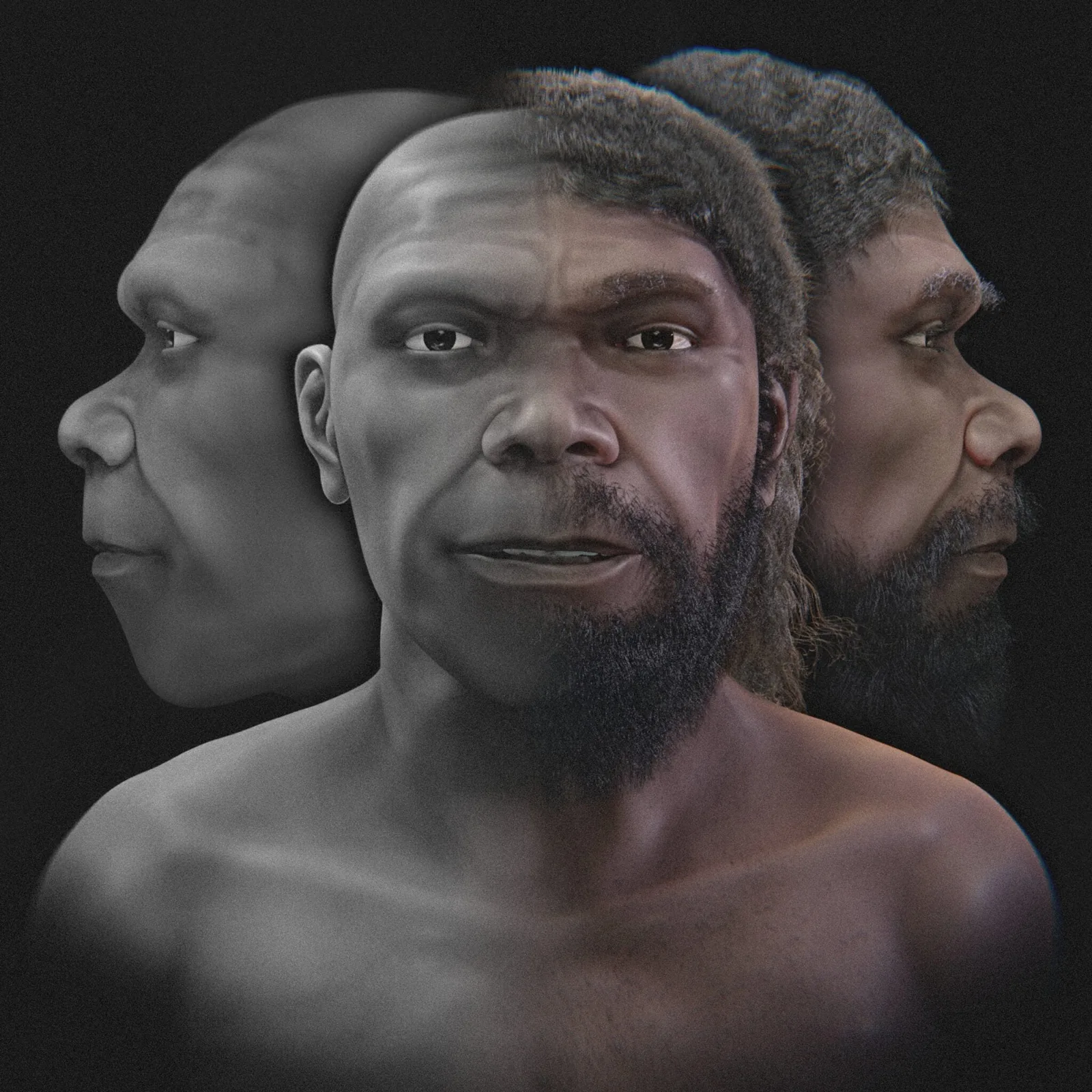
The study, signed by Brazilian facial reconstruction specialist Cicero Moraes with Australian, Italian and Malaysian researchers, starts from the composite skull that the Max Planck Institute for Evolutionary Anthropology in Leipzig released in 2017. The skull combines bones from three individuals found in the same layer of the site.
Using open-source software, the authors deformed a CT scan of a present-day adult until it fit the fossil’s geometry. Converted to brain volume, the resulting endocast gives 1,230 cubic centimeters, barely below the average for today’s adult men, put at 1,234.
The face, by contrast, belongs to another time: about 118 mm separate the outer rims of the orbits, against an average of 96.6 mm today. The skin and hair of the colored version are artistic interpretation.
The brain of the first Homo sapiens had thus already reached our size, though not yet our features, and Jebel Irhoud will remain the place where the species shows its oldest face.
Photo: Ryan Somma, CC BY-SA 2.0.