he joint plenary session opened at three in the afternoon on Monday, October 19, in the chamber of the House of Representatives in Rabat. Deputies and councilors sat together, summoned three days earlier by a joint statement from the speakers of both houses, Ahmed Touizi and Mohamed Ould Errachid.
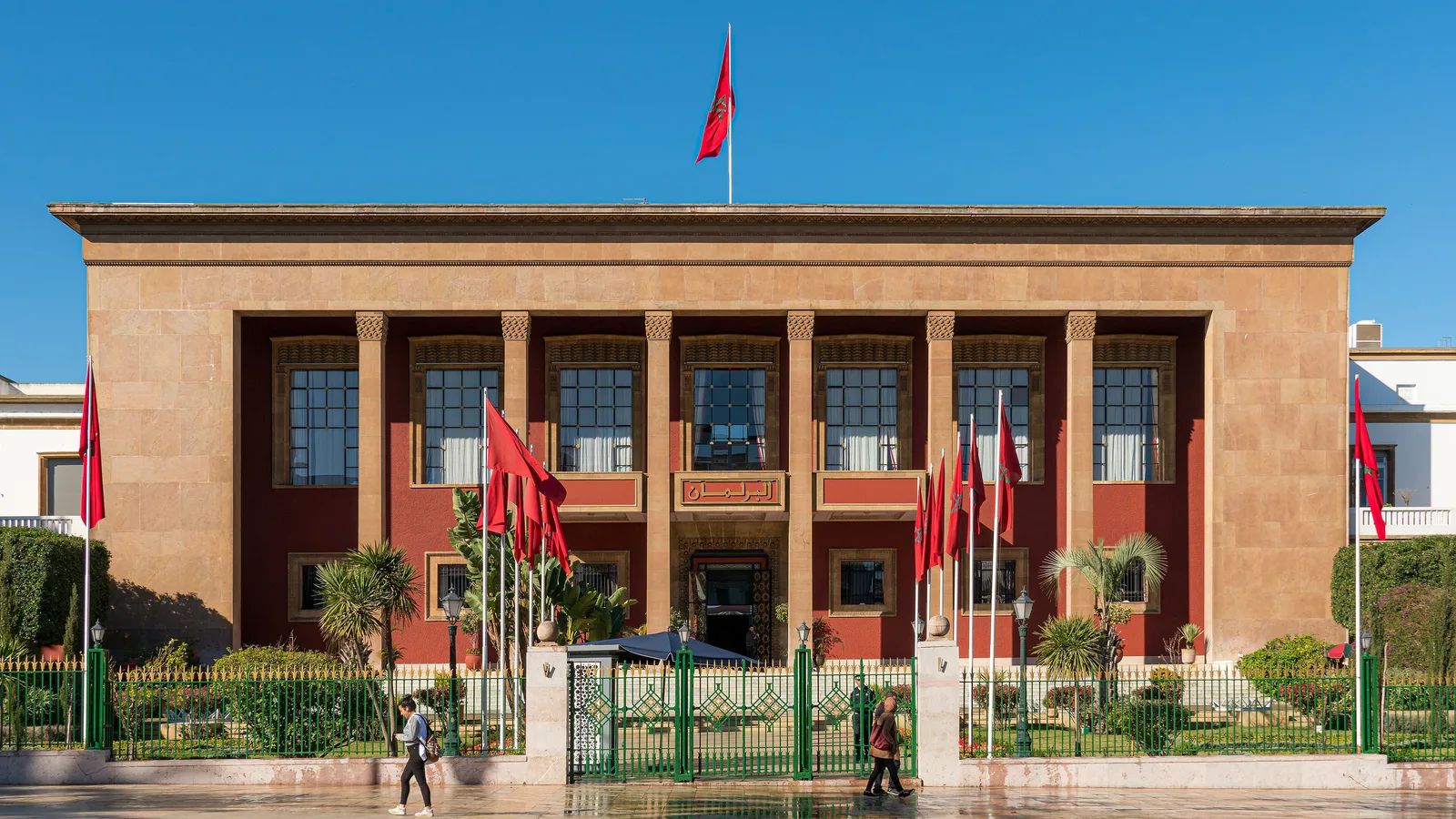
At the rostrum, Fatima Ezzahra El Mansouri began by thanking King Mohammed VI for the trust that had placed her at the head of the government, an honor in which she read the esteem the Sovereign holds for Moroccan women. It was in her own name, and in the name of the women of Morocco, that she spoke of the pride this trust inspired in them.
Three weeks after her appointment on September 29, and three days after the ceremony at which her team took the oath, the first woman to lead a Moroccan government presented to the two houses sitting together the program her executive pledged to carry out over the 2026-2031 term, as Article 88 of the Constitution requires. She spoke of it, MAP reported, as a “political and institutional contract” founded on the King’s trust and on the will voters expressed in the September 23 legislative elections. Thus, its accountability will be measured by the results in the daily lives of the latter.
The contract comes down to seven priorities and a handful of figures the press seized on at once. Let us go back over what it promises, what it puts numbers on, and what it keeps in the shadows, a few days before the vote that will decide whether the government is invested.
Seven priorities for a contract
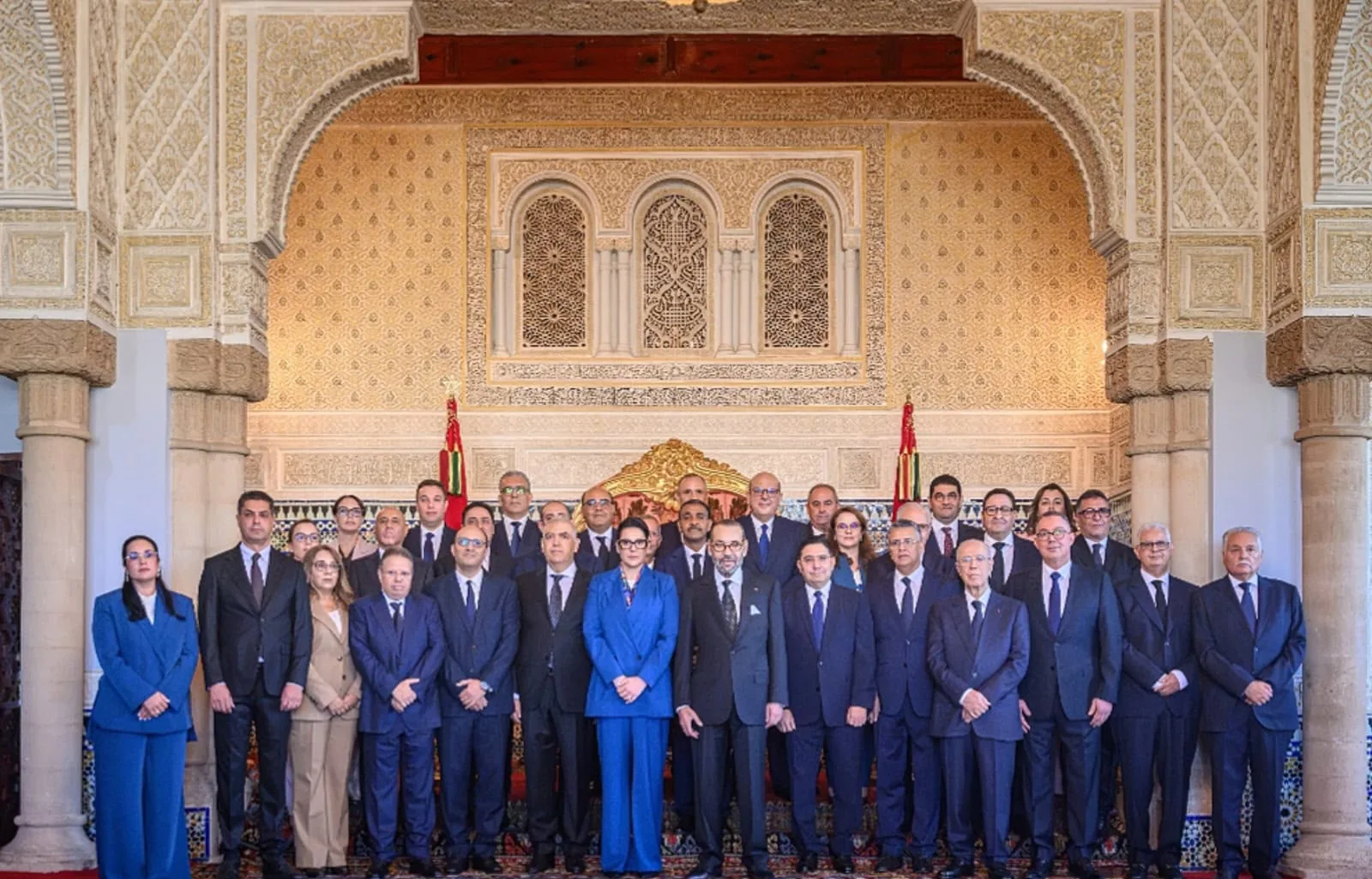
The program is built around seven pillars. The first consolidates the rule of law and the institutions, the second tackles corruption and rent-seeking in order to clean up public life, and the third sets out to preserve identity, citizenship and social cohesion. Then come the guarantee of a dignified life and the strengthening of the social state, as well as the integration of young people through education, training and decent work. The sixth pillar pairs strategic sovereignty with the Kingdom’s international standing, and the seventh promises a strong economy, able to pay for these social and sovereign ambitions.
The order is no accident, since the rule of law leads the way and the economy brings up the rear, as banker to everything else.
The head of government did not hide the finding on which the whole rests. Indeed, despite the reforms and the large-scale projects, she acknowledged according to MAP, the fruits of progress have not been shared equally among all social groups or all regions. Hence the formula that sums up her method: to move from widening social coverage to the quality of the service, from the volume of investment to its return, from a multiplicity of programs to their coherence and their effect.
The budget framework, for its part, comes down to four numbers, the government counting first on average growth of 5% a year between 2027 and 2031 and on inflation held at around 2% a year. It further intends to keep the budget deficit at 3% of GDP throughout 2026-2031 and to set public debt on a downward curve that is to bring it down by 2031 to about 62% of GDP. Add to this that the program relies on the private sector to carry two-thirds of national investment.
The price of the social state
The most awaited measure concerns direct social aid. The government is reworking its targeting, which now rests on households’ actual income, and will raise the amount from 500 to 1,000 dirhams by the end of the term, thus turning the aid into a lever for inclusion. Access to the job-loss allowance will also be widened, and income tax gradually reformed with a view to raising employees’ net pay.
For retirees, the minimum main pension will be raised gradually to 3,000 dirhams a month across all schemes. Besides this, widows will receive a full pension, equal to 100% of the main pension due to their late spouse, instead of the current 50%, with the rights of orphans preserved. You should know that this pledge rests on a broader reform of the pension system, which the head of government refused to reduce to raising the retirement age or revising contribution rates.
The electricity bill
A measure that looks more modest touches the daily life of many households. Eligible households will receive, for their main residence, an automatic social compensation equal to their monthly electricity bill when it does not exceed 100 dirhams, with no paperwork and no trip to an office. The PAM’s campaign pledge, which sought to make bills under 100 dirhams free, thus made its way into the government program. The text doesn’t say, however, what happens to higher bills.
One hundred thousand rural homes
For the countryside, a housing program will aim to rehabilitate or build one hundred thousand homes over the term, notably in emerging rural centers. Each eligible family will receive direct aid of 40,000 dirhams and free technical assistance.
On health, the program promises to speed up the royal social protection project toward universal and effective medical coverage, to secure the long-term future of compulsory health insurance (AMO) and to reform patient reception and emergency services.
The rule of law against rent-seeking
The second pillar is where the program goes on the offensive. The government intends to complete the national integrity system by criminalizing illicit enrichment and sanctioning conflicts of interest, under Article 36 of the Constitution. Public procurement serves as a lever too, since the law will require 30% of the value of contracts to be reserved for Moroccan small and medium-sized enterprises.
The text also targets middlemen and monopolies, which the head of government named clearly, in MAP’s French translation:
“Nous allons lancer une réforme structurelle pour réguler les marchés et lutter contre le monopole et l’intermédiation opportuniste, à la faveur d’un mécanisme dédié et des moyens appropriés, en coordination avec le Conseil de la concurrence.” (We will launch a structural reform to regulate markets and fight monopoly and opportunistic intermediation, through a dedicated mechanism and appropriate means, in coordination with the Competition Council.)
— Fatima Ezzahra El Mansouri, before the two houses of Parliament, October 19, 2026
The regions and Amazigh
In the name of territorial justice, financial transfers to the regions will reach at least 12 billion dirhams from 2027, with the aim of strengthening their resources and their autonomy.
A special fund of 2 billion dirhams will finance the implementation of the official status of Amazigh (ⵜⴰⵎⴰⵣⵉⵖⵜ), which the 2011 Constitution recognized as an official language alongside Arabic. A standing ministerial committee, attached to the head of government, will follow its integration into education, the administration, the courts, the media and public signage, and will publish the indicators every year.
The sovereignties
The sixth pillar speaks the language of sovereignty, starting with water. By 2031, the government intends to mobilize 1.8 billion cubic meters by speeding up the construction of seawater desalination plants. In 2030, renewables are to exceed 52% of the energy mix. In the fields, a dedicated plan will raise the share of national seeds from 20% to 50% over the term.
On the national cause, the program follows on from UN Security Council Resolution 2797, adopted on October 31, 2025, which it regards as a turning point. The government will go on defending the Kingdom’s sovereignty and territorial integrity and rallying support for the autonomy initiative within the framework of Moroccan sovereignty. It will also speed up the development of the Southern Provinces, which the text presents as the gateway to our African depth and Atlantic space.
As for Palestine, the executive reaffirms the Kingdom’s constant position on the Palestinian question and Al-Quds, and its commitment to a peaceful settlement based on the two-state solution, under the leadership of the King, Amir Al-Muminin (Commander of the Faithful) and chairman of the Al-Quds Committee.
The test of the vote
How many jobs does the program promise? The text puts forward no target for job creation or for the unemployment rate, Medias24 notes. However, the PAM had pledged during the campaign that it would create at least one million net jobs over five years and bring unemployment down by 2031 to 7%.
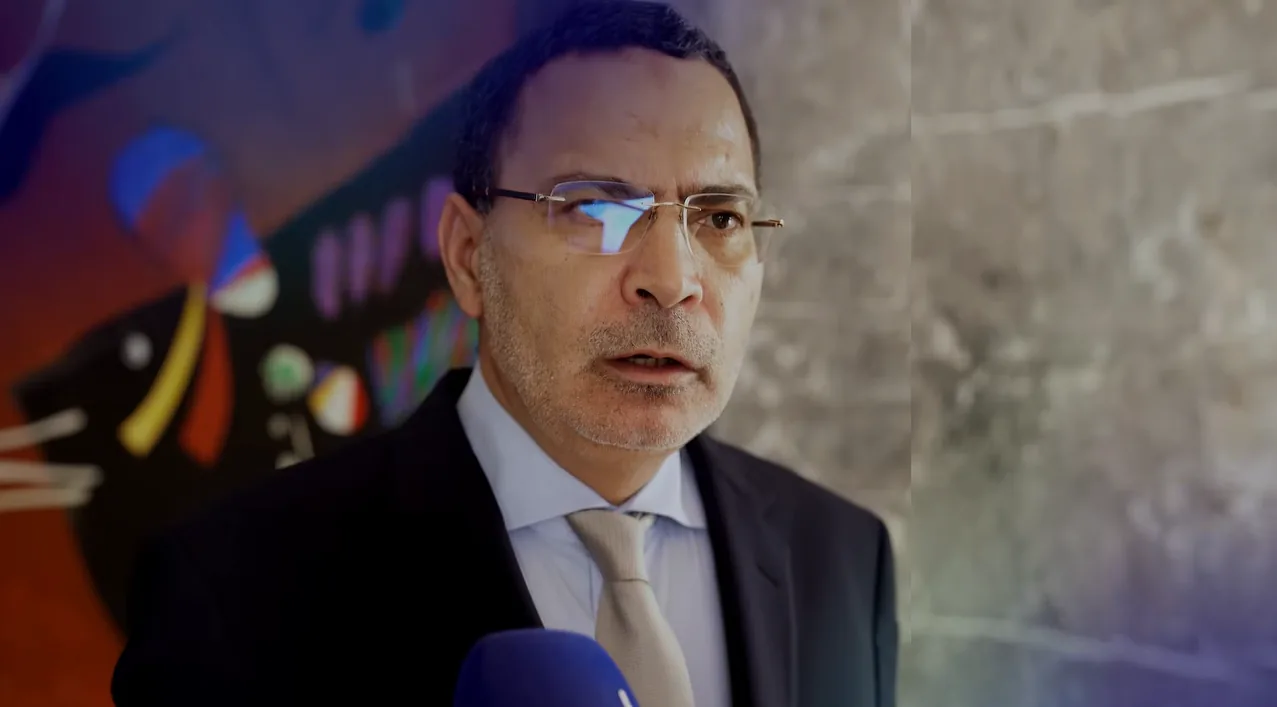
Following the speech, the opposition was quick to point out these gaps. For Mustapha El Khalfi, a deputy of the Justice and Development Party, the document looks more like a “declaration of intent” than a genuine program resting on precise commitments, SNRT reported. He faulted the government in particular for pushing back to the end of the term the increase in social aid to 1,000 dirhams. The majority, however, defended a text that in its view reflected the commitments of its member parties.
The parliamentary arithmetic, however, left little room for suspense. The majority gathers two hundred and seven deputies, with the PAM’s ninety-seven, Istiqlal’s sixty-five, the USFP’s twenty-six and the PPS’s nineteen. Investiture requires one hundred and ninety-eight, the absolute majority of the members of the House of Representatives.
The RNI, pushed back to second place on September 23 and left out of the coalition, now sits in opposition alongside the PJD and the Popular Movement.
The House of Councillors will debate the program on Wednesday, October 21, while in the House of Representatives the debate and the vote are scheduled for Thursday, October 22, according to Medias24. Having assured deputies that she was extending her hand to the majority and the opposition alike, Fatima Ezzahra El Mansouri closed her speech by asking for the House’s confidence. The vote will make the government an executive in full exercise of its powers, accountable for its program until 2031, the end of the term.
Photo: Y. Mannan, Le360.
- Full text of the government program presented by the head of government before the two houses of Parliament, October 19, 2026, in Arabic: « النص الكامل للبرنامج الحكومي المقدم من طرف رئيسة الحكومة امام غرفتي البرلمان », Kech24.
- MAP, dispatches of October 19, 2026: « Le Programme gouvernemental, un contrat politique et institutionnel fondé sur la Haute confiance Royale et la volonté exprimée par les citoyens lors des Législatives (Mme El Mansouri) »; « Le gouvernement envisage de porter les aides sociales à 1.000 DH et la pension de retraite minimale à 3.000 DH par mois (Cheffe du gouvernement) »; « Les institutions ne sauront regagner la confiance sans une lutte effective contre la corruption et les conflits d’intérêts (Mme El Mansouri) »; « Programme gouvernemental: Accélération de la réalisation de stations de dessalement d’eau de mer pour mobiliser 1,8 milliard de M3 à l’horizon 2031 (Mme El Mansouri) »; « Le gouvernement vise à atteindre “zéro abandon scolaire” à l’Horizon 2030 (Mme El Mansouri) »; « Les questions de la jeunesse érigées en priorité dans le Programme gouvernemental (Mme El Mansouri) »; « Création d’un Fonds spécial doté de 2 MMDH pour la mise en œuvre du caractère officiel de l’amazighe (Mme El Mansouri) »; « La consécration de l’État de droit, condition essentielle pour rétablir la confiance dans l’action publique (Mme El Mansouri) »; « Lancement d’une feuille de route touristique 2027-2030 pour attirer 26 millions de touristes à l’horizon 2030 (Mme El Mansouri) ».
- MAP, « Séance plénière commune lundi des deux Chambres du Parlement pour la présentation du programme gouvernemental », October 17, 2026; « Chambre des conseillers : séance plénière mercredi pour la discussion du programme gouvernemental ».
- SNRTnews, « Fatima Ezzahra El Mansouri présente les priorités et les engagements du programme gouvernemental » and « Programme gouvernemental : La majorité défend les engagements d’El Mansouri, l’opposition pointe leurs limites », October 19, 2026.
- Finances News Hebdo, « Programme gouvernemental : El Mansouri dévoile ses sept priorités pour 2026-2031 », October 19, 2026.
- Le Matin, « Programme gouvernemental 2026-2031: les sept grandes priorités annoncées par El Mansouri », October 19, 2026.
- Médias24, « Programme gouvernemental. L'empreinte du PAM domine, mais plusieurs engagements restent sans précision » and « Le PLF 2027 sera bien déposé ce mardi 20 octobre, avant le vote de confiance au gouvernement », October 19, 2026.
- Flash Économie, « Majorité gouvernementale : El Mansouri choisit la Koutla et écarte le RNI », October 2026.
- Constitution of the Kingdom of Morocco, 2011, Articles 5, 36 and 88.