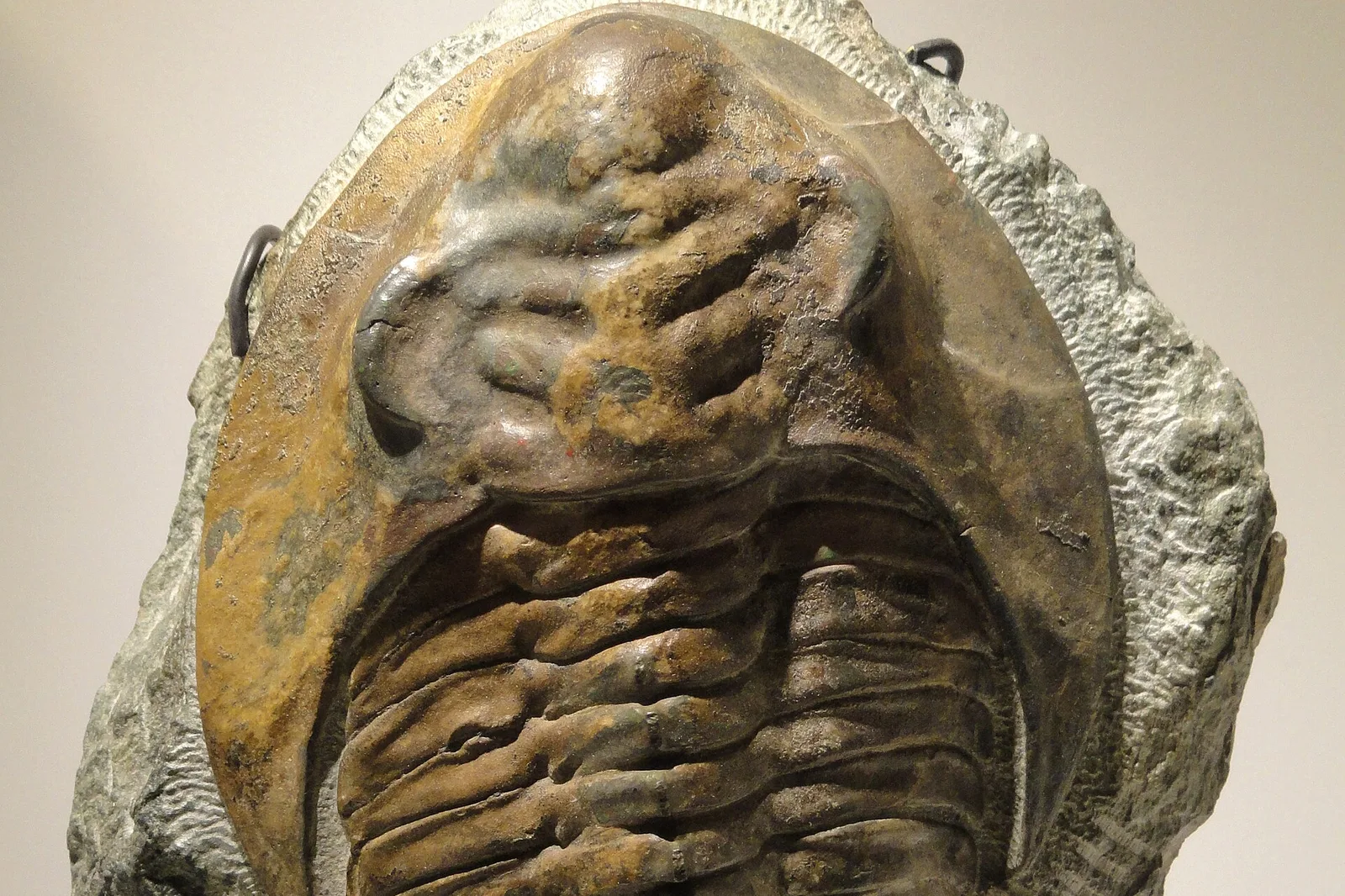
rilobites, long regarded as marine animals, also lived in brackish and nearly fresh water, according to a study of the fossils of Ait Youb, in the High Atlas, published on November 2 in Communications Earth & Environment.
Geochemical analyses of the Cambrian layers, more than half a billion years old, describe a delta shaped by a river and by waves, where salinity shifted with each inflow of fresh water.
The populations lived through a change of climate, from cool, arid and low-salinity conditions to warmer, more humid and saltier ones. That shift coincides with an increase in trilobite body size.
The lead author, Ibtissam Chraiki, is a Moroccan postdoctoral researcher at the University of Poitiers. The study brings together thirteen authors from seven universities, including Cadi Ayyad and Mohammed V, around Abderrazak El Albani.
The Hassan II Academy of Science and Technology and France’s Nouvelle-Aquitaine Region supported the work.
Photo: Daderot, CC0.
Communications Earth & Environment - Chraiki, I., Chi Fru, E., Bouougri, E.H. et al., Environmental flexibility across dynamic Cambrian ecosystems fueled trilobite success (2 novembre 2026)
Springer Nature Research Communities - Could trilobites thrive in changing environments? The story behind our study of Cambrian ecosystems