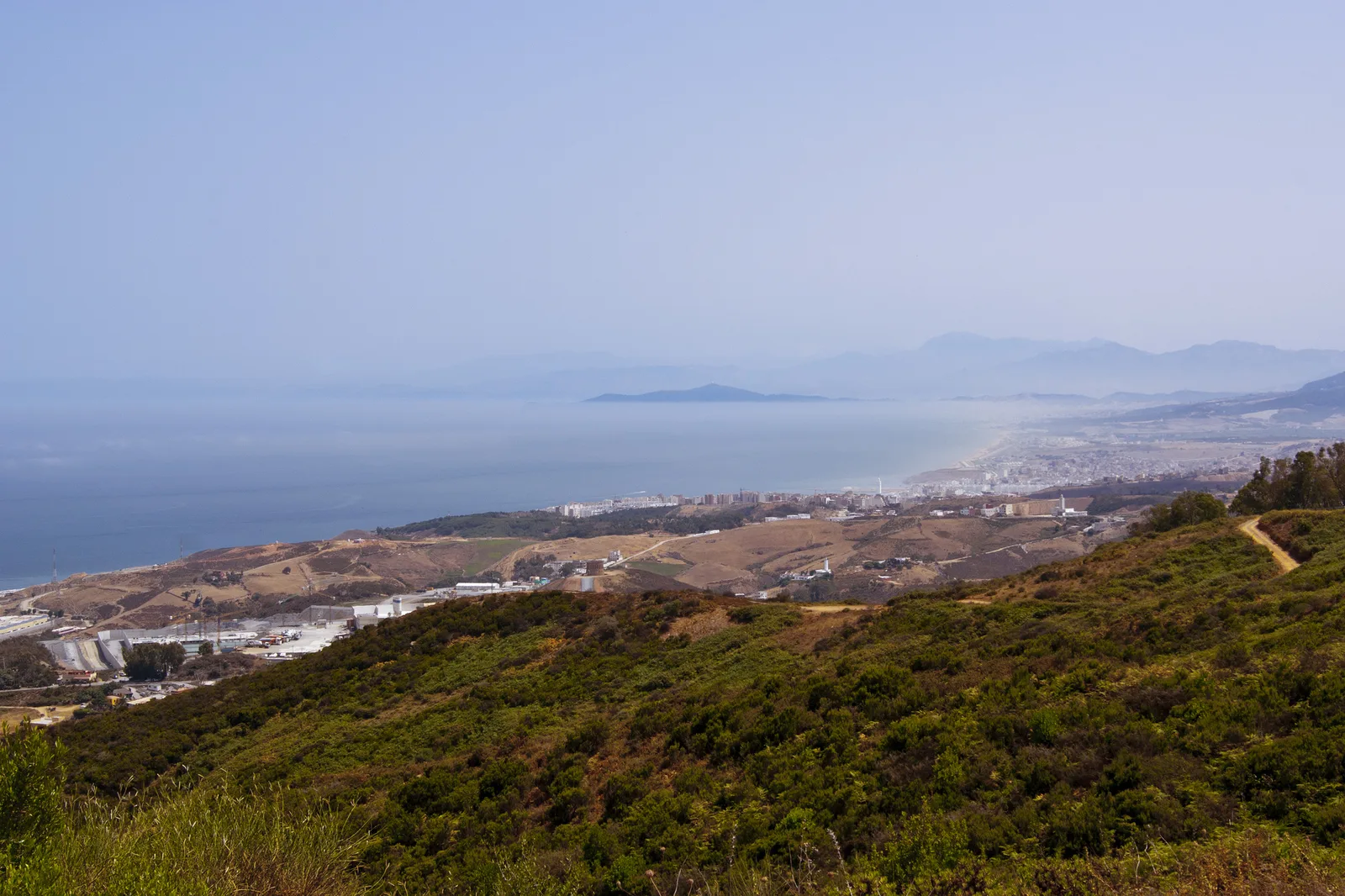
n the morning of 30 July, the coast running from Fnideq to Belyounech emptied itself into the sea. Thousands of young Moroccans waded in to swim around the Tarajal jetty, that finger of concrete which closes the border of the occupied presidio of Sebta and which only the waves know how to cross.
Others followed the rocky spur that Spanish forces could no longer hold. All day, the Guardia Civil and Spanish maritime rescue pulled bodies from the water.
There were fifteen by nightfall, a sixteenth during the night. In ten days, between one thousand five hundred and two thousand people had entered the city, the equivalent of 2% of its population according to its president Juan Jesus Vivas, whose center for minors had already passed 2,400% of capacity.
Vivas called for a national state of emergency. Madrid refused him, on the grounds that Spanish civil protection law recognizes only floods, earthquakes, volcanoes, fires and nuclear risk: a migratory flow appears nowhere in it.
This rush was born neither of a political signal nor of a calculated loosening of Moroccan controls, as in May 2021. It was born of a Spanish court ruling, and above all of what rumor made of it. Let us trace it back.
The night the coast emptied
On 8 July, the fifth section of the administrative chamber of the Spanish Supreme Court made public a ruling that the General Council of the Judiciary circulated widely on the 10th. It would take a little under three weeks for the news, distorted, to reach the beaches of the North.
On the night of 27 July, the Tetouan section of the Moroccan Association for Human Rights reported a collective crossing it would call a “great escape”.
On the morning of the 28th, the Royal Gendarmerie swept the shoreline at Fnideq and Belyounech and made, according to security services, some one thousand five hundred arrests; the Royal Navy intercepted several hundred people at sea and recovered a mother and her three children.
None of it would hold. By the morning of the 30th, the crowd was larger than the line could contain.
At Beni Ansar, facing Melilla, the scene played twice in one day: a first collective attempt dispersed before the border post, a second shortly after ten at night, when hundreds of young people pressed on the crossing and on the disused breaches of Barrio Chino and Farhana, closed since March 2020.
Around four hundred people would get through, according to the president of the autonomous city Juan Jose Imbroda, who speaks of a contagion effect coming from Sebta.
The blockage turned ugly on the Moroccan side: cars set alight, windows smashed, public property wrecked near the post. No official Moroccan tally has been published.
That same Thursday afternoon, a few kilometers away, King Mohammed VI presided at M’diq, in the prefecture of M’diq-Fnideq, over the reception marking the twenty-seventh anniversary of his accession to the Throne.
What the Supreme Court actually said
The case began with an Algerian national intercepted at sea while swimming towards Sebta, then handed back to Moroccan authorities with no procedure at all. The lower courts had already found in his favor; the Supreme Court confirms them and unifies Spanish jurisprudence.
The sea is not a fence
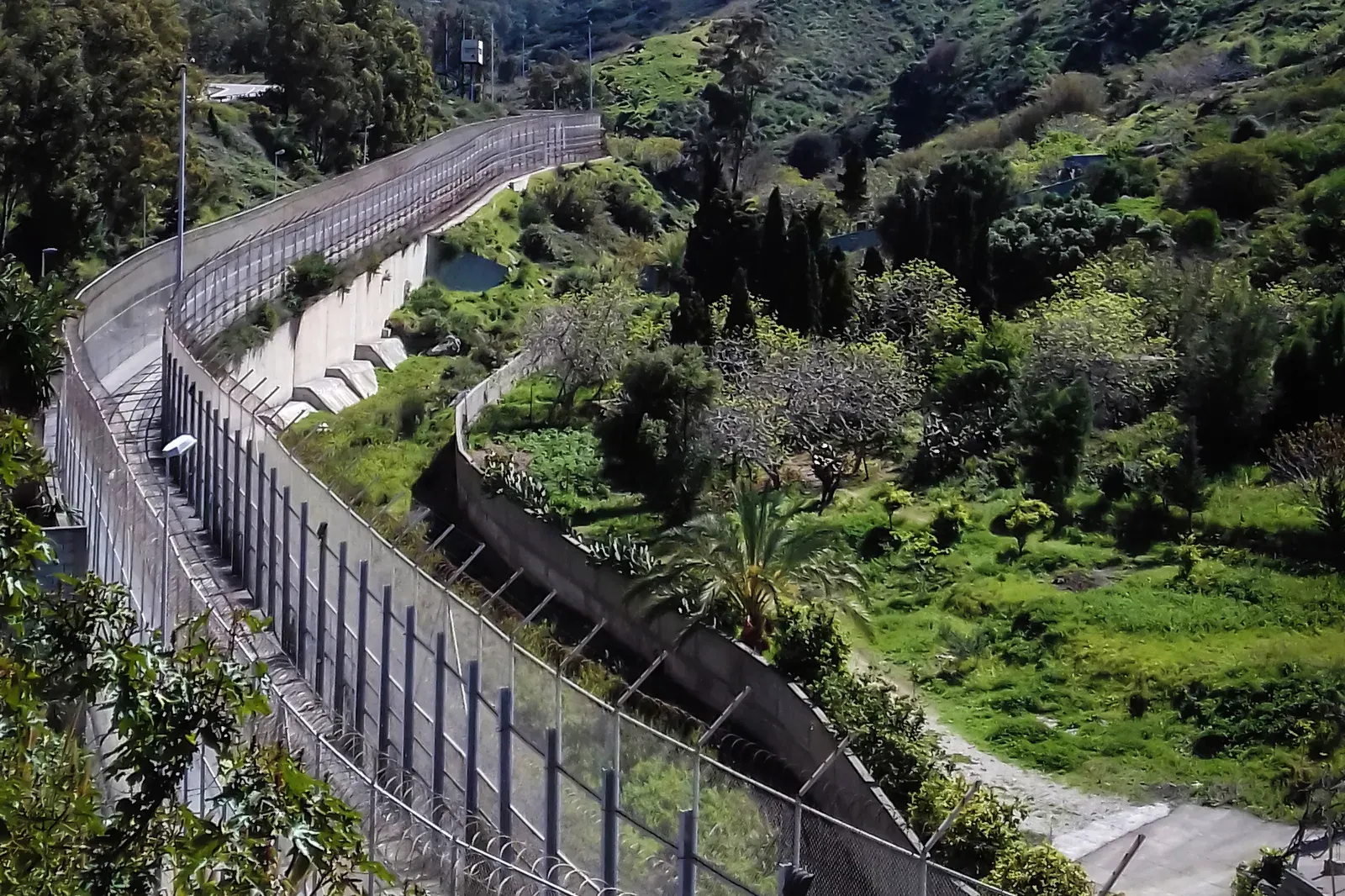
The tenth additional provision of the Spanish immigration law, which authorizes the “rechazo en frontera”, applies only where a migrant attempts to cross physical elements of border containment. Plainly: the fences of Sebta and Melilla, the barriers.
The sea is not one of them, and the Court takes care to specify that neither drones, nor cameras, nor radar, nor sensors replace a physical barrier.
It is worth knowing that the ruling nevertheless leaves a door open: nothing would prevent immediate pushbacks, the judges write, were containment elements installed at sea to materialize the border line.
The consequence is procedural, and it is narrow. Anyone arriving by sea must now be identified and given an individual administrative procedure, with a lawyer, an interpreter, the right to make submissions and the right to seek international protection. No one may any longer be walked back across the line minutes after touching the sand.
The rumor that did the rest
Between that ruling and the coast, something was lost. The version that traveled through the North, passed from screen to screen, did not say that a procedure would be owed: it said that reaching the shore guaranteed staying.
That is false, and the agreement struck on 30 July between Rabat and Madrid proves it cruelly. An individual procedure is not a residence permit; it is a formality that precedes, more often than not, removal.
On the ground, the city overflowed. With reception centers saturated, hundreds slept in parks and on pavements, and the Feria of Sebta was canceled.
Refuerzo de la Guardia Civil en el mar para intensificar el control y la vigilancia en la frontera de Ceuta.
— El Faro de Ceuta (@ElFarodeCeuta) 31 de julio de 2026
Madrid gives thanks, Rabat denies
On 30 July the Spanish Interior Ministry issued a communique which, rather than blaming its neighbor, thanks it:
“El Ministerio del Interior destaca la ejemplar colaboracion de Espana con Marruecos en todos los ambitos, incluido en materia migratoria. El departamento dirigido por Fernando Grande-Marlaska considera que las redes de trafico de personas estan instrumentalizando una sentencia judicial para fomentar el flujo de migrantes indocumentados, mayoritariamente jovenes.”
— Ministerio del Interior, communique of 30 July 2026
The text thanks Moroccan security forces by name for thwarting thousands of attempts, and notes that the minister remained in permanent contact with his counterpart Abdelouafi Laftit.
Both countries undertake to review and implement the procedures allowing the return, as soon as possible, of everyone who entered illegally. None will be regularized.
El Gobierno de Espana esta volcado en dar una respuesta inmediata a la situacion en Ceuta. Estamos movilizando todos los recursos necesarios, trabajando con las autoridades marroquies e internacionales, y preparando las medidas necesarias para recuperar la normalidad lo antes posible.
— Pedro Sanchez (@sanchezcastejon) 30 de julio de 2026
On the Moroccan side, the answer did not take the form of an official communique. It was diplomatic sources at Morocco’s embassy in Madrid, quoted by the Europa Press agency, who let it be known that these entries “in no way correspond to any desire on the part of the Moroccan authorities to favour irregular immigration”, and that cooperation with Spain remains “exemplary”.
The same sources attribute the departures to criminal organizations which “exploit the vulnerability of these people, feeding them false hopes”.
As for the human toll, no official count of the missing has been published, in Rabat or in Madrid; it is the families of Fnideq and M’diq who circulate the photographs of their sons.
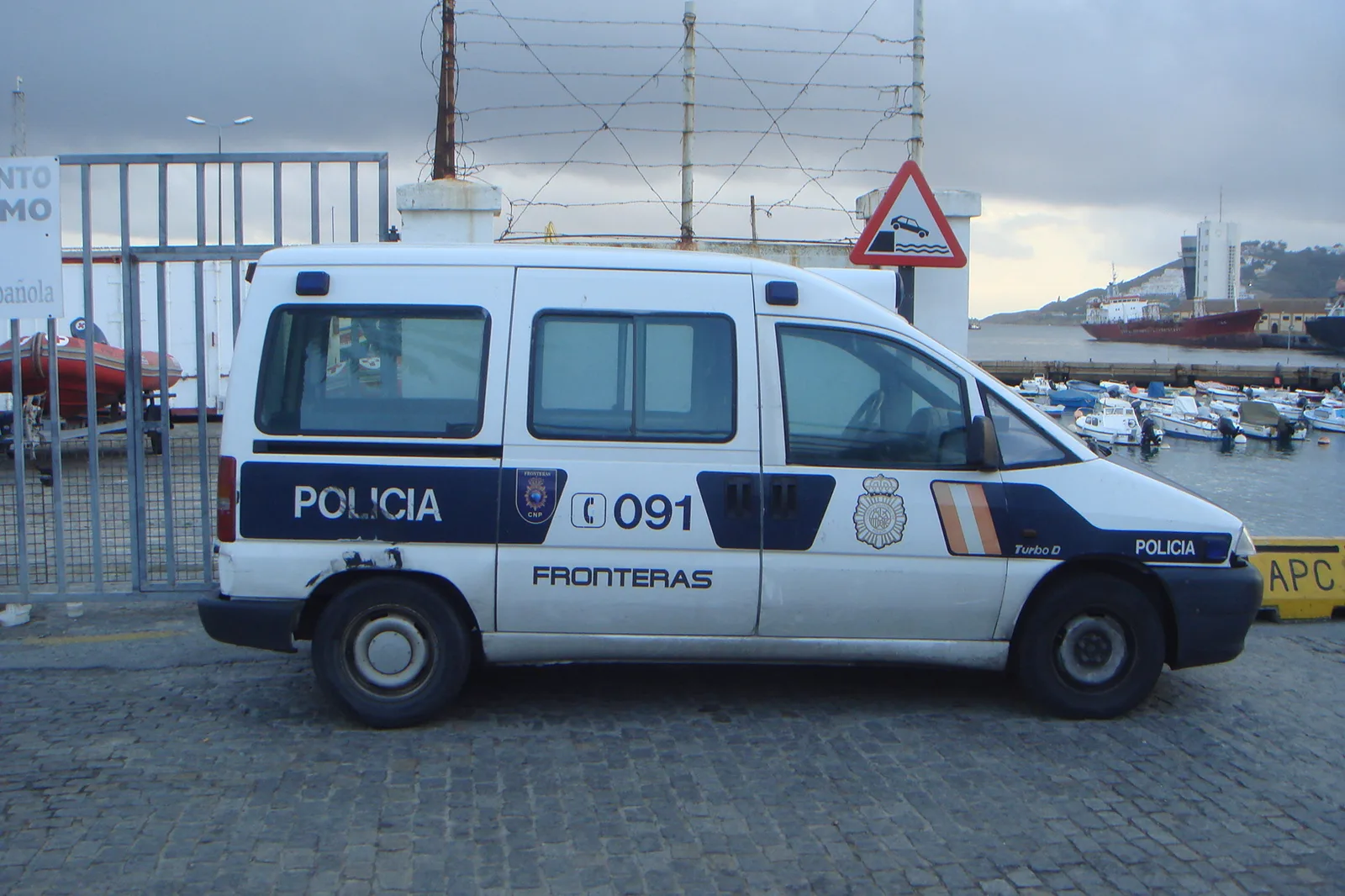
The war of numbers
A word is owed about what was read elsewhere. While verifiable sources converged on one thousand five hundred to two thousand entries over ten days, a Spanish account followed by hundreds of thousands claimed the Guardia Civil put the total at forty thousand for 30 July alone.
The figure was seen more than a million and a half times. It rests on nothing.
Another credited a Guardia Civil patrol with obligingly ferrying migrants to the Spanish shore. A surge may be entirely real without needing to be multiplied by twenty.
What the viral footage did not show, a local daily filmed: as exhaustion and uncertainty set in, requests for voluntary return to Morocco multiplied among the very people who had crossed the day before.
La otra cara de la crisis migratoria: crecen las peticiones para regresar a Marruecos. El cansancio, la incertidumbre y la separacion de sus familias llevan a numerosos inmigrantes a solicitar su regreso de manera voluntaria.
— El Faro de Ceuta (@ElFarodeCeuta) 31 de julio de 2026
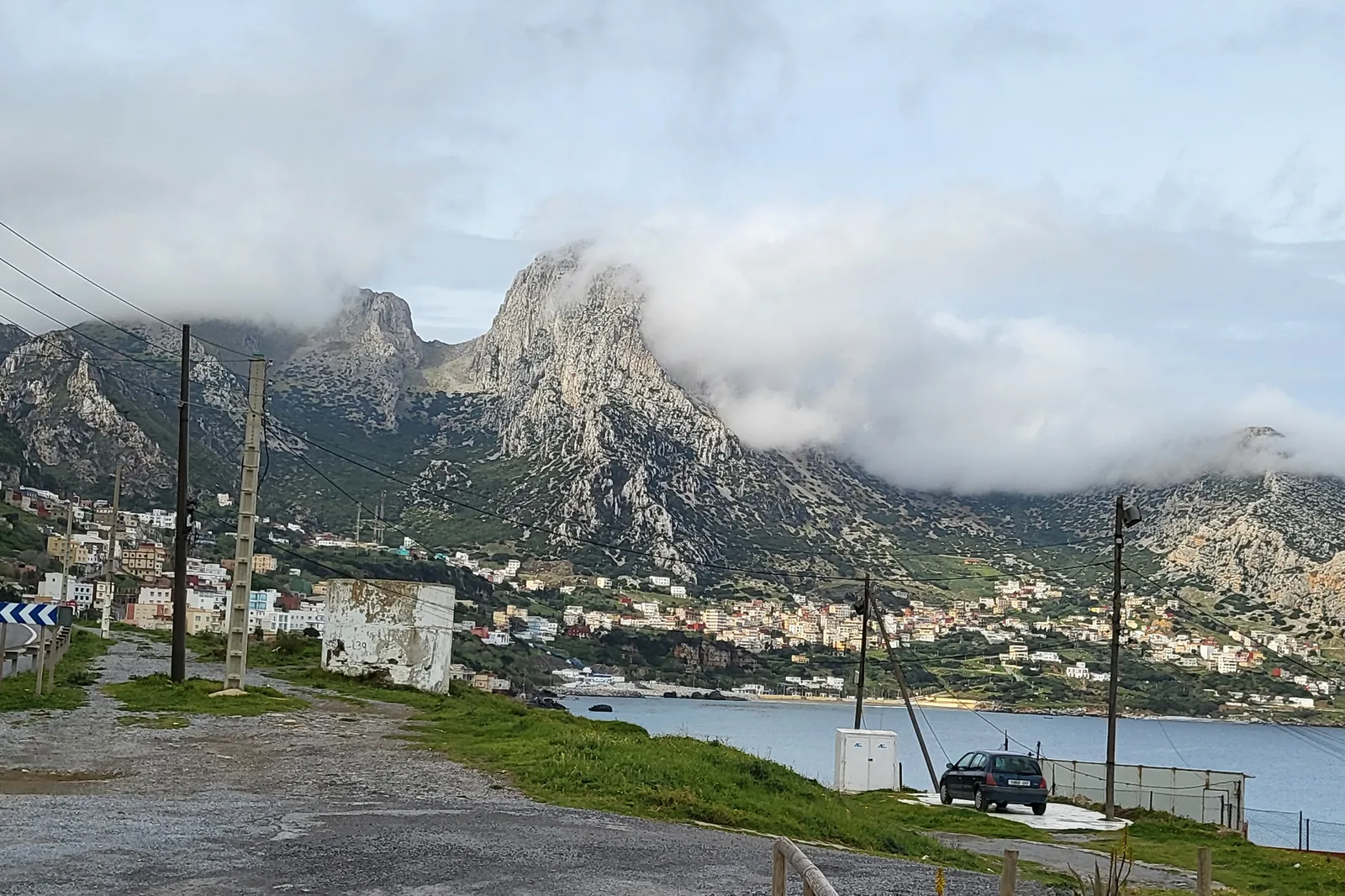
What remains are the figures nobody disputes. Forty-five bodies have been recovered from Sebta’s waters since January, twenty-six of them in July alone. The year 2025 closed on forty-six. Seven months were enough, and one badly copied sentence, to match the count of a whole year.
Update of 28 August: Madrid rules Morocco out
Twenty-eight days after the surge, the Spanish government settled the question before the Cortes. Heard on 27 August by the joint Congress-Senate committee on national security, at his own request, the minister of the Presidency Felix Bolanos declared that “there is no evidence whatsoever that Morocco led or drove the mass entry of people at the Sebta border on 30 and 31 July”.
He reproached the Partido Popular and Vox for disrespecting Rabat without a shred of proof, and attributed the trigger to two rumors born of a distorted reading of the Supreme Court ruling and spread over social media.
He used the figure of seventy thousand entries, while conceding that the government had “neither prior nor precise information” about the scale of what was coming.
The next day, before the foreign affairs committee, minister Jose Manuel Albares went further: he spoke of “cognitive warfare” and named, not the neighbor, but Russian disinformation networks, ultraconservative influencers and Elon Musk, whose posts are said to have passed seven hundred million views.
The foreign-interference thesis had nonetheless circulated on the morning of the 27th in the Madrid press, attributed to government sources and to confidential reports, never to a signed communique.
As for the figure, it was never a count: the Spanish government has successively advanced forty-nine thousand, fifty thousand, seventy-two thousand and almost eighty thousand. The royal decree of 25 August placing Sebta in a situation of national security interest until the end of the year is careful to advance no number at all.
Update, 31 July
The next day, the rush changed scale. The president of Sebta, Juan Jesus Vivas, put the number who entered in twenty-four hours at close to sixty thousand; the Spanish government brought the count down to fifty thousand. Set against the presidio’s roughly eighty thousand inhabitants, those orders of magnitude have no equivalent in the history of this border.
The ebb was as fast as the wave. By one in the afternoon the Interior Ministry was announcing twenty-five thousand returns to Morocco; by twenty past six, forty-eight thousand three hundred.
The ministry described a rate of “150 personas por minuto”. Rabat took back everyone who had entered, under the agreement struck the day before, and no one was regularised.
Pedro Sanchez travelled to Sebta with Fernando Grande-Marlaska, who will remain there several days.
The Spanish prime minister used a vocabulary he had until then avoided, denouncing “la violacion y el ataque a la integridad territorial de una ciudad espanola como es Ceuta”, while attributing the rush to smuggling networks and thanking Morocco for its cooperation.
He announced a reinforcement of roughly 10% of police and Civil Guard numbers, a military deployment, an emergency asylum commission to speed up expulsions, and support measures for the city’s businesses.
Buoys, and the circle closes
One measure deserves reading in the light of the ruling that started all this. Madrid will install buoys along the Tarajal jetty.
The Supreme Court had taken care to specify that nothing would prevent immediate pushbacks were containment elements installed at sea to materialise the border line: that is precisely what the government is putting in place. The door the judges left ajar will be walked through before the summer is out.
The human toll remains provisional and grows by the hour.
Spanish police sources reported at the end of the day forty-one bodies recovered along the coast of Sebta, bringing to seventy-one the number of people who have died this year attempting the crossing by swimming, fifty-two of them in July alone. The whole of 2025 had counted forty-six.
1 August: the barrier laid, the toll at sixty-seven
On the morning of 1 August the Civil Guard began laying in the water off Tarajal what the Supreme Court had called containment elements: buoys and a net five hundred metres long.
The ruling of 8 July had said immediate pushbacks would become lawful again the day the border line was materialised at sea. It took forty-eight hours.
The toll, meanwhile, has more than doubled. Ten further bodies were taken from the water between Friday evening and Saturday morning, bringing to sixty-seven the dead of this episode and to ninety-seven the number of people found lifeless on the coasts of Sebta since January.
The whole of 2025 had counted forty-six. The search continues and the Spanish authorities do not rule out the count rising further.
The returns are substantially complete. On Saturday the Spanish government put them at close to sixty-nine thousand five hundred, a figure that exceeds its own count of entries and that nothing reconciles.
In the city, the Civil Guard now escorts goods lorries to restore supply.
And politics has resumed its rights: arriving on the ground, opposition leader Alberto Nunez Feijoo declared that “el Gobierno no puede decir que no sabia lo que iba a ocurrir en Ceuta”.
2 August: the children who stay
Fifty thousand people left in a day. More than a thousand will not: they are unaccompanied minors, and Spanish law and international conventions alike forbid returning them against their will.
Each one opens an individual protection procedure; those who do not go back of their own accord remain under the guardianship of the administration. Sebta’s centre for minors was already past 2,400% of capacity before the rush.
The asymmetry holds in a single image, reported by the local press: a minor, turned back on the Moroccan side, returned to Sebta by swimming.
The rhetoric, meanwhile, is hardening. The leader of Vox, Santiago Abascal, called the crisis an “invasion” and “acto de guerra promovido por Marruecos y tolerada por Pedro Sanchez”.
The city is looking for its measure: the Feria is cancelled and the port crossing postponed on security grounds, but the procession of the Virgen de Africa will go out, and hundreds of Ceutis gathered in the Plaza de los Reyes for the unity of their city.
Congreso de los Diputados — appearance of Felix Bolanos, minister of the Presidency, before the joint committee on national security, 27 August 2026.
Congreso de los Diputados — appearance of Jose Manuel Albares before the foreign affairs committee, 28 August 2026.
Boletín Oficial del Estado — royal decree 705/2026 of 26 August 2026, following royal decree 681/2026 of 25 August 2026.
El Faro de Ceuta and Ceuta Actualidad — field coverage in Sebta, 1 and 2 August 2026.
El Faro de Ceuta — field coverage and statements gathered in Sebta, 1 August 2026.
La Moncloa — statement by the Spanish prime minister in Sebta, 31 July 2026.
Ministerio del Interior (Spain) — hourly tallies of returns to Morocco, 31 July 2026.
Tribunal Supremo, Sala de lo Contencioso-Administrativo, sección V — ruling on the inapplicability of the “rechazo en frontera” to people intercepted at sea, made public on 8 July 2026 and circulated on 10 July by the Consejo General del Poder Judicial.
Ministerio del Interior (Spain) — Comunicado sobre la situación en la ciudad autónoma de Ceuta, 30 July 2026.
Pedro Sánchez, Prime Minister of Spain — statement published on 30 July 2026.
Europa Press — statements by diplomatic sources at Morocco's embassy in Spain, 30 July 2026.
Le Desk — Ceuta et Melilla : au moins quinze morts, heurts a Beni Ansar, accord de retour avec Madrid, 31 July 2026 (own reporting).
Médias24 — Sebta : tous les migrants seront rapatries au Maroc, aucune regularisation, 30 July 2026 (own sourcing).
Maldita.es — fact-check of the figures and viral claims, 30 July 2026.
Moroccan Association for Human Rights, Tetouan section — alert of 29 July 2026.
El Faro de Ceuta — field reporting and images, 30 and 31 July 2026.