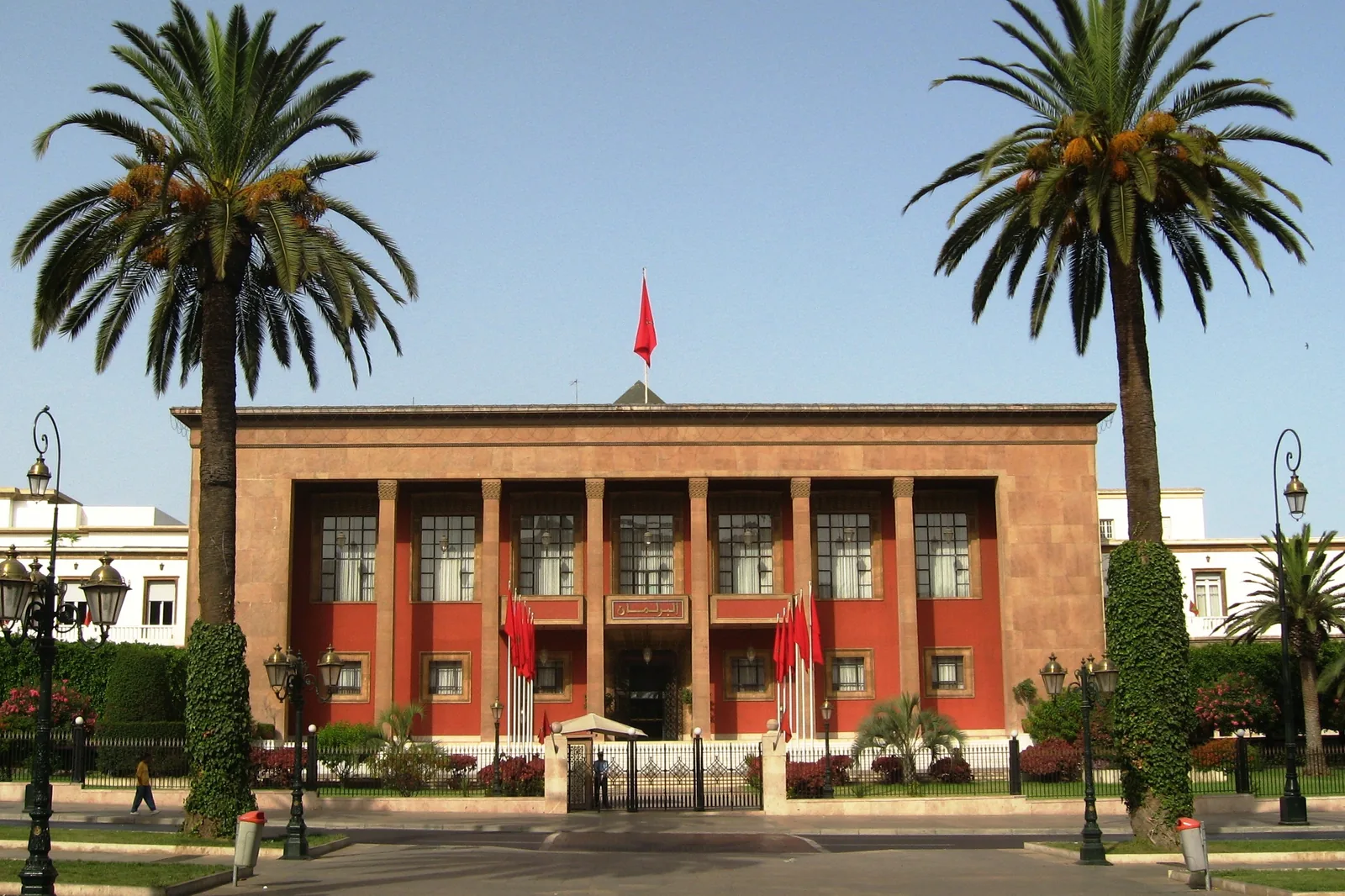
n Wednesday 23 September 2026, fifteen million eight hundred and one thousand one hundred and sixty-two registered voters are called to renew the House of Representatives. The date was fixed by decree no. 2.26.190 of 12 March 2026, published in the Official Bulletin four days later, and it closes a legislature opened in 2021 under a three-party majority. In between, electoral law was remade: three texts promulgated in January 2026 reworked the organic law of the House, the law on political parties and the law on electoral rolls.
What follows comes down to four questions: what exactly is being elected, who is standing, how one votes, and what Moroccans settled outside the Kingdom may do. The last is the one asked most often, and it is the one whose answer has changed least.
What is being elected on 23 September
Three hundred and ninety-five seats, on two floors. Three hundred and five are filled in ninety-two local constituencies, each carrying between two and six seats. The remaining ninety belong to twelve regional constituencies, one per region, from three seats for Dakhla-Oued Eddahab to twelve for Casablanca-Settat. An absolute majority is one hundred and ninety-eight.
It is on that second floor that the main novelty of 2026 sits. Since the 2021 reform, the ninety regional seats had replaced the old national list, with an obligation to place a majority of women on them; organic law 53.25, promulgated by dahir on 16 January 2026, follows the reasoning to its end and reserves those regional constituencies for women alone. Women of course remain candidates on local lists, where nothing limits them. The thirty seats once reserved for those under forty have not come back: youth is now encouraged by public money rather than by a quota, with the age ceiling cut to thirty-five and a raised subsidy for the seats it wins.
The electoral quotient, or the arithmetic that manufactures coalitions
The ballot is proportional, on closed lists, by largest remainder. What remains to be settled is what gets divided. Since 2021 the electoral quotient is obtained by dividing the number of registered voters in the constituency by the number of seats to be filled, and not the number of votes cast. The difference is not technical: in a constituency of two to six seats where turnout rarely passes half the electorate, the quotient stands so high that a leading list almost never takes more than one seat. Parliament examined amendments in December 2025 that would have returned to votes cast, or restored a 3% threshold; they were set aside in committee.
There is therefore no representation threshold at all: the 6% local and 3% national barriers disappeared in 2021 and have not been restored. Three figures circulate that must not be mistaken for one: 5% of votes cast conditions the refund of the candidacy deposit, 2% of registered voters opens public aid to independent lists, and one fifth of registered voters is required of a list standing alone in its constituency. The system hands out seats in thin slices, and that is where three-party governments come from, mechanically.
The parties standing
The landscape is still read through 8 September 2021, whose official turnout came in at 50.35%. The Rassemblement national des independants took one hundred and two seats there, the Parti authenticite et modernite eighty-seven, the Istiqlal eighty-one. Those three have governed together since, with two hundred and seventy seats at the outset. Behind them: the Union socialiste des forces populaires with thirty-four seats, the Mouvement populaire twenty-eight, the Parti du progres et du socialisme twenty-two, the Union constitutionnelle eighteen, and the Parti de la justice et du developpement thirteen, having held one hundred and twenty-five.
The outgoing majority
The RNI comes to this election with a president who is no longer its face. Aziz Akhannouch, head of government since October 2021, gave up a third term at the head of the party, which its statutes cap at two; an extraordinary congress held at El Jadida on 7 February 2026 elected Mohamed Chaouki in his place. Akhannouch remains head of government and the dominant figure of the campaign. Around them, the party holds Economy and Finance with Nadia Fettah Alaoui, National Education with Mohamed Saad Berrada, Health with Amine Tahraoui, Agriculture with Ahmed El Bouari, Tourism with Fatim-Zahra Ammor, and the speakership of the House of Representatives with Rachid Talbi Alami.
The PAM has no secretary-general: since its congress of February 2024 it has been led collegially by Fatima Ezzahra El Mansouri, minister of Territorial Planning and mayor of Marrakech, who coordinates that leadership, alongside Mohamed Mehdi Bensaid, minister of Youth and Culture, and Salaheddine Aboulghali. Abdellatif Ouahbi, who led the party until 2024, kept Justice. The party also counts Younes Sekkouri at Employment and Leila Benali at Energy Transition, and in July 2026 it took into its political bureau Fouzi Lekjaa, minister delegate for the Budget and president of the Royal Moroccan Football Federation.
The Istiqlal stands behind Nizar Baraka, secretary-general and minister of Equipment and Water, a candidate at Larache. The party is fielding several of its ministers in constituencies: Ryad Mezzour, at Industry and Trade, and Abdessamad Kayouh, at Transport. Mohamed Ould Errachid, of the Istiqlal, presides over the House of Councillors, which is not renewed on 23 September.
The opposition
The USFP refused to enter government in 2021 and pays for it in visibility more than in seats. Driss Lachgar has been its first secretary since 2012, returned for a fourth term at the Bouznika congress of October 2025; the parliamentary group is chaired by Abderrahim Chahid. The Mouvement populaire, led since November 2022 by Mohamed Ouzzine, who is also a deputy speaker of the House, is running a frontal opposition campaign. The PPS of Mohamed Nabil Benabdallah comes to the vote knowing that its secretary-general will leave the leadership after it, at the next congress.
The PJD, finally, is playing the strangest hand. Abdelilah Benkirane, back at the general secretariat after the rout of 2021 and returned at the April 2025 congress for a mandate running to 2029, will not be a candidate: the party announced it in May 2026. He will campaign without standing, and it is Abdellah Bouanou, president of the parliamentary grouping, who carries the party’s voice in the chamber.
The others
The Union constitutionnelle, led by Mohamed Joudar since 2022, has no minister and sits with the Mouvement democratique et social in a single group. To the left of the left, the Federation de la gauche democratique and the Parti socialiste unifie formed a Left Alliance in June 2026 and are running joint lists without merging: two parties, two leaderships, one ballot line.
It has to be added that five departments are not played out at the ballot box. Interior, with Abdelouafi Laftit, Foreign Affairs, with Nasser Bourita, Habous and Islamic Affairs, with Ahmed Toufiq, the administration of National Defense, with Abdellatif Loudyi, and the General Secretariat of the Government fall to royal appointment and not to the arithmetic of lists. Whatever coalition comes out of 23 September, those five will not change hands by its doing.
How one votes
The calendar is tight. Candidacy filing opens on 31 August at eight in the morning and closes on 9 September at noon, the electronic platform itself closing at noon the day before: a file filed online incomplete is void, and the original must be handed over in person at the prefecture or the province for local lists, at the wilaya for regional lists. The official campaign runs from midnight on 10 September to midnight on 22 September. On the 23rd, voting runs from eight in the morning to seven in the evening.
One document alone is required at the polling station: the electronic national identity card. The notice handed out by local authorities between 24 August and 22 September gives the station, the date and the hours, but it is on no account required in order to vote, and the ministry of the Interior said so again in its statement of 24 August. Anyone who has lost theirs, or never received one, can find their station on the listeselectorales.ma portal, or by sending their identity card number free of charge to 2727.
In the booth, a single ballot paper carries both elections. The voter puts one mark against the local list of their choice and a second against the regional list, then folds the paper and drops it in the urn. Closed lists rule out both split voting and preference voting: one chooses a list, never a name inside a list. Decree no. 2.26.278 of April 2026 fixes the layout, local lists ranged vertically from right to left in order of registration, each party’s regional list placed to the left of its local one. Marking two lists on the same floor voids the vote for that floor.
Registration, for its part, is closed. The revision of the rolls ran from 15 May to 13 June, and the lists were stopped on 10 July 2026. Anyone not on them will not vote on 23 September.
Moroccans abroad
The answer comes down to one sentence: one does not vote in consulates, one votes by proxy. Article 17 of the 2011 Constitution recognizes for Moroccans residing abroad “the rights of full citizenship, including the right to be electors and to be elected”, and refers to the law the task of determining the conditions and the arrangements for the effective exercise of the right to vote and to stand “from the countries of residence”. That last phrase is an enabling clause, not a procedure. Fifteen years on, the organic law of the House of Representatives still creates no polling station outside the territory: its stations are designated by the governor, in Morocco.
What the law does organize is the proxy, and it belongs to residents abroad alone: a voter settled in Morocco cannot vote by proxy. The principal, registered on the general rolls, fills in the form on the platform open from 24 August to noon on 22 September, entering an identity card number, a consular registration number, the commune of registration, then the identity of the proxy; the document is downloaded and sent on. The proxy must be registered on a communal roll in Morocco, with no requirement of kinship, and may carry only one proxy. On the day, the proxy votes in the principal’s station, identity card and proxy form in hand. The procedure is digital; the ballot still falls into a Moroccan urn.
Standing, on the other hand, is open. Article 22 of the organic law allows Moroccans abroad to appear on local and regional lists, in the same forms and to the same deadlines as anyone else, under one reserve: they are ineligible if they hold a governmental, elective or public function in the country of residence. The January 2026 reform added two documents, a criminal record extract issued by the state of residence and a valid residence permit. There is, however, no diaspora constituency: one stands in a constituency of the Kingdom, not in a constituency of Europe or of the Americas.
Consular voting is hardly inconceivable: the constitutional referendum of 1 July 2011 was held in embassies and consulates. The operation has never been repeated for a legislative election. Amendments to that effect were rejected in 2021, then again in December 2025, and the proposals tabled by the PPS, the PJD, the Istiqlal and the USFP, running from a direct vote in the country of residence to the creation of reserved seats, were not adopted. The Constitutional Court, seized of the 2026 text, held the electronic proxy to conform to the Constitution: it validated the means the legislator chose, it did not say that article 17 required another. On 23 September the diaspora will therefore vote through a proxy, or by coming home.
What remains is the question neither the texts nor the rolls will settle before the evening of the 23rd. In 2021, one registered voter in two turned out. A quotient computed on the registered makes abstention a variable in the allocation of seats as much as a political verdict: the emptier the boxes stay, the higher the bar, and the more the remainders decide. It may be the only thing this election will say without ambiguity.
Update of September 20: the government asks for facilities to go and vote
In a communique issued on Friday, September 18, the Head of Government called on the heads of public administrations, the directors of public establishments and enterprises and the presidents of territorial collectivity councils to grant their cadres, civil servants, employees and agents the facilities needed to reach the polls on September 23, without prejudicing the proper functioning of services and administrations. The same call is addressed to the heads of private-sector companies, asked to take the measures that will let their employees exercise their right to vote on polling day. The communique sets neither a duration nor any modalities: the arrangement is left to each official.
Photo: Pilecka, CC BY-SA 3.0.
Le Matin - Élections 2026: des facilités accordées aux salariés pour exercer leur droit de vote
Le360 - Élections législatives 2026: des facilités accordées aux salariés et fonctionnaires pour voter
Médias24 - Le gouvernement appelle les secteurs public et privé à faciliter l’accès aux urnes
Constitution of the Kingdom of Morocco, 2011 — article 17.
Organic law no. 27-11 on the House of Representatives, as amended by organic law no. 53.25, dahir no. 1.25.70 of 16 January 2026, Official Bulletin no. 7478 of 29 January 2026.
Decree no. 2.26.190 of 12 March 2026 fixing the date of election of the members of the House of Representatives, Official Bulletin no. 7491 of 16 March 2026.
Decree no. 2.26.278 amending decree no. 2.11.605 on the ballot paper, Official Bulletin no. 7502 of 23 April 2026.
Constitutional Court — decision no. 259/25 M.D. of 24 December 2025.
Ministry of the Interior — statement of 24 August 2026 and electoral rolls portal.