n its October economic update on the Middle East, North Africa, Afghanistan and Pakistan, posted on October 6, 2026, the World Bank kept Morocco among the region’s sturdiest economies. After estimated growth of 4.9% in 2025, gross domestic product would expand by 4.4% in 2026, 0.2 points more than the April forecast, then by 4% in 2027, as the lift from good harvests fades and energy costs weigh more heavily. Inflation would stay contained at 1.2% this year, while the current account deficit would reach 3.6% of GDP, even as the region as a whole contracts by 2.1% under the weight of the conflict that broke out at the end of February.
The report, titled From Divide to Opportunity: AI, Jobs, and Growth, places the Kingdom, alongside Tunisia, among the region’s leading exporters of AI-related products: high technology now accounts for more than 5% of its manufactured exports. The productive fabric is lagging behind. According to a survey the World Bank carried out in 2024 among establishments with five or more employees, 98.8% of firms have basic digital tools and a third of them have adopted advanced software, but fewer than half of those use it intensively, and only 4.3% use big data or artificial intelligence, with cost cited as the main obstacle. It is in this gap between equipment and use, the institution concludes, that the productivity gain is lost.
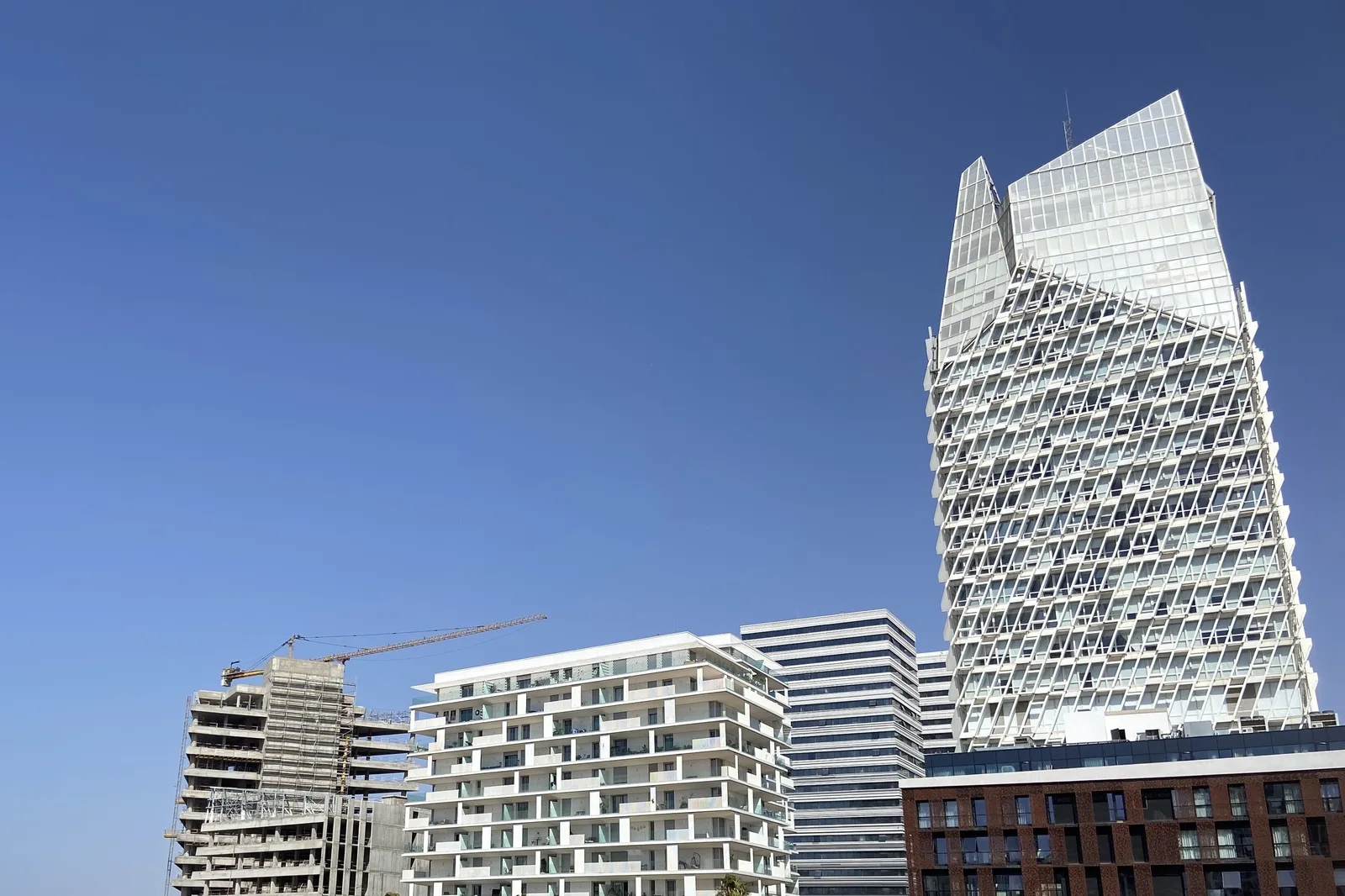
Photo: AyourAchtouk, CC BY-SA 4.0. The Casablanca Finance City district.
Banque mondiale - Middle East, North Africa, Afghanistan and Pakistan Economic Update, October 2026: From Divide to Opportunity: AI, Jobs, and Growth