One refusal, a single one, appears in the monthly report of the Flemish strategic goods control service for April 2026: the transit, from the United States, of military vehicles and parts intended for the Royal Armed Forces, for 81,618,114.33 euros.

The explanatory note of May 13 cites article 26 of the Flemish arms trade decree, which requires refusal where the goods can be used in an armed conflict and the end user is a party to a regional armed conflict. The text does not name the theater.
On July 15, 2026, the Flemish Parliament adopted a new text which aligns Flanders with the European common position of 2008 and drops that near-automatic ban. It will not enter into force until December 31, 2027, unless the Flemish government brings that date forward.
When it does, it will not free Morocco. The easing in the new article 17 applies to transits bound for NATO and Wassenaar Arrangement countries, not to those originating in them, and the Kingdom belongs to neither.
A license will still be required, and article 18 will still allow it to be refused. The press headlined that Flanders would no longer block these transits, a forecast that rests on an inaccurate reading of the text.
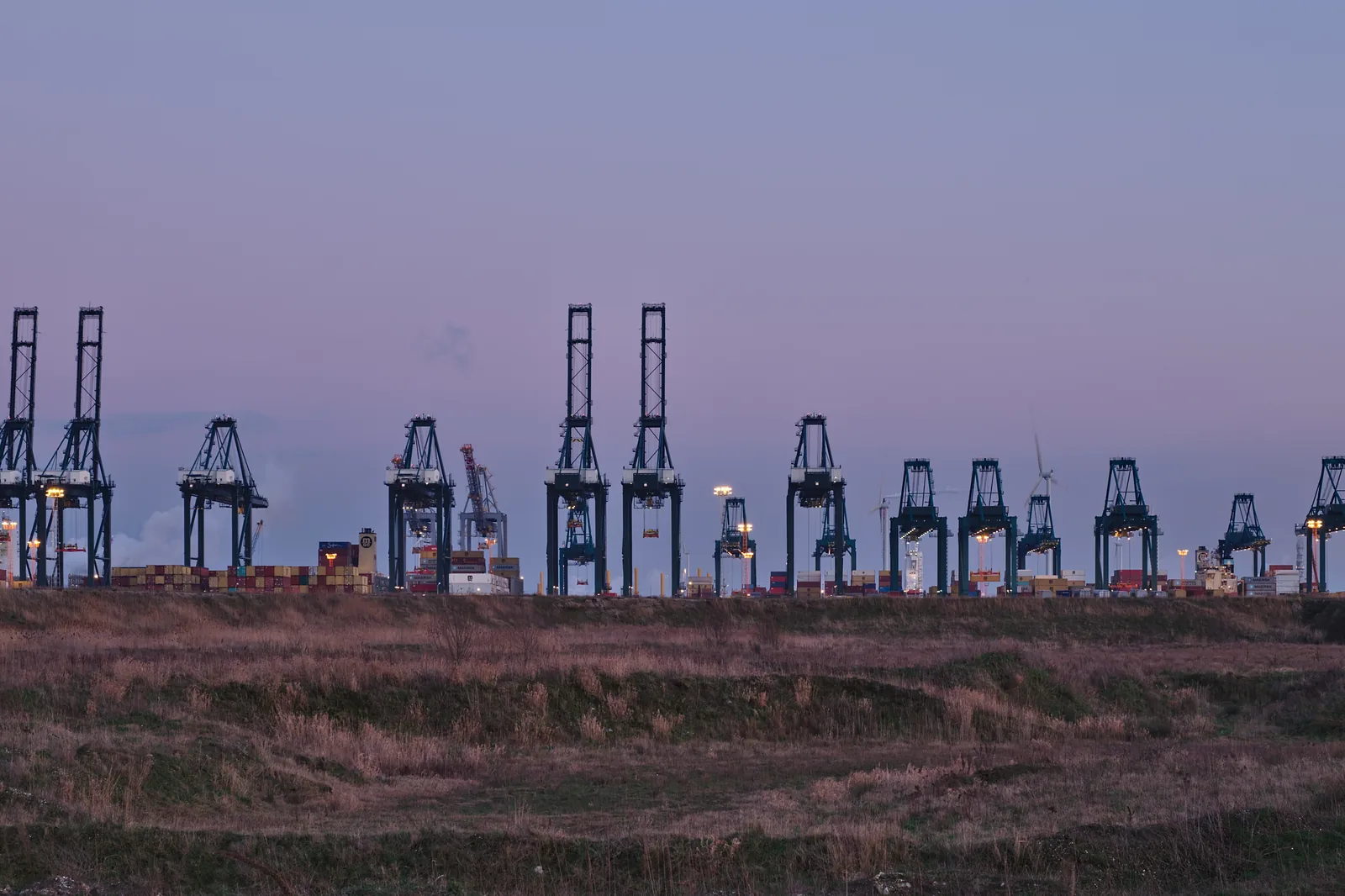
Photo: Trougnouf, CC BY 4.0.
Flemish Parliament — draft decree 846 (2025-2026), articles 17, 18 and 66, adopted at second reading on 15 July 2026.
Common Position 2008/944/CFSP, article 2, fourth criterion, consolidated version of 15 April 2025.
Vlaamse overheid, dienst Controle Strategische Goederen — monthly licence report, April 2026, and explanatory note of 13 May 2026.
Flemish Parliament — decree regulating the import, export, transit and transfer of military goods, adopted at second reading on 15 July 2026.