A recap of the facts.
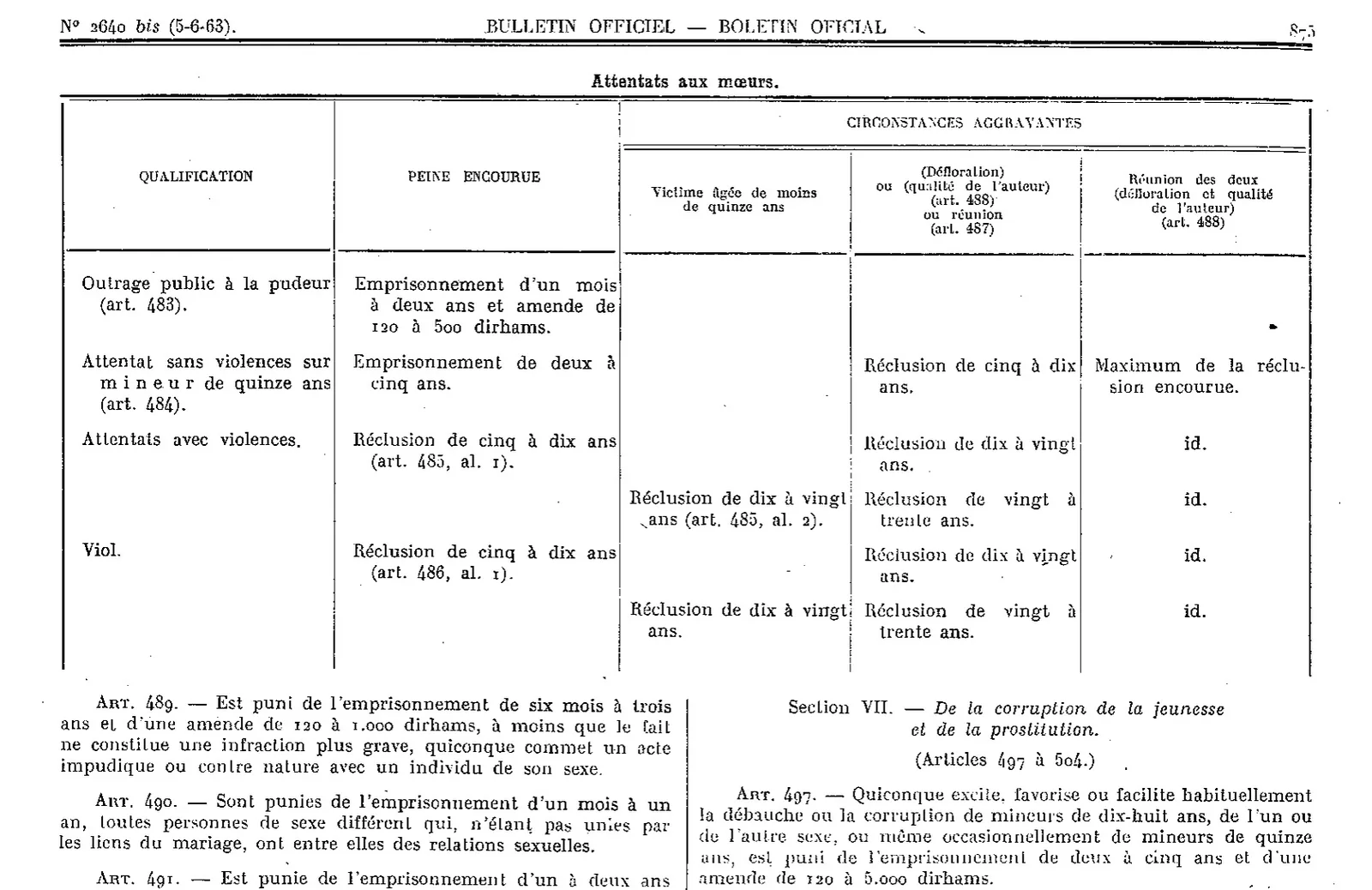
Hanaa, a young 24-year-old Woman, was sentenced on January 4, 2021 to one month in prison and a 500-dirham fine for “sexual relations outside marriage” and “public indecency [1]”, after the circulation of a video of a sexual nature [2]. The man appearing in the video is no longer on Moroccan soil. The individual who recorded and circulated the video is also abroad. The Moroccan justice system has issued a national arrest warrant against the man who appears in the video. He resides in the Netherlands: a State with which Morocco has no judicial cooperation agreement [3].
On February 3, 2021, upon her release from prison, Hanaa declared her intention to file a complaint against the pornographic sites that had circulated the video, and against the person who filmed and circulated the images without her knowledge. Simultaneously, the Moroccan Outlaws 490 Collective initiated a virtual campaign aimed at the repeal of Article 490 of the Penal Code [4]. The #STOP490 then spread across the Moroccan web.
The activist Collective’s dubious communication.
On February 3, 2021, the Moroccan Outlaws 490 Collective shared the following message on its InstaGram account: “To support Hanaa from Tetouan and demand the repeal of Article 490 of the Penal Code, share the #STOP490” [5]. This activist group, which defines itself as a “Moroccan social and citizen Movement”, seized the occasion to express its main demand: repealing Article 490 of the Penal Code. What, then, of Hanaa, guilty within the meaning of Article 490, but also a victim of her ex-partner’s revenge porn within the meaning of Article 447-1[6]?
If one looks into the Collective’s InstaGram posts, one observes that it is repeatedly stated that “the person behind the video’s dissemination is not being troubled by the justice system”, without specifying why. According to most of the media outlets citing the investigation reports and the statements of various lawyers, the maker of the video resides abroad and has not truly been identified. It is precisely for these reasons that the individual has not faced justice, and not because of some supposed leniency of the authorities implicitly suggested by the Collective. As for the man appearing in the video, he has been identified and a national arrest warrant has been issued against him. This detail was likewise passed over in silence by the association, and that throughout the promotion of the virtual event. The shadow cast over these additional pieces of information fed a frustration and a sense of persecution across the various comment sections of the posts.
Still on its InstaGram account, the Collective suggests that only Hanaa, in her capacity as a Woman, is targeted here by the law: “A victim of sexual exploitation and of the dissemination of private videos without her consent, it is nonetheless Hanaa who, through the application of law 490, finds herself behind bars… Which goes to show just how insidious and dangerous this article is”. Through this message, the association suggests an outrageous conflation. Hanaa has certainly suffered a harm within the meaning of Article 447-1 of the Penal Code, but that is not what she was convicted for. This Woman, who acknowledged her offense, was indeed convicted of public indecency and sexual relations outside marriage under articles 483 and 490 of the Penal Code. The harm suffered by an offender does not cancel out the offense they commit. Moreover, Hanaa’s lawyer himself indicates that “what is at stake in this case is the protection of intimacy and private life [7]”. After passing over in silence the details concerning the two other individuals involved in the case, the Collective will have shamefully instrumentalized Hanaa’s condition as a Woman for its activist ends. Upon observation, is there truly a founded link between the harm suffered by Hanaa and the Collective’s demands? It appears obvious that this is not the case.
The Collective is de facto building on an erroneous presentation of the case. What emerges is a poorly concealed manipulation of its some +85,000 followers[8]. Beyond this point, one notices that the activist group did not particularly insist on the true injury done to Hanaa, who was subjected to the dissemination of private information without her knowledge. Is that not what she is truly a victim of? Why not have insisted more on the judicial prosecution of the two other individuals involved? Ultimately, the Collective is no longer really defending the young Woman. Likewise, it no longer really cares about her psychological situation, since it continues, to her detriment, to relay this case for strictly activist ends. Moreover, Karima Nadir, spokesperson for the Collective, does not hide the opportunism of the association, which knowingly rode the wave of the Hanaa case to recall the diversity of demands calling for the repeal of all legal articles hindering the individual freedoms[9] of Moroccans.
What, then, of the #STOP490? The Collective claims to defend a cause that concerns all Moroccans. An inclusive initiative that would raise the voice of those traditionally reduced to silence. Although the communication around the virtual mobilization was carried out — at first — in French, Arabic and English, the hashtag is in English. This may seem trivial, but it is legitimate to wonder who the true audience of the operation carried by this hashtag really is. Would the use of a hashtag in Arabic or darija not have been wiser given the objective pursued? Would the targeted audience then no longer be the Moroccan people as a whole, but a segment usually receptive to hashtags in a foreign language? More broadly, the general communication, as well as the testimonies gathered on the Collective’s InstaGram network, are almost entirely in French or English. Does the Collective truly stand as the voice of all Moroccans? The Collective’s established communication leads one to believe it does not. More broadly still, was one of the objectives pursued by the association not to place its demands under the spotlight of the international media? Indeed, the Collective relays via InstaGram the #STOP490’s appearances in the Dutch, Egyptian and Swiss press, or again on BBC Arabic. Is this supposed to be gratifying? Is this supposed to represent significant progress for the demands being brandished?
A religious approach to Article 490 of the Penal Code.
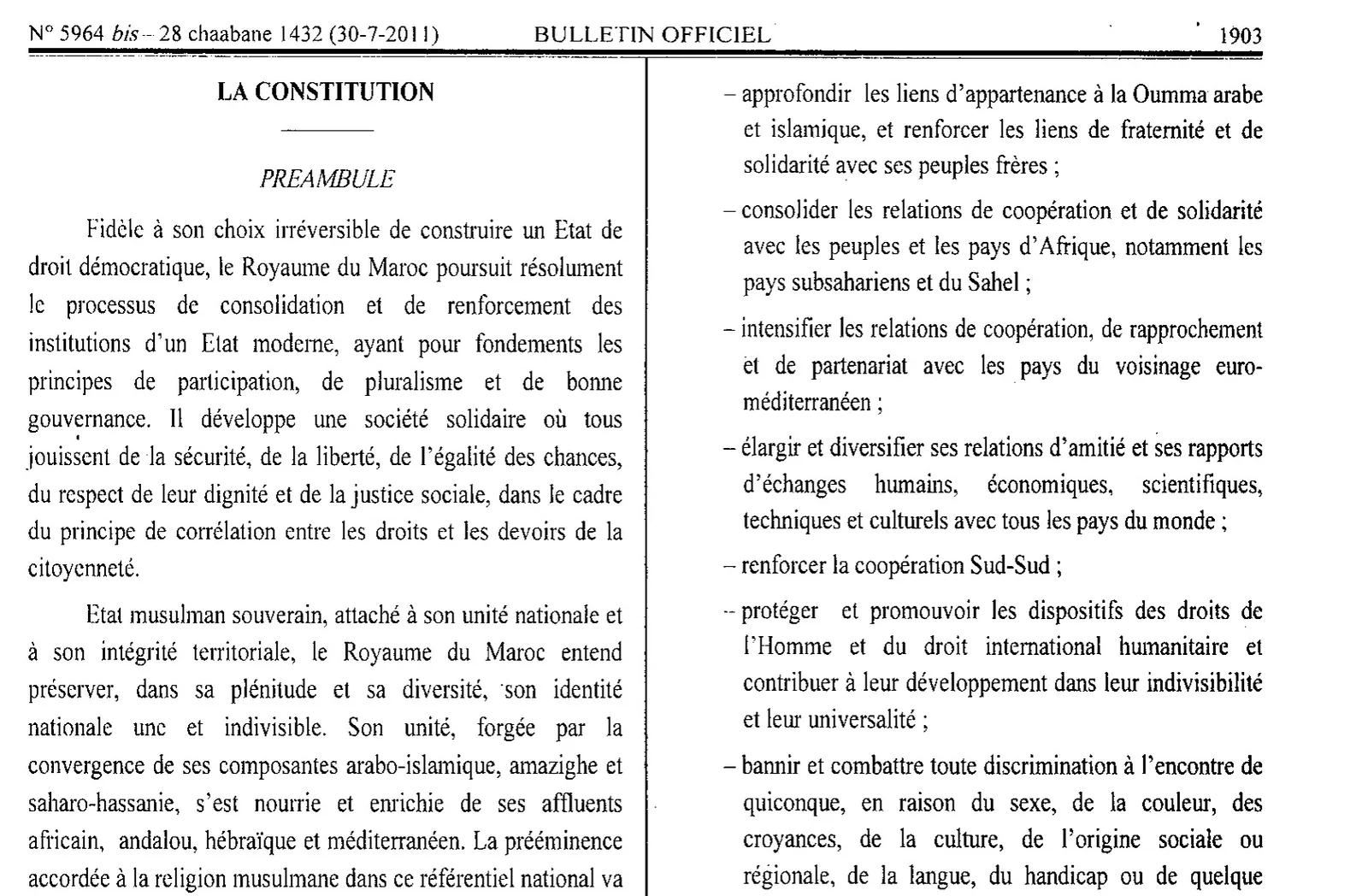
This point will be addressed modestly. The task of exploring the question in depth will be left to specializts in the field. The Preamble of the Constitution states that Morocco is a “sovereign Muslim State”. Likewise, in its third article, it is stated that “Islam is the religion of the State”[10]. Islamic Law designates fornication as a grave sin. It is punished by 100 lashes, on the condition that the clear and unambiguous testimony of 4 adult men first be gathered. For its part, Moroccan Law addresses fornication essentially in Article 490 of the Penal Code, which provides that: “all persons of the opposite sex who, not being united by the bonds of marriage, have sexual relations with each other are punished by imprisonment of one month to one year”. The intervention of a specializt to shed light on the sources of Law inspiring this article would be pertinent. One may wonder whether custom, a moderate reading of the legal provision of Islamic Law[11], an arbitrary choice by the Moroccan legislator — or all three at once — were drawn upon. Be that as it may, while the penalty incurred under Moroccan Law is not the same as that incurred under Islamic Law, religious morality seems to have justified the wording of Article 490 of the Penal Code.
Religious morality and Moroccan ethics.
The Moroccan Outlaws 490 Collective calls for the repeal of Article 490 of the Penal Code in the name of individual freedoms. That said, through what prism are these individual freedoms being invoked? Are they invoked through the prism of Moroccan society? Or through that of a foreign society? At first glance, one quite easily observes that the demand for the law’s repeal is characterized by a Western approach to the question, literally disregarding Moroccan particularism with respect to the issue at hand.
Until now, Article 490 of the Penal Code has never truly been the object of any considerable divergence within Moroccan society. Some will speak of a relative consensus on the question; others will point to the absence of any conclusive study, or to a taboo complicating sincere speech on the matter. Be that as it may, since this law took effect, there has not been a single instance in which it stirred discord or marked any substantial divergence in Morocco. Accordingly, the absence of any large-scale study can, as things stand, be justified by its lack of necessity. The intervention of a specializt would nonetheless be welcome to shed light on the possible applicability of this norm before its inscription into the Penal Code. This would make it possible to determine Moroccan society’s relationship to this prohibition before 1913[12], and would then settle the matter for those who would agree in thinking that fornication was not legally punished until then.
Through its various demands, the Collective quickly disregards Moroccan social cohesion[13], within which numerous values are articulated — chastity, modesty and honor, to name only these. Values nonetheless intrinsically tied to Islam, but also to the centuries-old social heritage of Moroccans. One may consider that these values belong to a broader set of convictions consciously shared by all. A kind of ethical corpus forged in each person’s conscience. One could also amuse oneself by challenging this assertion through the absence of any detailed study.
More concretely, a methodical process scarcely compatible with the ethical corpus of Moroccan society, combined with the Collective’s aggressive approach, naturally diminishes the receptiveness of Moroccans as a whole to the message being chanted. The Collective has not even made the effort to adapt its discourse to Moroccan specificity. The association seems to impose its will on the entire Moroccan people while clinging desperately to the fleeting platforms granted by a few Western media outlets; which adds not the slightest value to the substance of the debate required in Morocco.

Repealing Article 490: a legitimately founded demand?
One may indeed wonder by whom and for whom the Collective’s initiatives are undertaken. This questioning may once again seem trivial; that said, the form of this Movement betrays its proclaimed ambitions. Indeed, Oum El Ghait Ben Sahraoui specified in 2019 on the set of TV5 Monde[14] that the initiator of the Manifesto defending the individual freedoms of Moroccans was Sonia Terrab and not Leila Slimani: this so as not to suggest that the Manifesto was a production from outside Morocco. However, one need only glance at Sonia Terrab’s FaceBook account to realize that she expresses herself exclusively in French. The events and articles relating to her demands are likewise in French. Ultimately, even if she does reside in Morocco, the fight she wages through the Moroccan Outlaws 490 Collective is addressed almost exclusively to a French-speaking audience. Must we recall which language Moroccans speak? According to the Organisation Internationale de la Francophonie, 35% of Moroccans are French speakers[15]. Are we to understand that the Collective’s Manifesto defends the individual freedoms of only 35% of Moroccans? Are we to understand that the individual freedoms of the 65% of Moroccans are not worth defending? How can one claim to raise the awareness of one’s people, or to defend them, when addressing them in a language foreign to them? Two thirds of the Moroccan population are de facto excluded from the debate. From then on, can the demands of this association really be considered truly legitimate?
In its form, this collective appears to have very little legitimacy as to the demands it expresses. As early as 2019, Rachid Hachachi was already telling RT France[16], at the time of the Hajar Raissouni affair, that the initiatives of the Moroccan Outlaws 490 Collective amounted to bourgeois demands. The political scientist also spoke of a “desire to transpose a fight that is not that of Moroccans, but that of a small Moroccan minority Westernized in its way of life, and of the Moroccan petite bourgeoisie”. A description that seems to fit the Collective, judging by its communication methods, which are non-inclusive to say the least. Likewise, the Collective contents itself with a foreign media platform while relegating to second place that of the very State to which its demands are addressed.
Does the Collective really seek to establish debate? Would that same debate be legitimately founded?
The Moroccan Outlaws 490 Collective claims to be committed to establishing a debate around its demands. Yet that is not what one observes in light of its various methods. Whether it be its aggressive and denigrating communication toward the Moroccan women and men attached to the morals it fights, or the knowingly distorted reality it suggests to its audience in order to stir up a misleading sensationalism; in both configurations, the association restricts the room left for debate.
Thus, by focusing strictly on the individual freedoms it brandishes, the Collective entirely disregards the social consequences that the possible repeals or amendments of laws deemed liberticidal could generate. The supporters of #STOP490 agree in thinking that the decriminalization of sexual relations outside marriage would constitute no social disruption. The post-repeal social transition is regarded by these activists — wrongly — as a given. The reality could indeed be quite different. Let us suppose Article 490 of the Penal Code were repealed: would Moroccan mores thereby normalize access to contraception? Would this be an open door to an explosion of sexually transmitted diseases, to a rise in unassumed pregnancies and births, to the construction of new orphanages, or to a potential resurgence of abortions performed in secrecy? Absolutely nothing guarantees that these scenarios are not the ones awaiting Moroccan society. And none of these themes are truly addressed by the activists.
A parenthesis on abortion deserves to be opened. Article 453 of the Penal Code provides that: “abortion is not punished when it constitutes a measure necessary to safeguard the mother’s health and is openly performed by a physician or a surgeon with the spouse’s authorization”. An abortion thus permitted, but strictly conditioned. The Hajar Raissouni episode in 2019 was an occasion for the Collective to renew its demands for the amendment of this law. Parliament is said to have recently intended to broaden the legal conditions for abortion[17], but this advance would be “far from sufficient”[18] according to the association, which would hope to make abortion a Right vested in every Woman, whatever the circumstances in which she would resort to it. On this subject, light could be shed on the remarks of Doctor Aissam Bachir[19], who recalls the content of Simone Weil’s 1974 speech on the question of abortion in French society. The former Stateswoman made it explicit that abortion was to remain the exception, for situations without a way out[20]. According to the Doctor, abortion is not a Right but a medical necessity.
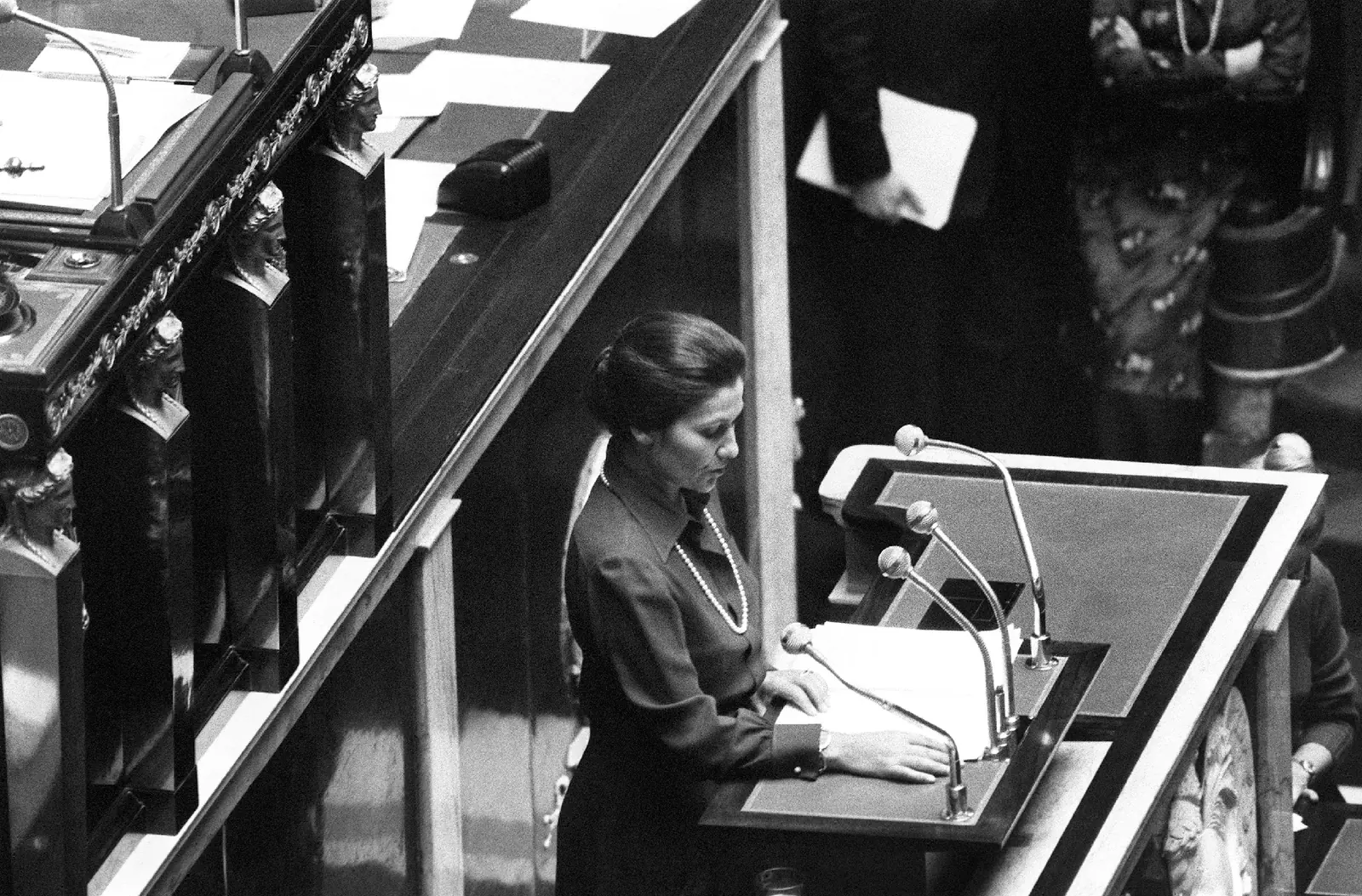
Amending Article 453 to broaden the conditions for abortion, so as to stem its clandestine practice, would be welcome in Moroccan society. This new provision would remain compatible with the Moroccan ethical corpus; however, the Collective has no intention of settling for it. Has the association asked Moroccan women for their opinion? Perhaps they do not ask for as much as the Collective demands of the legislator? Perhaps it is the case, but what do we know of it? Ultimately, on what foundations does the Collective legitimize its demands? Debate is not really being suggested; important notions of the debate are bypassed, such as the place of the Right to life in the face of the claimed Right to abortion. Whatever the demand, the activist methodology is reproduced and de facto rules out the supposedly healthy debate being pursued.
On the one hand, the Collective moves away from any prospect of debate; on the other, it feeds the social rupture between its supporters and the rest of the Moroccans never consulted. This fracture was moreover illustrated on social media through the confrontation of the hashtags #STOP490 and #KEEP490. A confrontation that brought no added value to a debate that would nonetheless deserve to be examined. The Collective’s attitude is regrettable in many respects: this association has shown itself to be non-inclusive and hardly conciliatory. One may wonder whether, failing to invest itself in social peace in Morocco, the Collective really wishes to craft solutions to the various societal issues.
What is problematic in Article 490 of the Penal Code
The criticizm leveled against Article 490 of the Penal Code is relatively vague. Does the Collective oppose the content of this law? Or is it its applicability that is being contested?
As a reminder, Article 490 provides that “all persons of the opposite sex who, not being united by the bonds of marriage, have sexual relations with each other are punished by imprisonment of one month to one year”. The question that arises here is that of how the crime is established. How is proof adduced? In principle, proof is established by a report of in flagrante delicto findings drawn up by a judicial police officer, or by the confession of the accused[21]. In practice, one finds that it is very difficult to gather these elements. The authorities then take to guessing at potential sexual relations. This is an overreach of duty, forcing these same authorities to pass judgments on individuals’ appearance. There, already, is the first anomaly in the applicability of Article 490 of the Penal Code. This new approach to sexuality by the public authorities thus sheds light on the now no longer moral but social dimension of the criminalization of immorality[22]. Once again in practice, the legal prohibition of sexual relations outside marriage tends to be concretely enforced only against girls generally from precarious classes[23]. That is a second anomaly in the applicability of Article 490 of the Penal Code. By opting for this detection practice essentially focused on the female sex, the male sex gets off lightly. On the one hand, the authorities’ improvised applicability — which is obviously not legislated — creates an inequality of treatment; on the other, it strikes at the integrity of the Moroccan Woman who, when subjected to an arbitrary police check, is often categorized as a prostitute[24] for the sole fact of having engaged in an activity deemed to resemble it. Meriam Cheick raises the idea of illegalism[25], borrowed from Foucault, here conveying the authorities’ false neutrality toward the female and male sexes. It is precisely in this sense that the Moroccan Woman suffers an injustice, and not because she is convicted of an offense she has actually committed[26], as the Collective contends. This injustice endured by the Moroccan Woman constitutes a third anomaly in the applicability of Article 490 of the Penal Code. While the three elements above illustrate rather well the fallible character of this law, another major consideration might suffice on its own to call into question the legitimacy of the legal provision’s improvised applicability. Would the authorities’ improvised attitude not be a violation of the Right to privacy, a Right nonetheless guaranteed by the Constitution in its Article 24? “Everyone has the right to the protection of their private life. […] The home is inviolable. […] Private communications.”; the question may seem legitimate. This potential violation of the Right to privacy constitutes a fourth anomaly in the applicability of Article 490 of the Penal Code.
A statistical parenthesis: arrests relating to sexual relations outside marriage have been declining in recent years. By way of illustration, the city of Tangier recorded 404 cases in 2009, then only 80 in the year 2014. This decline reflects less an actual fall in sexual relations outside marriage than a softening by the police of repressive measures in matters of morals. The young anthropologist[27] goes on to indicate that “the moralization of the current decade now seems to proceed through the security of the city and, thereby, through a strengthening of police work focused on upholding not the moral order but the social order”[28]. In the end, one observes that while the number of arrests for sexual relations outside marriage stands at +15,000 in 2019, the trend is on the whole downward[29].
What must be changed in Article 490 of the Penal Code.
One may finally ask what the adequate solution would be with regard to Article 490 of the Penal Code. If the pros and cons had to be strictly weighed, one might be hostile to its repeal, and perhaps a little less so to its preservation. The Collective has failed to be convincing in justifying and legitimizing its ambitions. In parallel, the supporters of #KEEP490 did not have to strain their arguments, given the poor level of the demands they were confronted with.
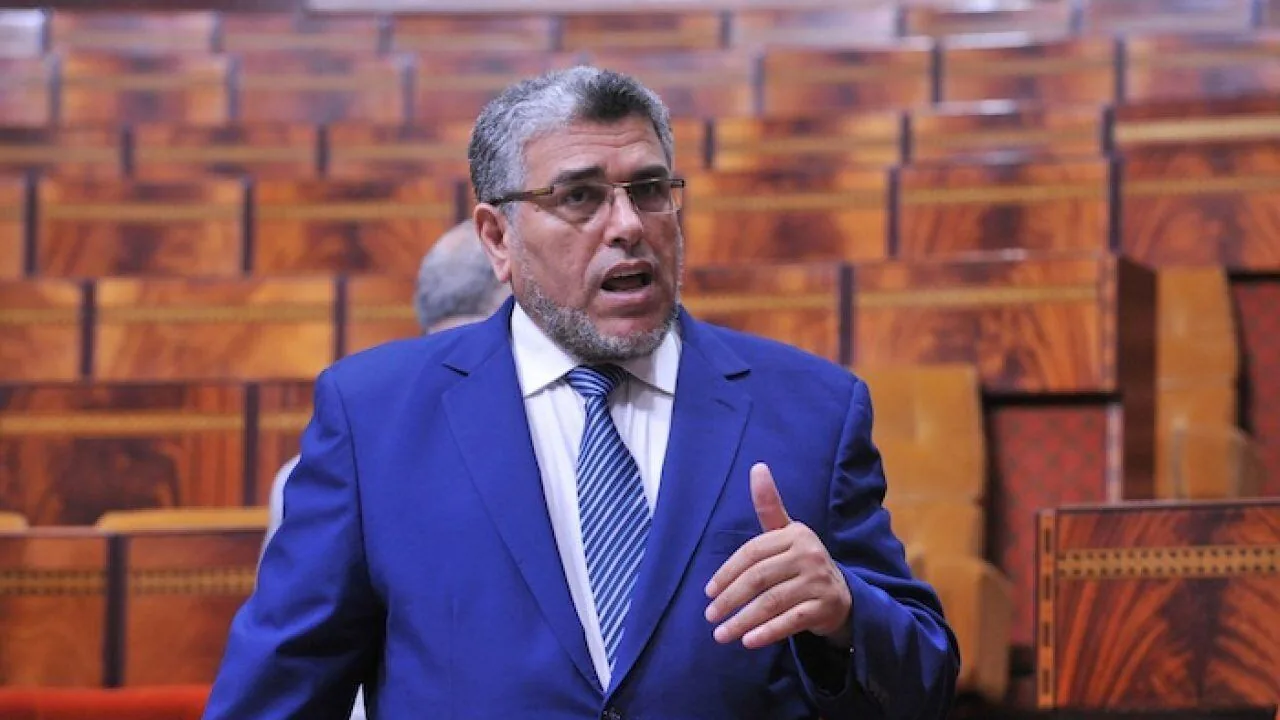
The substance-free opposition between #STOP490 and #KEEP490 literally smothered any attempt at a pragmatic approach to the question, effectively ruling out the possibility of a third outcome to this battle of ideas: amending the article. What if #EDIT490 were in fact the appropriate solution? A modification of the legal provision insisting on [1] the undifferentiated treatment of the genders; [2] the objective gathering of proof, no longer founded on the random judgment of the police officer; [3] the establishment of a third category, distinct from prostitution and from adultery and compatible for both Women and men; [4] the spelling out of what does or does not infringe the Right to privacy when the police officer carries out his mission, and the clear determination of its limits — this with a view to protecting the Right to privacy, a constitutional Right guaranteed to all individuals. It may seem obvious that a single sentence is insufficient to spell out the complexity of Article 490. Mustapha Ramid indicated in December 2019 that “the State does not have the right to break into the private space, to spy on adults and to break down their doors in order to violate their intimacy[30]”. A statement that could be skillfully articulated through the amendment of Article 490. In any case, it is this option that seems the most opportune.
The repeal of Article 490 of the Penal Code will never be permitted in Morocco. These demands belong to utopia. The King of Morocco is carried in part by a religious legitimacy; Islam is certainly no mere accessory in the exercise of power. What would the attitude of the Moroccan people be upon the announcement, by the Commander of the Faithful, of the decriminalization of sexual relations outside marriage? What would be the reaction of the neighboring peoples who, for several centuries, have been bound to the Muslim frame of reference enshrined in the Moroccan monarchy? If the regional reference point of Islam were to withdraw from its religious legitimacy, what would the strategic consequences be, both for Morocco and for the neighboring States whose peoples are in the majority Muslim? The repeal being demanded is part of a strictly individual dynamic, de facto excluding any collective approach, be it national or international. These demands relegate the collective interest to second place in favor of marginal individual interests. An ultimately selfish outlook, carried notably by the Collective Moroccan Outlaws 490.
A final word.
The Moroccan Outlaws Collective would gain from being more inclusive. It would likewise gain from being more in tune with the Moroccan reality it strives not to see, or to misunderstand. Likewise, thinking that the solution exists only through the blessing of the West is a misstep. This breach opened toward the outside also favors foreign interference in matters of undesirable ideology. Moroccans of all stripes would lend more credence to an initiative bearing a strong Moroccan imprint. The Salvation of Moroccan society will come only through the Moroccan people and ideas of its own. Inspiration is certainly an opportunity; the transposition of foreign systems is, on the other hand, a defect.
If one follows the dynamic of the opposition between #STOP490 and #KEEP490, reflection around #EDIT490 would be far more pertinent and constructive. If one takes the broader view of a dynamic aimed at Moroccans as a whole, hashtags in Darija or Amazigh would undoubtedly have been preferable. It is not Europe that must be made aware: it is indeed Moroccans.
[1] Article 483 of the Penal Code: Anyone who, through deliberate nudity or through the obscenity of their gestures or acts, commits a public affront to decency is punished by imprisonment of one month to two years and a fine of 120 to 500 dirhams.
[2] A video dating from 2015, recently circulated online
[3] Details provided by Ms. Ghizlane Mamouni, lawyer at the Paris bar and member of the 490 Collective. https://www.lemonde.fr/afrique/article/2021/02/03/au-maroc-une-affaire-de-revenge-porn-relance-le-debat-sur-la-liberte-sexuelle_6068672_3212.html
[4] “All persons of the opposite sex who, not being united by the bonds of marriage, have sexual relations with each other are punished by imprisonment of one month to one year”.
[5] https://www.instagram.com/p/CK0hh_KlKi4/
[6] “Anyone who knowingly and by any means, including computer systems, proceeds to intercept, record, disseminate or distribute words or information uttered in a private or confidential setting, without the consent of their authors, is punished by imprisonment of six months to three years and a fine of 2,000 to 20,000 dirhams. The same penalty applies to anyone who knowingly and by any means proceeds to capture, record, disseminate or distribute the photograph of a person in a private place, without that person’s consent”.
[8] Combined follower count across the InstaGram and FaceBook social networks
[9] Karima Nadir : « Pour changer les mentalités, il faut changer les lois », 5 févr. 2021 https://www.youtube.com/watch?v=dD9XUOLVqVY
[10] Moroccan Constitution https://mjp.univ-perp.fr/constit/ma2011.htm
[11] The Moroccan Nation adhering to a so-called “moderate” approach to Islam, Art.1 of the Constitution
[12] 1913 marks the entry into force of the Penal Code. This date coincides with the beginning of the protectorate.
[13] What Ibn Khaldun more broadly termed Asabiyya, which he was already observing under the Almoravid Era.
[14] htps://www.instagram.com/stories/highlights/18090315529101276/
[15] Such a percentage may seem somewhat overestimated https://www.medias24.com/francophonie-francais-maroc-marocains-942.html
[16] Liberté sexuelle au Maroc, revendication d'une «minorité» de Marocains pour Rachid Hachachi https://www.youtube.com/watch?v=BD4C3Zm8xd4&list=ULxRVLcpFPUmI&index=12861
[17] Abortion would be legal if it results from rape, if it results from an adulterous relationship, in cases of insanity, and if a fetus suffers from a genetic malformation impossible to treat at the time of diagnosis. The procedure must be supervised by a competent medical body, and performed before 90 days of pregnancy.
[18] https://www.instagram.com/p/B7ReGvSFEAJ/?utm_source=ig_embed
[19] "Réflexions sur le débat des libertés individuelles" By: Dr. Aissam Bachir https://www.youtube.com/watch?v=gJpo5-41il0&feature=share
[20] Simone Veil : son discours historique en faveur de l’IVG, 26 novembre 1974 https://www.youtube.com/watch?v=cTAmCUgoSZ4
[21] Article 493 of the Penal Code: Proof of the offenses punished under articles 490 and 491 is established either by a report of in flagrante delicto findings drawn up by a judicial police officer, or by a confession recounted in letters or documents originating from the accused, or by a confession in court.
[22] Mériam Cheikh, « De l’ordre moral à l’ordre social. L’application des lois pénalisant la sexualité prémaritale selon des lignes de classe », L’Année du Maghreb, 17 | 2017, 49-67.
[23] [25] [28] Ibid
[24] Ibid, “a category they define not in terms of sexual practices but first and foremost in terms of social belonging”
[26] Within the meaning of Article 490 of the Penal Code
[27] Mériam Cheikh